Badminton Racket Balance Point & Lead Tape Customisation: Tuning Your Racket to Your Game
7 June 2026 · Badminton Fans
The balance point of a badminton racket is the distance from the bottom of the handle to where the racket balances flat on one finger — typically around 280–300 mm (head-light), 290–295 mm (even), or 295+ mm (head-heavy) — and small changes can be tuned by adding lead tape: a few grams at the racket head to make it more head-heavy, a few grams in the handle to make it more head-light, while keeping total weight changes small (1–3 g per location). It lets you fine-tune a stock racket without buying a new one.
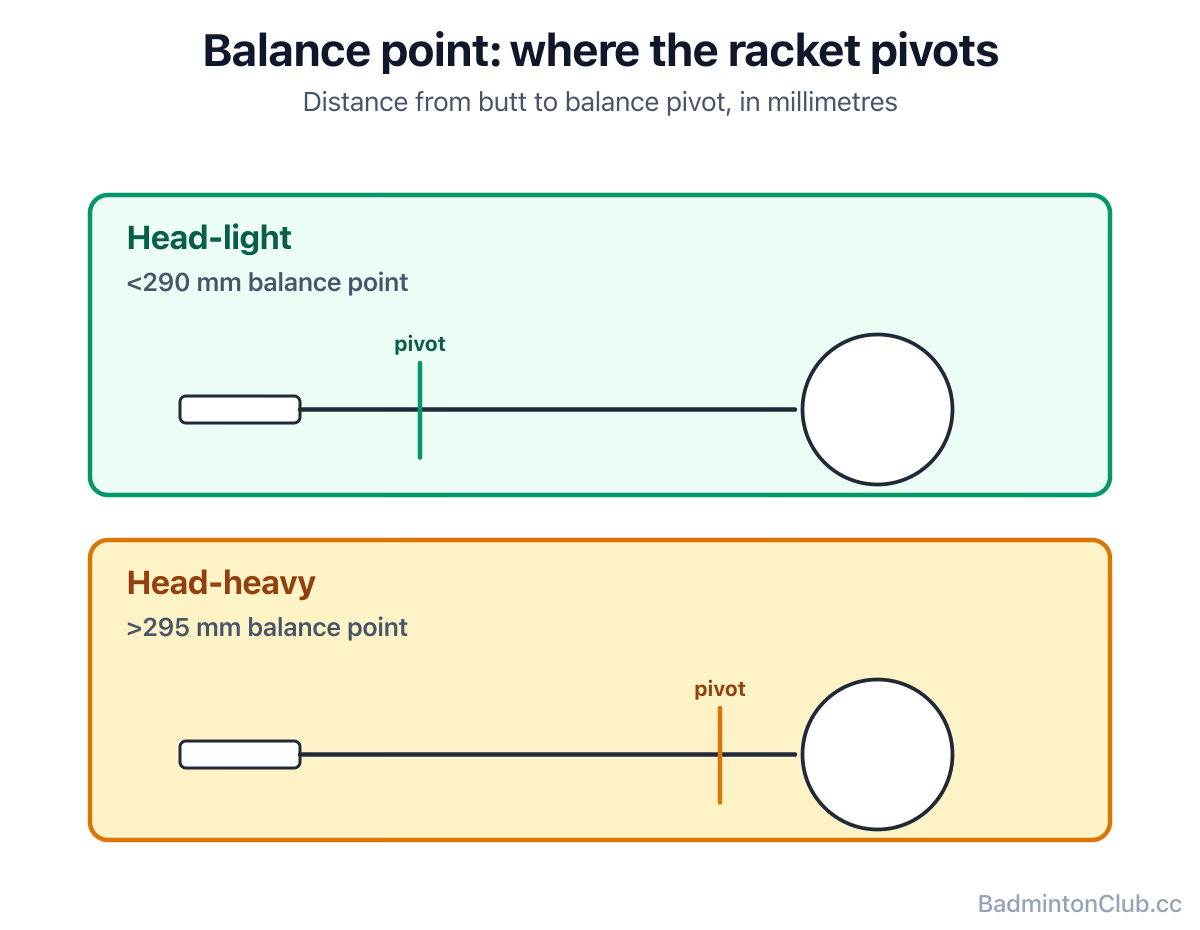
How to measure your racket's balance point
Place the strung, gripped racket flat across one finger near the throat and slide it until it balances. The distance from the butt cap (the bottom of the handle) to the pivot is the balance point, measured in millimetres.
- <290 mm → head-light
- ~290–295 mm → even balance
- >295 mm → head-heavy
Different manufacturers measure with or without a grip; results shift a few mm. Treat balance point as a relative measure — useful for comparing rackets, not for fetishising a single number.
When and why to add lead tape
Lead (or tungsten) tape is a self-adhesive thin strip you stick to the racket frame or handle to shift weight and balance. The classic uses:
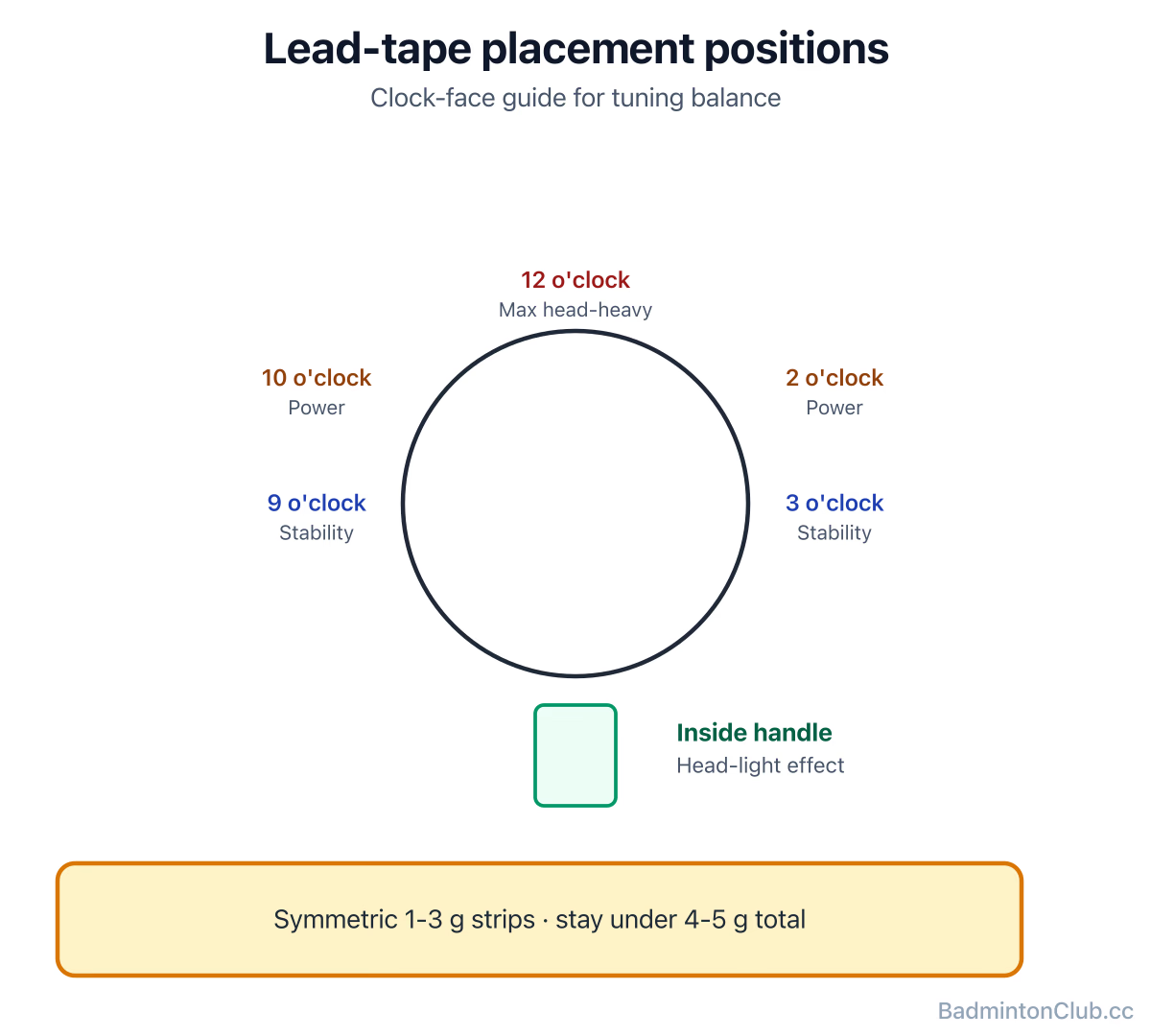
- More smash power on a stock racket → 1–3 g at the 2 and 10 o'clock positions of the head (just above the T-joint or near the top rim). Makes it more head-heavy. Don't overdo it — even 2 g changes feel noticeably.
- Faster hands / less arm fatigue → 1–3 g inside the handle (under the grip wrap). Makes it more head-light.
- Sweet-spot stability → small balanced amounts at 3 and 9 o'clock of the head improve the off-centre forgiveness (the "twist weight" or moment of inertia) without much change to balance.
Total added weight should usually be under 4–5 g for a racket — beyond that you change the feel fundamentally and probably want a different racket instead.
Where to stick it
Common positions on the head: 3 and 9 o'clock (for stability), 2 and 10 o'clock (for power without too much swingweight change), 12 o'clock at the tip (most head-heavy effect per gram, but tip-heavy can feel sluggish).
Always apply in small symmetric increments — same amount on both sides — and test on court between changes. A 2 g strip on each side adds 4 g; that's already a meaningful change. Mark the position with tape so you can replicate or revert.
Words of caution
- Check your racket's max stated total weight if you're stacking lead — some lighter frames aren't designed for additional mass at the head, and over-loading can stress the shaft.
- Don't add lead until you've ruled out grip and string tension as causes of any "off" feeling. Most of the time the fix is simpler.
- Lead tape is heavy metal — keep it out of reach of small kids and pets, and don't chew on your grip (yes, people do this).
What this looks like on a club night
Tuning rackets with lead tape is a wonderful rabbit hole, and most players who go down it discover they made their racket worse. A frank opinion: lead tape is a fine-tuning tool, not a fix for the wrong racket. If you need 8 g at the head to feel right, you bought the wrong frame; go back and buy a 3U head-heavy — the trade-offs that lead there are spelled out in the Racket Buying Guide. But for the player who loves their racket and wants 2 g more bite in the smash, or 2 g less head load for tired forearms, lead tape is genuinely useful. Make small changes, test between each, and write down what you did — you'll thank yourself when you change your mind. A notes field on your BadmintonClub.cc player page is a perfectly fine spot for the "2 g at 3 and 9 o'clock, added Feb, undid in March because it killed my net hands" diary; future-you will read it back when next-you wonders why the same idea didn't work the first time.
FAQ
- Q: How do I find the balance point of my badminton racket? Balance the strung, gripped racket flat across one finger near the throat until it pivots; measure from the butt cap to that pivot in millimetres.
- Q: What balance point is head-heavy vs head-light? Roughly under 290 mm is head-light, 290–295 mm is even balance, above 295 mm is head-heavy — treat it as a relative comparison number, not absolute.
- Q: How do I add lead tape to a badminton racket head? Apply small symmetric strips (1–2 g per side) at the 2 and 10 o'clock positions of the head for more smash, or 3 and 9 o'clock for stability — test on court between each change.
- Q: How much weight can I add with lead tape? Usually under 4–5 g total — beyond that the racket's feel changes fundamentally and you're probably better off buying a different frame.
- Q: Can I make my racket more head-light with tape? Yes — add 1–3 g under the grip wrap in the handle to shift balance toward your hand.
- Q: Will adding lead tape damage my racket? Small amounts (a few grams) are safe on most frames; large amounts at the head can stress the shaft on lighter rackets and exceed the manufacturer's stated max weight.
Badminton racket balance point in millimetres — under 290 mm is head-light, 290–295 mm even, above 295 mm head-heavy — and how to fine-tune balance with small (1–3 g) strips of lead tape at the racket head or under the handle wrap. Covers the standard 2/10, 3/9 and 12 o'clock placements, the 4–5 g total ceiling, and the honest caution that lead tape is a fine-tuning tool, not a fix for the wrong racket. A useful skill for players who love their frame but want a tweak.