15 Badminton Tips for Beginners That Actually Make You Better Fast
8 June 2026 · Badminton Fans
The fastest way to improve as a beginner isn't learning new shots — it's fixing four habits: gripping too tight, standing flat-footed, hitting late, and trying to smash everything. Sort those and your existing shots suddenly work. Below are the tips that move the needle, in rough order of how much they help.
The tips that matter most
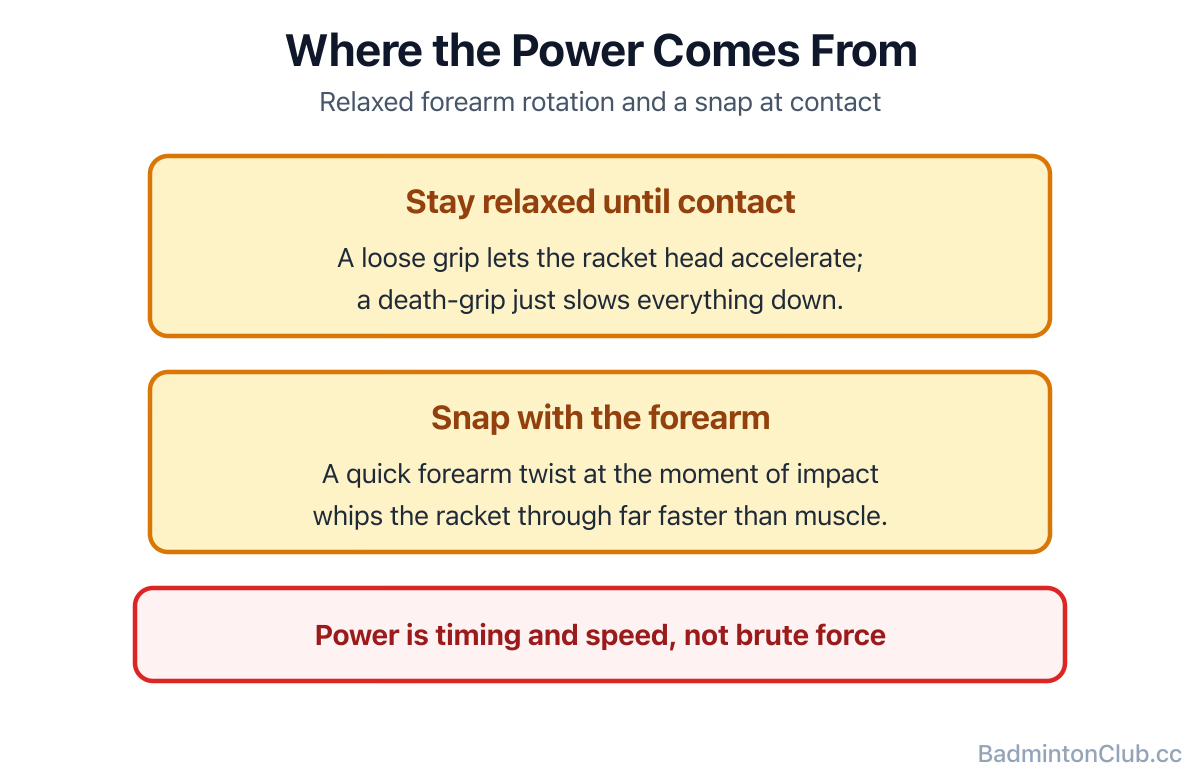
- Loosen your grip. Hold the racket like a small bird — firm enough it won't escape, soft enough you won't hurt it. A relaxed grip gives you wrist snap and saves your forearm. Tense gripping is the #1 beginner mistake.
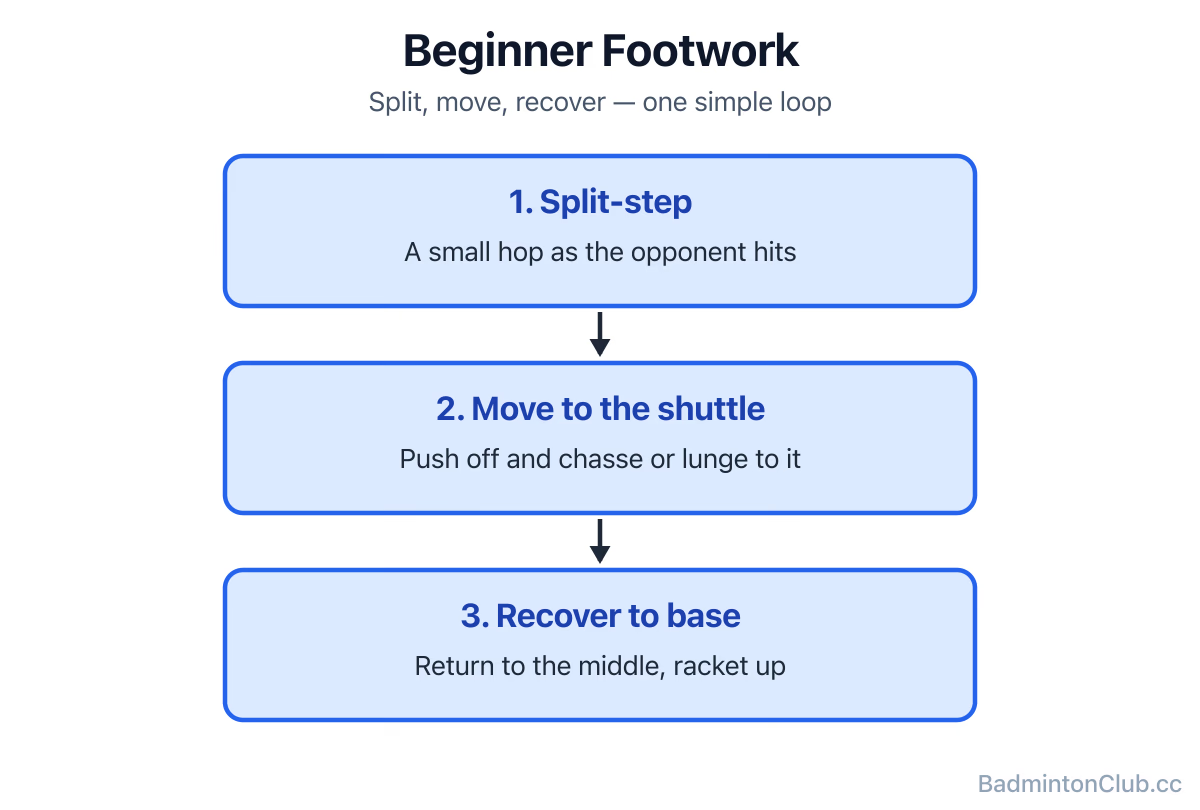
- Recover to the middle. After every shot, move back toward the centre "base." Beginners hit and admire; good players hit and reset.
- Split-step. A tiny hop just as your opponent strikes, landing on the balls of your feet. It primes you to move in any direction and is the single biggest footwork upgrade.
- Serve low and legal. A low serve that skims the net takes the attack away from your opponent. A loose high serve in doubles is a free smash for them.
- Take the shuttle early — and high. Meet it in front of you, ideally above net height. Late, low contact forces you to lift and defend.
Use your wrist and forearm, not your whole arm
Power in badminton comes from forearm rotation (pronation) and a relaxed wrist snap at the last moment — not from a big tennis-style arm swing. Beginners muscle the shuttle with a stiff arm and wonder why it's both tiring and weak. Learn the snap on the swing technique and your clears suddenly reach the back without effort.
Stop trying to smash everything
The smash is fun and almost always the wrong choice for a beginner. It's hard to control, leaves you out of position, and a decent opponent just blocks it back. Win rallies with placement and patience instead — clear deep, drop short, make them run. Add the smash once your control is solid.
What I'd tell my past self
Two things, honestly. First: footwork before strokes. I spent my first year obsessing over my smash and not enough on getting to the shuttle early — and you cannot hit a good shot you've arrived late to. Second: play people better than you, on purpose, and lose happily. A night of losing to stronger players teaches you more than a week of beating beginners. The improvement curve is steep at the start; don't waste it grinding wins against people at your own level.
A two-week practice plan
- Days 1–4: low serves and gentle clears, 10 minutes each session — pure consistency.
- Days 5–8: add the split-step and "recover to base" after every shot in games.
- Days 9–14: net shots and drops; introduce a controlled smash only when set up.
Do this and the difference at week three is obvious — to you and to whoever you play.
The observation that changes how you watch the game
Once you've been playing a few months, watch a match between two experienced players — any level, even decent club players — and notice something: they hit the shuttle from a very narrow band of heights. Almost every contact happens between shoulder and waist height, because they've learned to take everything early. Beginners let the shuttle drop to knee height (or lower) before hitting, which turns every shot into a desperate, upward defensive lift. The skill that quietly separates intermediate from beginner isn't power or speed — it's the relentless refusal to let the shuttle fall. Move early enough, prepare early enough, and the whole court opens up because you can hit from so many more angles. Train yourself to treat a dropping shuttle as an urgent problem, and every other tip in this list suddenly becomes easier to execute.
FAQ
- Q: What is the most important tip for a badminton beginner? Loosen your grip and recover to the middle after every shot. Those two alone fix a huge share of beginner problems.
- Q: How can I improve at badminton quickly? Drill consistency (serves and clears), add the split-step, and play opponents slightly better than you. Footwork improves you faster than new shots.
- Q: Why does my arm get tired so fast playing badminton? You're gripping too hard and using your whole arm instead of forearm rotation. Relax the grip and snap with the wrist; the fatigue largely disappears.
- Q: Should beginners learn to smash early? No. Master control shots first. The smash is the last thing to add because it's the easiest to mishit and the easiest for an opponent to punish.
- Q: How often should I practise to improve as a beginner? Two focused sessions a week beats one long random one. Short, deliberate practice on one habit at a time builds skill fastest.
- Q: What's a common mistake that's easy to fix? Standing flat-footed and watching your shot. Add a split-step and immediately move back to base — instant improvement with zero new technique. See more in common mistakes.
Practical badminton tips for beginners that fix the real things holding you back: loosen your grip, recover to the middle, serve low, use your wrist not your arm, and stop swinging at full power. These are the cues that take a new player from flailing to competent in a few weeks — the same short list a coach would give you courtside, with the why behind each one so it sticks.