Common Badminton Mistakes Beginners Make (and How to Fix Each One)
8 June 2026 · Badminton Fans
The most common badminton mistakes for beginners are nearly always the same: a panhandle grip, gripping too tightly, flat feet with no split-step, failing to recover to the middle, lifting the shuttle when they could attack, and over-smashing from poor positions. None of them are about talent — they're habits, and each has a specific, quick fix. Sort these and you'll improve faster than by learning any new shot.
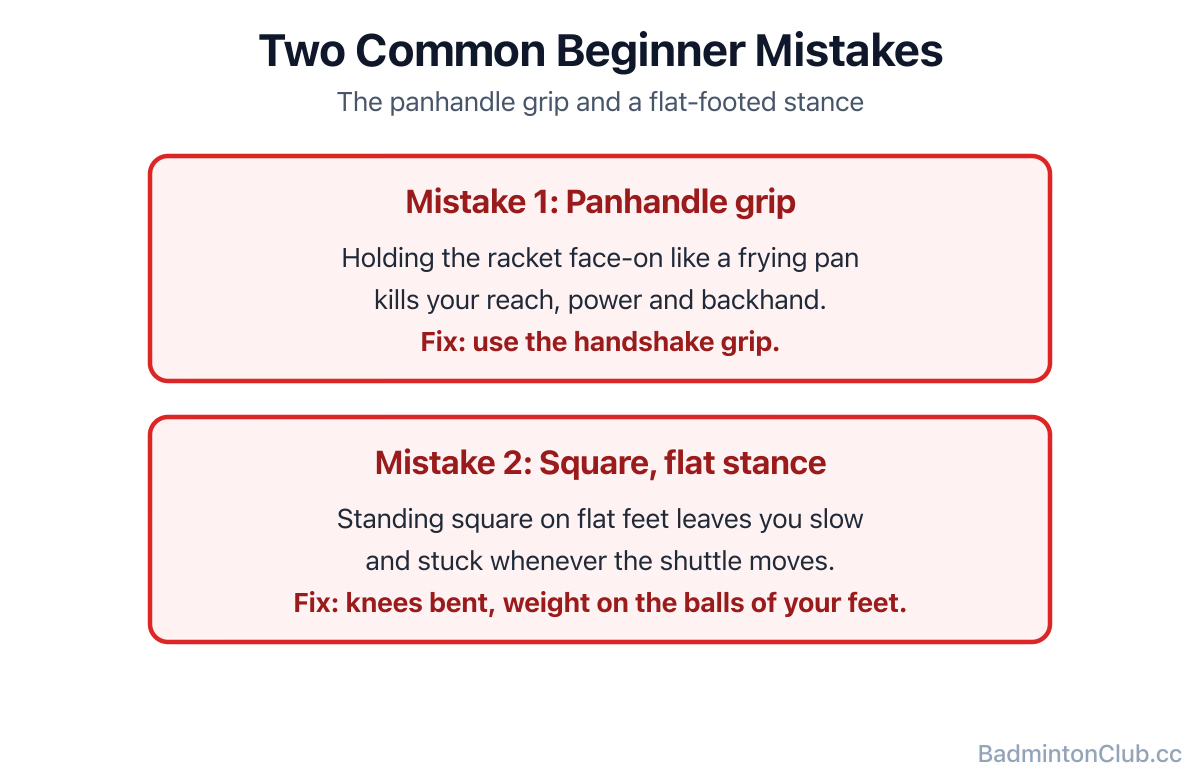
Mistake 1: the panhandle grip
Holding the racket face-on like a frying pan and slapping at the shuttle. It feels natural and ruins everything — locked wrist, no reach, no proper overhead. Fix: switch to the handshake grip and a thumb grip for backhands, even though it feels strange for a week. This is the highest-leverage fix in the whole sport.
Mistake 2: gripping too tight
A white-knuckle grip kills your wrist snap, saps your power and exhausts your forearm in minutes. Fix: hold loosely, tighten only at the instant of contact, then relax. Loose hands are fast hands.
Mistake 3: flat feet and no split-step
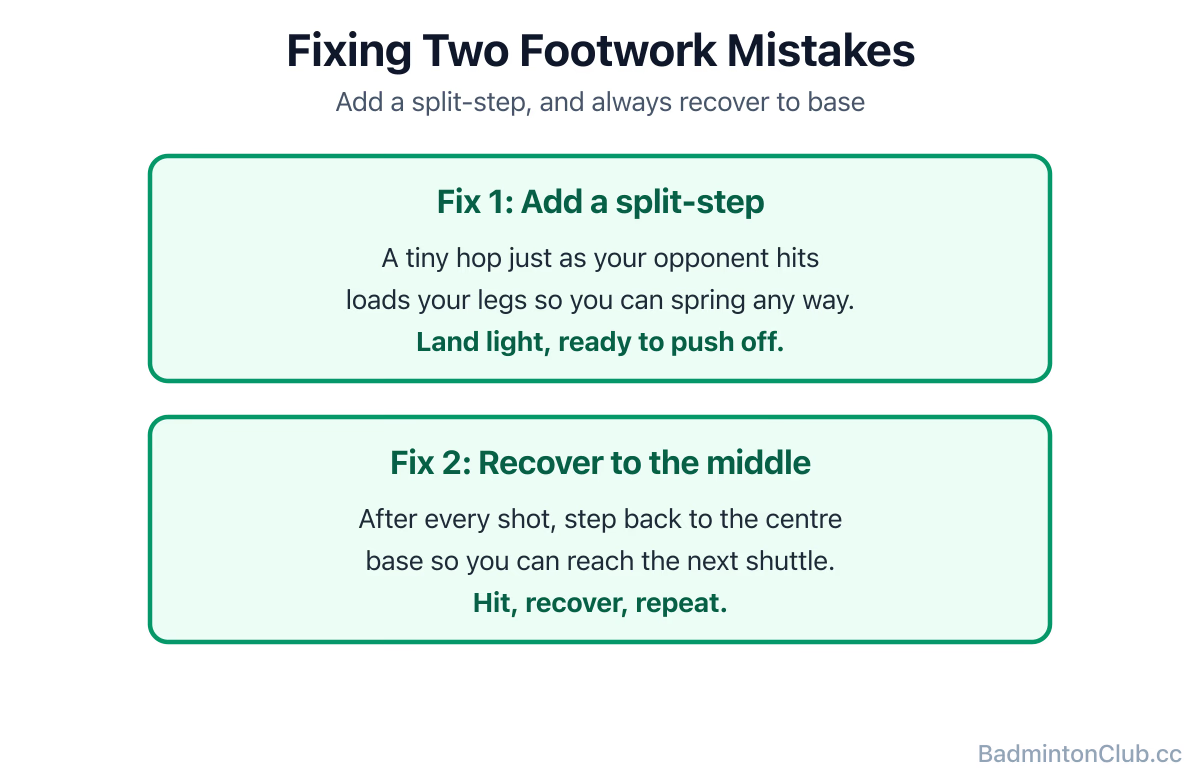
Standing flat-footed and heavy means you're always late to the shuttle. Fix: a small split-step (a light hop landing on the balls of your feet) just as your opponent hits. It primes you to move and is the single biggest footwork upgrade a beginner can make.
Mistake 4: not recovering to base
Beginners hit a shot and watch it, rooted to the spot, then get wrong-footed by the reply. Fix: after every shot, move back toward the central "base" position. Hit and recover, every time — good players are always returning to the middle.
Mistake 5: lifting when you could attack
Constantly hitting the shuttle up hands your opponent the attack over and over. Fix: learn to take the shuttle early and high so you can hit it flat or down — a drive, a net shot or a push instead of a defensive lift. Whenever you hit up, you've given away the initiative; minimise it.
Mistake 6: smashing everything
The smash is fun and almost always the wrong choice for a beginner — mishit, out of position, and easily blocked. Fix: only smash when the shuttle sits up short and central and you're behind it. Otherwise clear or drop. Patience wins more than power.
The mistake behind the mistakes
If I had to name the root cause beneath all six, it's this: beginners try to play with their arms when badminton is played with the feet and the hands. The arm-heavy player grips tight, swings hard, stands still and smashes wildly. The player who improves fast does the opposite — relaxed hands, busy feet, early contact, patient shot choice. You don't fix these one at a time so much as adopt a whole different posture toward the game: light, early, calm. Pick the two mistakes you recognise most in yourself and fix those first; the rest tend to follow.
The mistake that doesn't go away
Here's the honest truth about the mistake list above: you will make all of them for years, and that's fine. Fixing a mistake doesn't mean you never do it again — it means you do it less often, recognise it sooner when it happens, and recover from it faster. Even advanced club players occasionally stand flat-footed, or grip too tight when they're nervous, or smash from a bad position when they're frustrated. The difference between a good player and a beginner is not that the good player has eliminated these mistakes — it's that they notice the mistake mid-rally and adjust for the next shot, instead of carrying it through the whole game. A beginner who says "I always grip too tight at match point" is a beginner who knows the problem and will eventually develop the awareness to loosen the grip at the critical moment. A beginner who doesn't even know they're gripping too tight will plateau much lower. So don't aim for perfection — aim for awareness. The self-correction loop is the skill that actually separates levels.
FAQ
- Q: What are the most common mistakes beginners make in badminton? A panhandle grip, gripping too tight, flat feet with no split-step, not recovering to the middle, lifting instead of attacking, and over-smashing from bad positions. All are habits with quick fixes.
- Q: What is the biggest mistake in badminton for beginners? The panhandle (frying-pan) grip, because it caps how good every other shot can become. Switching to a proper handshake grip is the highest-impact fix you can make.
- Q: Why do I get tired so quickly playing badminton? Usually because you grip too tightly and swing with a stiff arm, both of which waste enormous energy. Relax your grip, use forearm rotation, and move efficiently with a split-step rather than lunging late.
- Q: How do I stop getting wrong-footed? Recover to the central base position after every shot and add a split-step as your opponent hits. Being back in the middle and ready means you can reach any reply.
- Q: Should I stop smashing so much? Probably yes, as a beginner. The smash loses more points than it wins until your control is solid. Save it for when the shuttle sits up and you're balanced behind it; clear or drop the rest.
- Q: How long does it take to fix bad badminton habits? A new grip feels normal in about a week; footwork habits like the split-step take a few weeks of conscious effort. The longer you leave a bad habit, the harder it is to unlearn — so fix them early.
Most beginners lose points to the same handful of fixable mistakes: a panhandle grip, gripping too tight, standing flat-footed, never recovering to the middle, lifting when they should attack, and smashing from bad positions. This guide names each common badminton mistake, explains why it hurts you, and gives the specific fix — so you can skip months of frustration and the bad habits that are hardest to unlearn later.