Badminton Swing Technique: The Overhead Throw, Forearm Pronation and Wrist Snap
8 June 2026 · Badminton Fans
Badminton's overhead swing is a throwing motion, not a chopping one. Power comes from a chain — legs and hips, then shoulder, then a sharp rotation of the forearm (pronation) and a relaxed wrist snap at the last instant — with the racket head accelerating like the tip of a whip. The biggest beginner error is muscling the shuttle with a stiff, tense arm; the real technique feels almost lazy until the final snap.
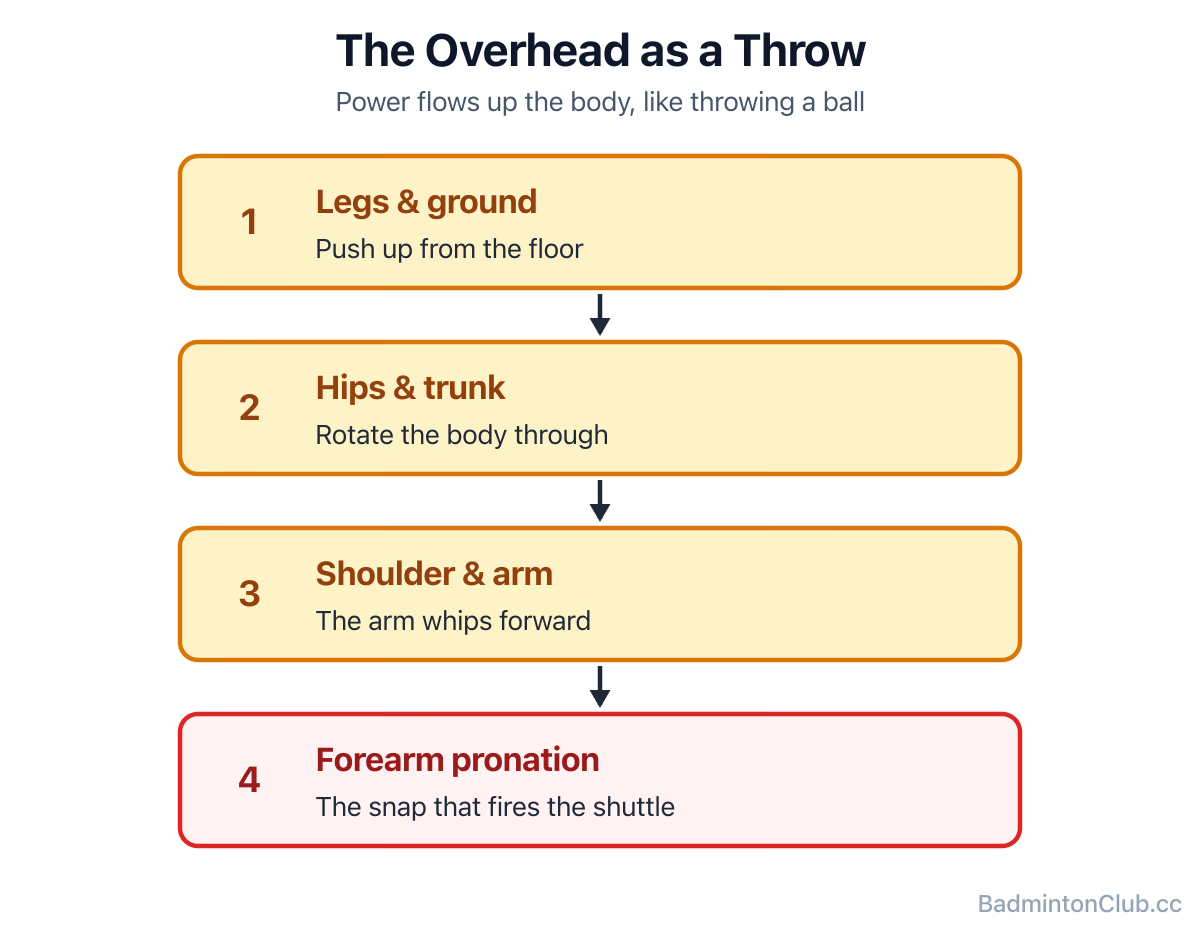
The overhead swing is a throw
If you can throw a ball, you already have the badminton overhead swing. Watch yourself throw: you step, your hips and shoulders rotate, your elbow leads, and your hand whips through last. The overhead clear, drop and smash use exactly this sequence. That's why coaches tell beginners to "throw the racket at the shuttle" — the throwing motion naturally produces the relaxed, whip-like action that a deliberate "hit" never does.
Forearm pronation: where the power hides
The piece beginners miss is pronation — the inward rotation of your forearm as you make contact, turning your palm from facing you to facing away. This rotation is the main engine of racket-head speed in badminton. It's not a wrist "flick" (a common myth) and it's not arm strength; it's the forearm rotating sharply at the right instant. When you learn to pronate, your clears suddenly reach the back with what feels like no effort, because you've stopped fighting the racket and started whipping it.
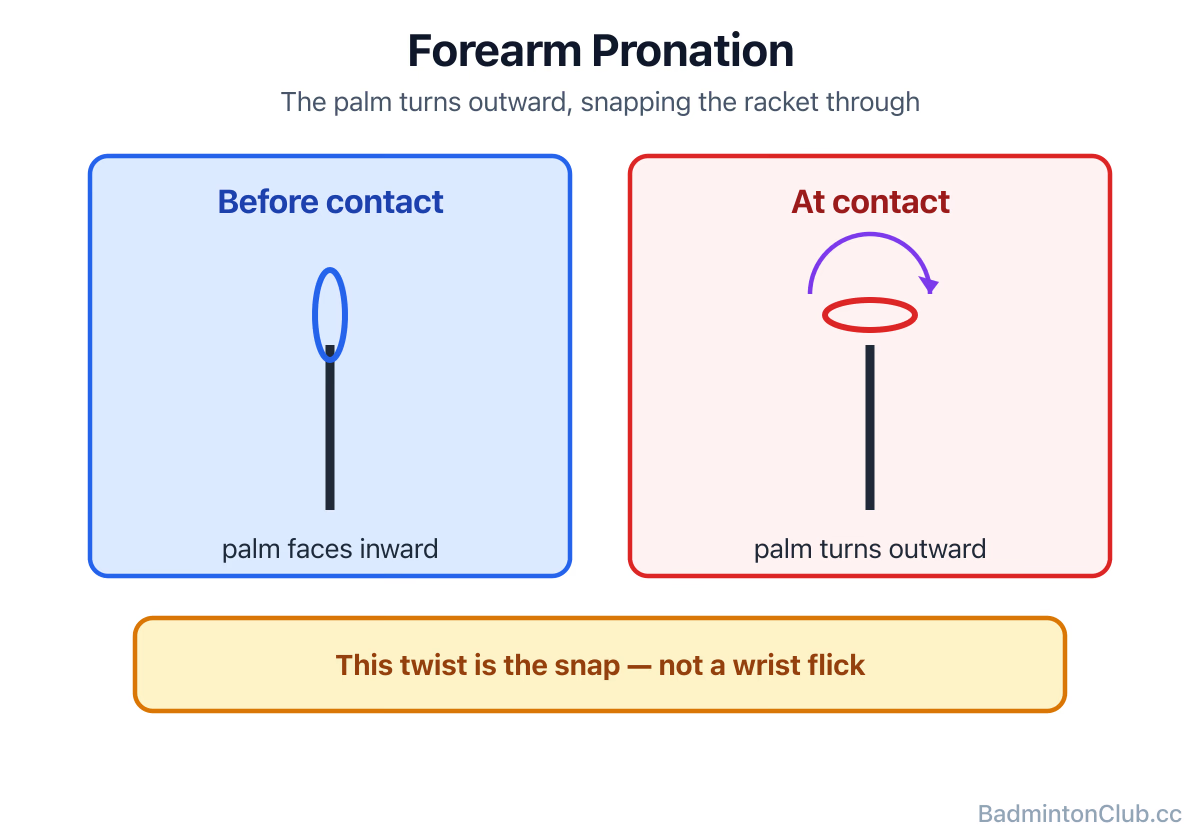
The relaxed wrist snap
Your wrist does snap — but it's relaxed and it happens with the pronation, not instead of it. A loose wrist that snaps at contact adds the final acceleration to the racket head. The catch: this only works if your grip and arm are relaxed. A tense wrist can't snap. So the whole swing is built on staying loose until the last possible moment, then a brief, sharp acceleration through contact, then relax again.
Why "swing harder" is the wrong instinct
This is the counterintuitive heart of it. When a beginner's shot is weak, every instinct says swing harder — tense up, grip tighter, heave with the arm. That makes it worse: a tense arm is slow and a clenched grip kills the snap. The players who hit effortless winners look like they're barely trying, because they are barely trying with their muscles — the speed is in technique and timing, not force. I'd rather a beginner swing at 70% with a relaxed whip than 100% with a rigid arm. Slow down to speed up: relax, throw, pronate, snap.
A swing drill (no shuttle needed)
Shadow-swing your overhead in slow motion, exaggerating the pronation — feel the forearm rotate and the palm turn outward at "contact." Do 20 slow reps focusing only on the rotation, then a few at full speed. Then add an underarm feed and hit clears, keeping the same loose, throwing feel. Grooving the motion without the pressure of a live rally is how it becomes automatic.
The single swing thought that fixes everything
If you can only hold one thought in your head during a rally, make it this: "elbow first." When the shuttle is coming to your overhead, the first thing that should move is not your racket — it's your elbow, leading upward and forward like you're reaching for something on a high shelf. The elbow drives the arm, the arm lags behind, and the racket whips through last. Beginners start with the racket, dragging the arm and elbow along for the ride, and the result is a slow, arm-driven swing with no whip. Start with the elbow and everything else falls into place naturally: the side-on position, the racket drop behind your head, the snap through contact. "Elbow first" is the closest thing badminton has to a magic cue — it organises the entire kinetic chain without you having to think about each piece separately. Practise it in shadow swings until it feels weirdly exaggerated, then take it into a rally. The first time you hit a clear where the elbow led and the racket just cracked through, you'll feel the difference instantly.
FAQ
- Q: What is the correct swing technique in badminton? An overhead throwing motion: power flows from legs and hips through the shoulder to a sharp forearm pronation and relaxed wrist snap at contact. It should feel like throwing a ball, not chopping wood.
- Q: What is forearm pronation in badminton? The inward rotation of your forearm at contact, turning your palm from facing you to facing outward. It's the main source of racket-head speed — more important than wrist or arm strength.
- Q: Is badminton power in the wrist or the forearm? Mostly the forearm (pronation), with a relaxed wrist snap adding the final acceleration. The popular "it's all in the wrist" idea is misleading — the forearm rotation does the heavy lifting.
- Q: Why is my overhead shot weak even when I swing hard? Because swinging hard with a tense, stiff arm is slow and kills the snap. Relax your grip and arm, use a throwing motion, and let forearm pronation generate the speed. Less muscle, more whip.
- Q: How do I learn the badminton swing? Mimic a throwing motion, shadow-swing slowly while exaggerating the forearm rotation, then groove it with underarm-fed clears. Keeping it relaxed is more important than keeping it powerful.
- Q: Does the same swing work for clear, drop and smash? Yes — that's the point. All three share the overhead throwing swing; only the speed and contact angle change, which is also what makes them deceptive. Learn the swing once and all three improve.
Good badminton swing technique is the difference between effortless power and a tired, weak arm. This guide breaks down the overhead 'throwing' motion, the forearm pronation that actually generates racket-head speed, the role of a relaxed wrist snap, and why beginners who muscle the shuttle with a stiff arm get it exactly backwards. Learn the swing once and your clear, drop and smash all improve together.