Badminton Racket T-Joint: Built-In vs External Joint — Why It Matters
7 June 2026 · Badminton Fans
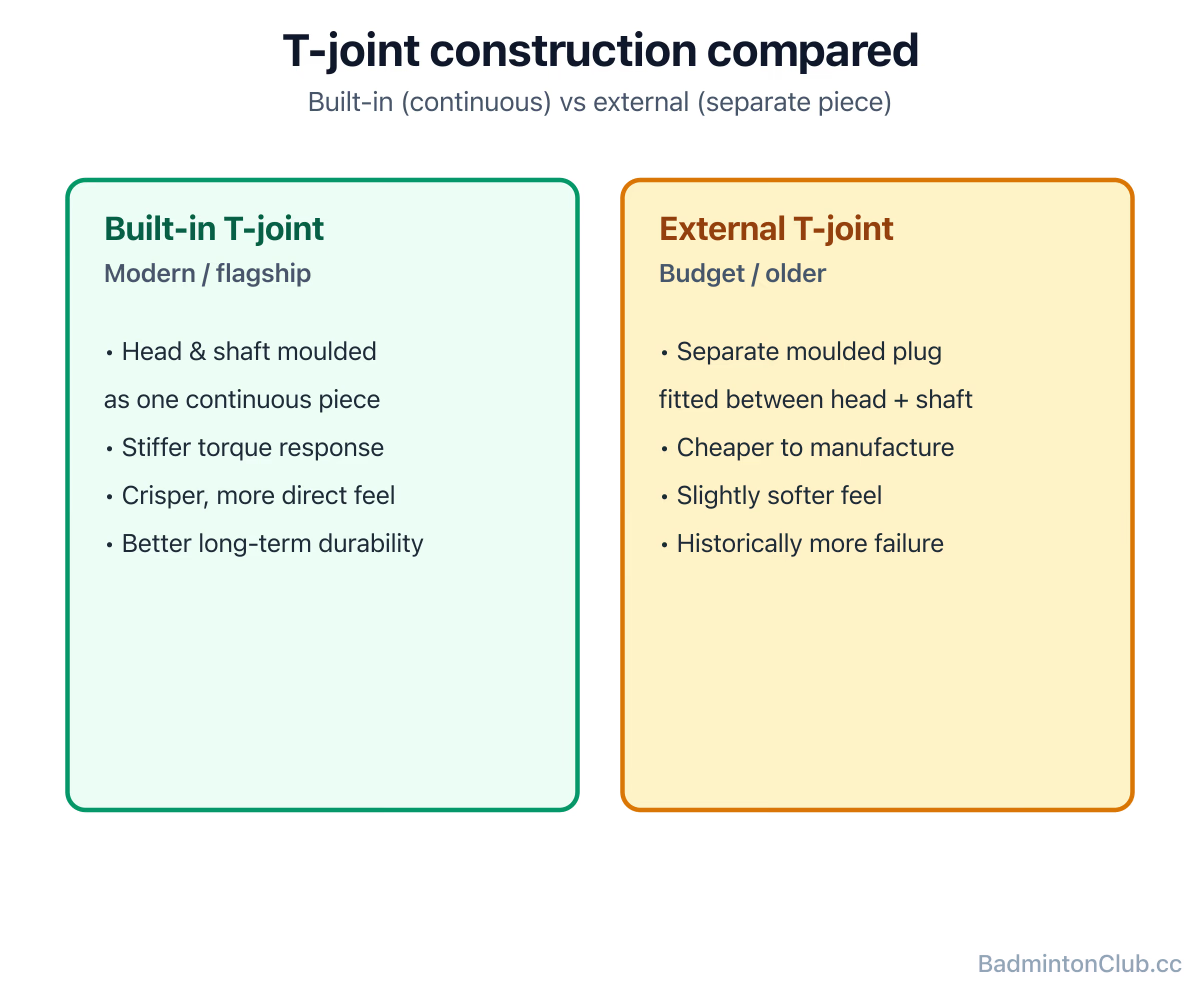
The T-joint is the piece where the racket's shaft meets the head — the "T" shape you see at the throat — and it comes in two main constructions: a built-in (integrated) T-joint where the head and shaft are moulded as one continuous piece for stiffer feel and better torque resistance, and an external (separate) T-joint where a moulded piece is fitted between head and shaft, slightly cheaper to make and traditionally a touch weaker. Most modern mid- to high-tier rackets use built-in T-joints; the difference is real but rarely a deal-breaker for club players.
What the T-joint does
The T-joint sits at the most-stressed part of the racket — it transmits the shock from string-bed contact through the shaft to your hand, and it's where any twisting force on the head tries to pivot. A stiffer, more solid T-joint means:
- Better torque resistance — the head twists less on off-centre hits, so the shuttle leaves cleaner.
- More direct feel — vibration and feedback come through unfiltered.
- Generally better durability — historically, external joints were a common failure point.
Built-in T-joint
Modern flagship rackets are usually moulded so the head and shaft are one continuous carbon-graphite structure, with no separate joint piece — sometimes called an "integrated" or "built-in T". Benefits:
- Stiffer torque response → crisper feel and more control on hard shots.
- Better long-term durability (no joint to weaken).
- Marginally more weight saved in construction → designers can put weight elsewhere.
This is the standard on Yonex's higher-tier lines and most modern competing brands.
External T-joint
On budget rackets and some older frames, the T-piece is a separate moulded plug fitted between head and shaft. Trade-offs:
- Cheaper to manufacture.
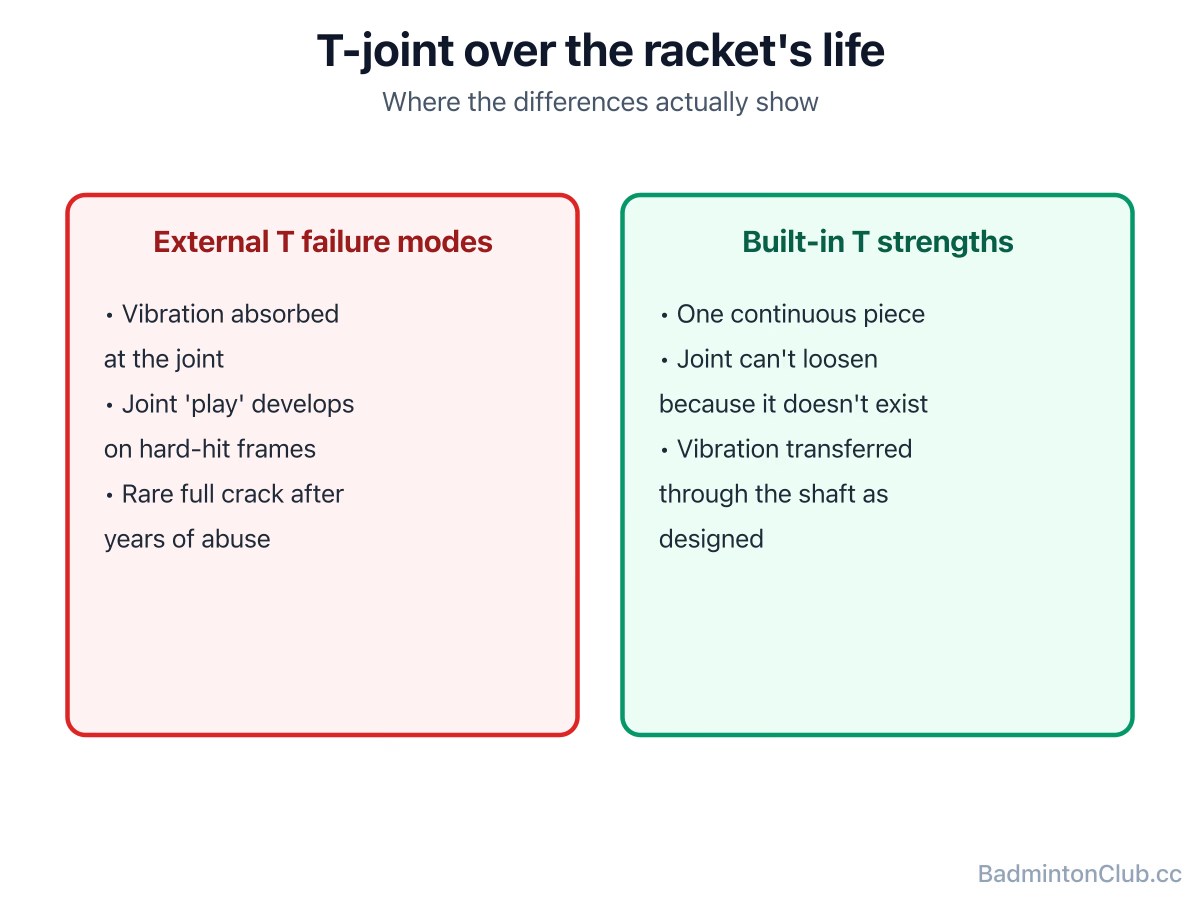
- Slightly more vibration absorbed at the joint (some players prefer this softer feel).
- Historically more failure-prone — though modern external joints are well-engineered and almost never fail in normal play.
For a casual or social player, an external T-joint racket plays perfectly well. For someone hitting hard, frequently, and noticing torque on off-centre smashes, the built-in T tends to feel better.
Should you make a buying decision over this?
Honestly, rarely. T-joint construction is a useful spec to know about — and it correlates roughly with price tier — but it's downstream of bigger choices (balance, weight, flex, string tension). If you're comparing two rackets you like, similar in price, and one has a built-in T while the other doesn't, the built-in is the safer pick. But don't pass on the right feel for a T-joint spec sheet detail.
What this looks like on a club night
T-joint chat is one of those equipment topics that gear-obsessed players love and most people quietly ignore. The honest reality: on a £30 starter racket the external T is probably fine for casual play; on a £200 flagship the built-in T is part of why it costs that much. Slot it into the bigger picture from the Racket Buying Guide rather than treating it as a standalone deciding factor. Players who hit really hard on a racket with a sub-standard T-joint can develop a slightly hollow feel on big smashes and occasionally — very occasionally — see the joint fail after years of abuse. As a general rule, I'd flag T-joint construction as a tie-breaker between similar rackets, not as a headline spec to chase. If you're hunting a second-hand bargain through your club's classifieds on BadmintonClub.cc, it's the kind of detail to ask the seller about — "built-in or external T?" tells you a lot about the racket's tier in two words.
FAQ
- Q: What is the T-joint on a badminton racket? The "T"-shaped piece where the shaft meets the head — it transmits string-bed shock to the shaft and resists twisting forces on the head from off-centre hits.
- Q: What's the difference between a built-in T-joint and an external one? A built-in T-joint is moulded as one continuous piece with the head and shaft (stiffer, better torque, more durable); an external T-joint is a separate moulded piece fitted between head and shaft (cheaper, slightly softer feel, traditionally more failure-prone).
- Q: Is a built-in T-joint better? Generally yes — stiffer torque response, better durability, crisper feel — but for casual play a well-made external joint is fine, and other specs (balance, weight, flex) matter more.
- Q: Can a T-joint break or fail? Rarely on modern rackets in normal play; older external T-joints and abused frames can develop play at the joint or even crack, but it's not a common failure mode today.
- Q: Does T-joint type affect smash power? Indirectly — a stiffer T-joint transmits more energy to the head and resists twist on off-centre hits, so smashes feel crisper, but it doesn't add power in the way string tension or technique do.
- Q: Should I prefer built-in T over external when buying? As a tie-breaker between similar rackets, yes — but don't pass on a racket that feels right just because the T-joint is external.
The badminton racket T-joint — the throat piece where shaft meets head — and the difference between modern built-in (moulded continuous) and older external (separate piece) construction. Built-in T-joints give stiffer torque, crisper feel and better durability; external joints are cheaper and slightly softer, with a small history of joint failure on abused frames. Honest take: T-joint type is a tie-breaker between similar rackets, not a headline spec.