Flick, Drive & High Serves in Badminton: Attacking and Surprising the Receiver
6 June 2026 · Badminton Fans
A flick serve disguises itself as a low serve, then snaps the shuttle quickly over the receiver's reach to the back of the service box; a drive serve fires flat and fast at the receiver's body; a swerve serve adds curving flight; and a high serve (mostly singles) sends the shuttle high and deep to the back tramline. Each one punishes a receiver who's guessed wrong about your low serve.
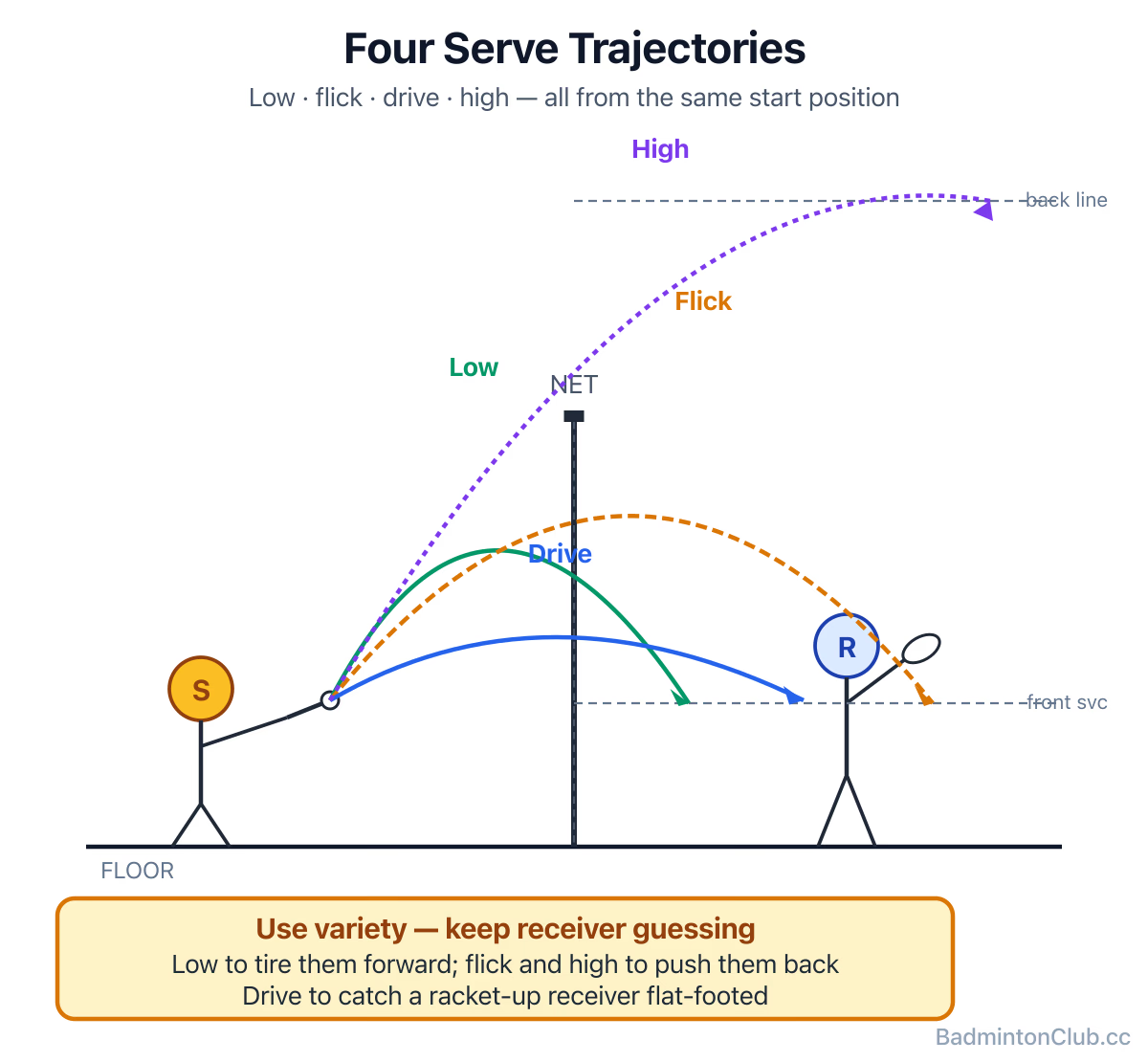
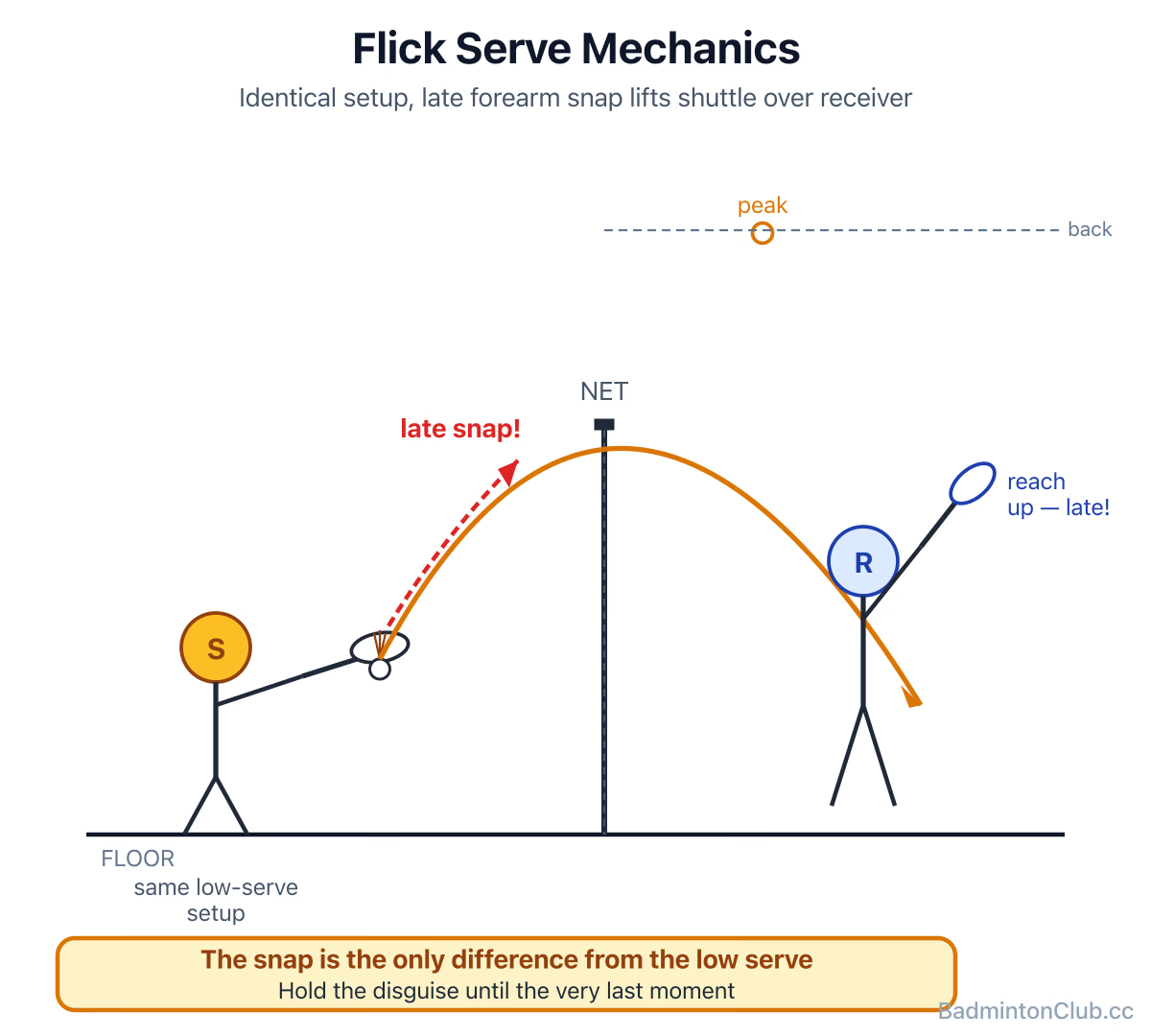
The flick serve — same look, late snap
The flick's entire value is disguise: it must start from your low-serve action so the receiver can't tell, then a sudden late forearm/wrist flick sends the shuttle fast and just over their racket to land deep in the service box. It still has to be struck below the 1.15 m line to be legal, so the speed comes from the snap, not from lifting higher. Time it for when the receiver is rushing forward to attack your low serve — the flick goes over their head and they're stranded. Overuse it, or telegraph it with a bigger backswing, and it gets read and smashed back; one or two well-hidden flicks a game keep the receiver honest.
Drive and swerve serves
A drive serve is a flat, fast serve aimed at the receiver's body or backhand — high-risk, high-reward, used to catch a flat-footed or deep-standing receiver off guard. It must stay legal (under 1.15 m, upward-angled contact), so it's more common in singles or as a rare surprise in doubles. A swerve serve brushes across the shuttle to give it a curving flight that drifts away from the receiver, making the contact point awkward to judge. Both are change-of-pace weapons — their power is surprise, so they only work occasionally and from a disguised, repeatable action. The same late-commitment principle that makes these serves hard to read is explored in more depth in the guide to deception and wrist-snap timing.
The high serve (singles)
The high serve is the singles staple: a forehand underarm serve that sends the shuttle high and deep to the back service line, forcing the receiver all the way back so they can't attack the serve and must play a clear or drop from the rear court. Height and depth are the whole game — high enough to be unattackable, deep enough to land near the back tramline (the doubles long-service line, which in singles is the back boundary). It's almost never used in doubles, where the service box is shorter and a high serve would be smashed. The forehand high serve rewards a full, relaxed swing and a clean contact out in front.
What this looks like on a club night
Flick serves win and lose more club doubles points than people realise — it's one of those patterns that shows up clearly when you're tracking games with BadmintonClub.cc. A well-hidden flick against an eager net-rushing receiver is almost a free point; a telegraphed one — bigger wind-up, obvious change — is a free smash for them. The tell is nearly always the preparation, so the fix is to make your flick boringly identical to your low serve and spend it sparingly. My take on the drive serve: fun, occasionally devastating, but don't build your service game on it — it's a spice, not a staple. The low serve plus a credible hidden flick is the meal.
After a flicked-smash loss
If your flick just got put away for a winner, don't go straight back to a tight low serve — the receiver has read you. Vary: a higher, longer low serve, or (in singles) a high serve to the back tramline, for a couple of points, then return to the original. The receiver's read will have drifted, and you can re-establish the threat on your own terms. The instinct after being punished is to tighten up; the smarter move is to breathe out and change the picture. Most importantly, don't flick again immediately to "show you meant it" — that's the temptation, and it's how a second smash lands the same way. Reset, then re-attack.
FAQ
- Q: How do you hit a flick serve in badminton? Start from your exact low-serve action, then add a sudden late forearm/wrist snap that sends the shuttle fast over the receiver's reach to the back of the service box — kept below 1.15 m.
- Q: Is a flick serve legal? Yes, as long as the whole shuttle is below 1.15 m at contact and the serve is hit in an upward direction — the speed comes from the snap, not from raising the contact point.
- Q: What is a drive serve? A flat, fast serve aimed at the receiver's body or backhand to catch them off guard — high-risk and best used rarely as a surprise.
- Q: When should I use a high serve? Mainly in singles — to push the receiver deep to the back tramline so they can't attack the serve. It's risky in doubles, where it gets smashed.
- Q: Why does my flick serve get smashed back? You're telegraphing it with a bigger backswing or different setup — make it identical to your low serve and use it sparingly.
- Q: What is a swerve serve? A serve brushed across the shuttle to give it curving flight that drifts away from the receiver, making the contact point harder to judge.
Master the flick, drive, swerve, and high serves in badminton — four weapons that punish receivers who guess wrong. Covers the identical low-serve disguise that makes the flick work, when to use a flat drive serve as a rare surprise, and why the high serve is a singles staple. Practical tips on reading when to vary, and how to reset after your flick gets smashed.