Yellow, Red & Black Cards in Badminton: What Each Card Means (Misconduct & Officials)
6 June 2026 · Badminton Fans
A yellow card is a warning, a red card is a fault that gives the opponent a point, and a black card is disqualification. They're issued by the umpire under the misconduct law, with the referee overseeing the match and tournament.
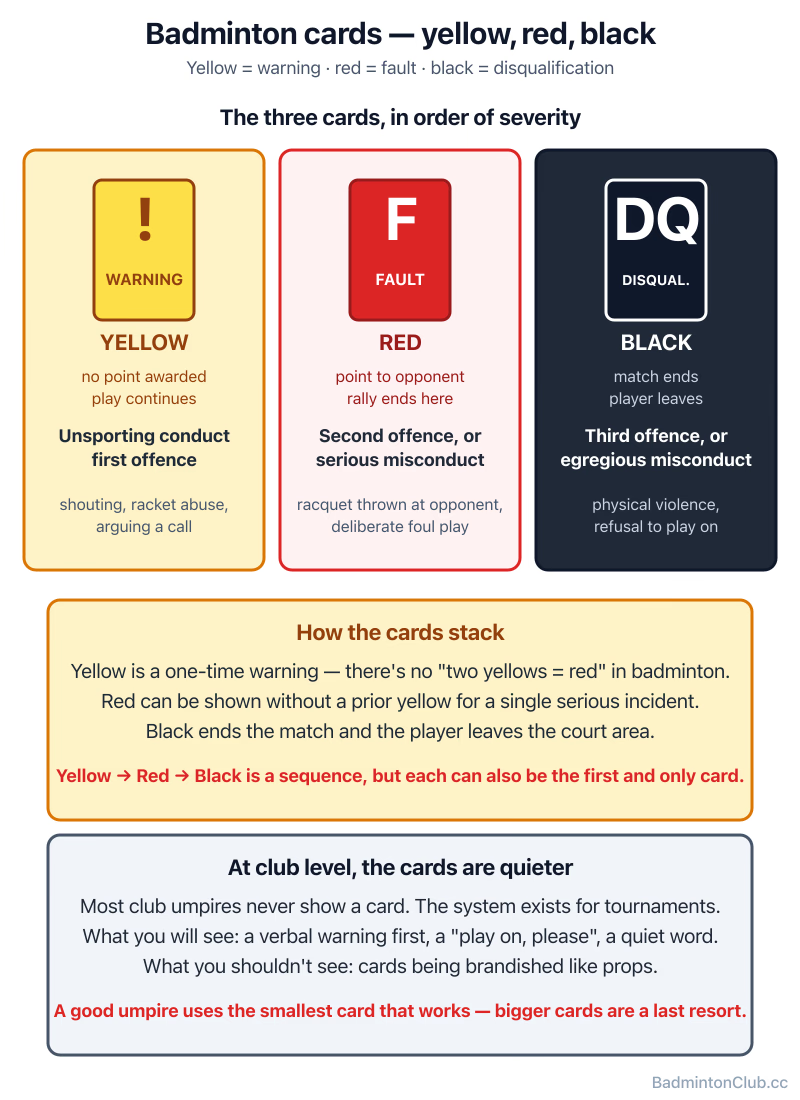
What actually earns a card — club night vs the pro tour
You'll almost never see a card at club level, and that's the point: they're for conduct, not for playing badly. What tips an umpire from a quiet word to a yellow is usually time-wasting — endless shuttle inspections, wandering off to towel down after every rally — or audible dissent and racket abuse. A red follows a repeat or something sharper, and it hands the opponent a point. A black (disqualification) is rare and serious, and the referee is pulled in. The practical takeaway for anyone stepping up from social play into a graded tournament: the umpire is also quietly timing your between-rally rituals, so the leisurely habits that are fine on a Tuesday can genuinely cost you a point. Cards are a separate category from the technical faults in badminton — those are called for things like a foot fault or an illegal serve, not for behaviour.
What each card means
- Yellow card — warning. A first offence (delaying, mild dissent, over-aggressive behaviour). One warning per player for the match; it stays on record.
- Red card — fault. A repeat or more serious offence. The opponent is awarded a point (and the serve), and it's recorded. Further red cards escalate.
- Black card — disqualification. The player or pair is disqualified from the match (and possibly the event) for serious or persistent misconduct.
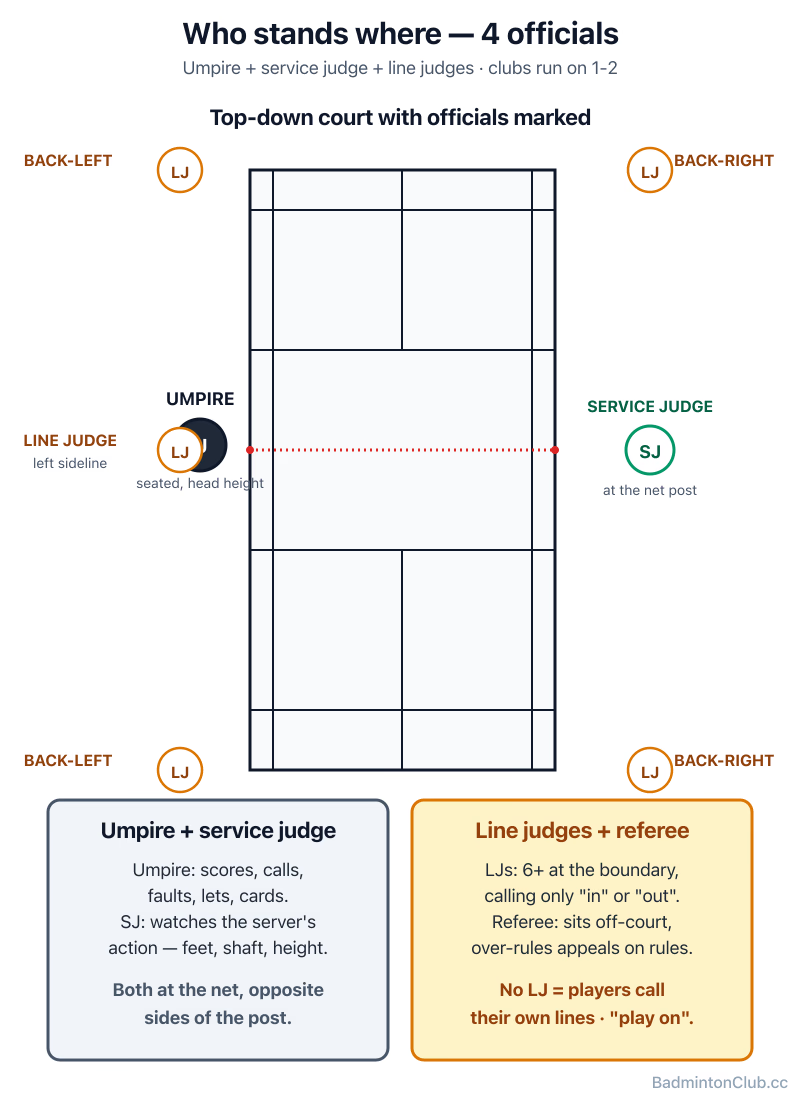
The officials
- The umpire runs the match, calls faults and lets, and issues cards.
- A service judge watches the serve (height/feet) at major events.
- Line judges call in/out on their boundary.
- The referee is in overall charge of the tournament and handles disputes and the most serious sanctions (a black card is given with the referee's involvement).
FAQ
- Q: What does a yellow card mean in badminton? A warning for misconduct.
- Q: What does a red card mean? A fault — the opponent gets a point — for a repeat or more serious offence.
- Q: What is a black card in badminton? Disqualification.
- Q: Who issues the cards? The umpire, with the referee overseeing serious cases.
- Q: What's the difference between the umpire and the referee? The umpire runs a single match; the referee is in charge of the whole tournament. For more on how matches are structured and scored, see the complete guide to badminton rules.
Publishing checklist (per article)
- Author + series come from
seriesmetaat the top:authorType: 'member',authorId: 6(superadmin), series tagBadminton Rules— not repeated per record. - Leave
articleSlugunset — the seed script generates it (PascalCase-hyphenated + suffix). - Cornerstones →
sitePriority: 10,recommendation: 'featured'(P1, S1, V1, C1, C4, F1); everything else →7,'normal'. status: 'published'+visibility: 'public'+type: 'article'on all — the/articlegate.- Set
publishedAttoNOW()on insert. - Generate all ~50 diagrams (≥2 per article, 3 per cornerstone), then upload + swap to CDN URLs before inserting — the seed script blocks insert while any local
../doc/...svgplaceholder remains or an article is under its image quota. Diagrams matter most for serving (V1, V2, V4) and court lines (C1, C4). - Do the human pass — each article's original block is the unique, human-voiced material; before publishing, drop in one real specific (club name, a photo of your own court/net, a recent score). That's the dependable way to read as genuine; no wording trick guarantees a detector passes.
- Verify
/articleafter insert — tag hub/article/tag-Badminton%20Rules, type hub/article/type-article, one detail URL (200 + diagrams render), count = 22. - Accuracy gate — every rule/figure verified against the current BWF Laws (cited at the foot); no number ships unverified, and if BWF amends a law, update the affected article. One wrong figure on a reference page costs trust across the series.
- Uniqueness/differentiation gate (SEO/GEO-critical) — before publishing each article, check its lead definition and original block aren't near-duplicates of the pages already ranking for that keyword; if a sentence could be copy-pasted from another site, rewrite it. The original block, the worked example, the custom diagrams and the original FAQ phrasing are what make the page different, not just correct — keep them genuinely original and non-overlapping with the other 21 articles.
Suggested publish order
- P1 pillar — the head term; links to everything.
- S1 Scoring, V1 Service rules, C1 Court dimensions, C4 Doubles lines, F1 Faults — the sitePriority-10 cornerstones (highest volume).
- V2 (1.15 m), V4 (even/odd), C2 (in/out), C5 (doubles rotation) — high "mid-match" intent + diagrams.
- The remaining S/V/C/F/E specifics.
Sources consulted (rule grounding, verified June 2026)
- Laws of Badminton (worldbadminton.com) · BWF — bwfbadminton.com
- Service 1.15 m: Badminton Insight — serving rules
- Court & net: Olympics.com — court size & net height
- Shuttle specs & speed test: BadmintonBites — shuttlecock standards
- Scoring/deuce/cap: JudgeMate — how badminton scoring works
Reminder: these are reference pages — accuracy beats flourish. Verify any figure against the current BWF Laws before publishing.
Badminton's yellow, red, and black cards are issued for misconduct — not mistakes. A yellow card is a warning, a red card hands the opponent a point, and a black card means disqualification. This guide covers what triggers each card, which official issues it, and why tournament players need to know the difference between the umpire and the referee.