Badminton Biomechanics: Forearm Pronation, Supination & the Kinetic Chain of a Smash
6 June 2026 · Badminton Fans
Almost every power stroke in badminton is created by forearm rotation — pronation (rotating the forearm inward) on forehand shots and supination (rotating outward) on backhand shots — released at the last instant as the final link in a kinetic chain that runs from the ground up through legs, hips, trunk, shoulder and elbow. Understanding this is what turns "swing harder" into "sequence better", and it's why timing beats muscle in this sport.
Pronation and supination — the real engine
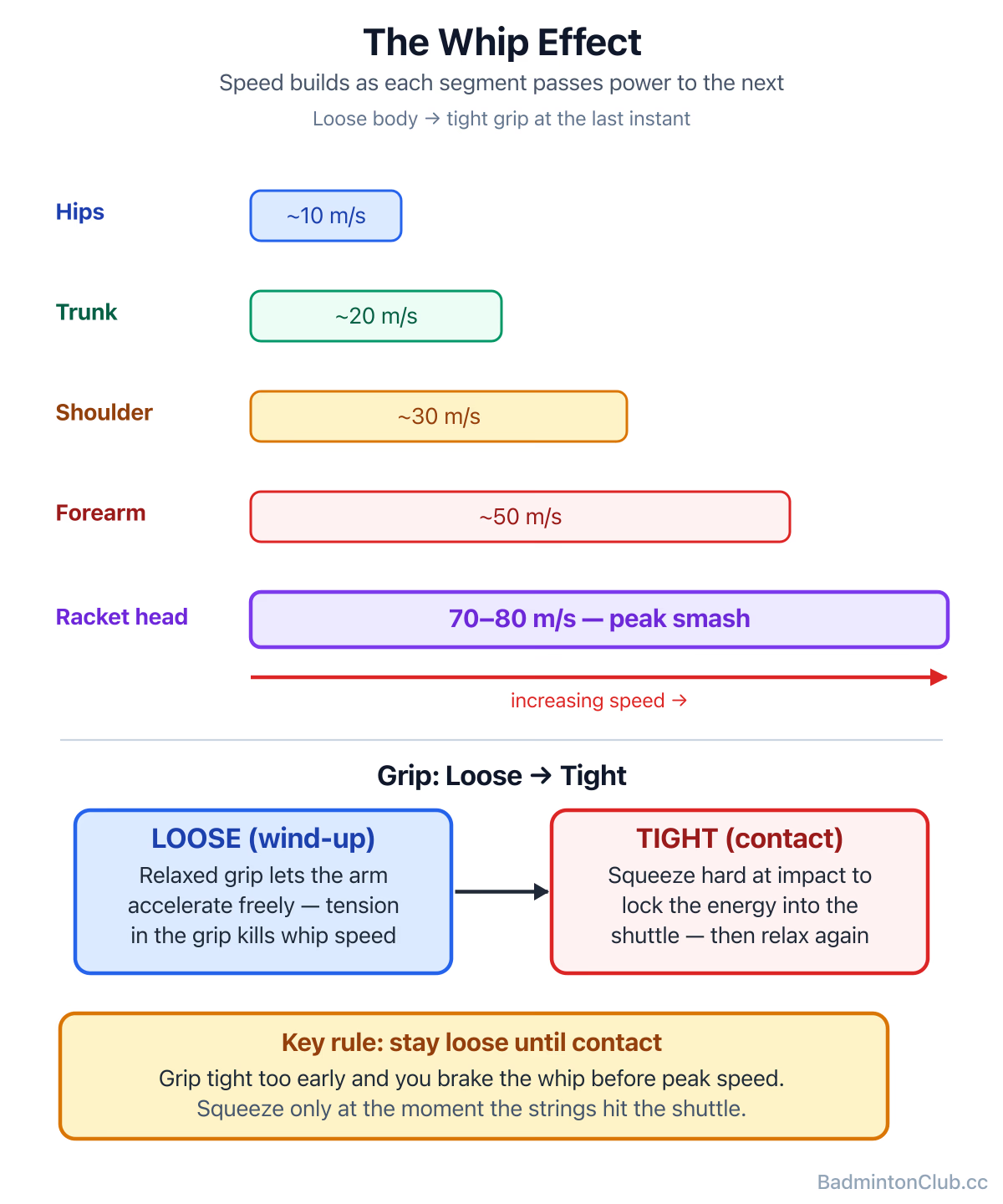
Pronation is the inward rotation of the forearm (palm turning down); on a forehand overhead the racket face whips from edge-on to flat-through-the-shuttle as the forearm pronates at contact. Supination is the reverse, outward rotation (palm turning up), and it powers the backhand overheads — the backhand clear and smash. This forearm rotation is where the racket-head speed is finally generated; the arm and shoulder are delivery, the forearm is the release. It's also why grip matters: a relaxed grip lets the forearm rotate freely and squeeze tight only at impact ("loose-to-tight"), while a permanently tense grip locks the rotation and kills the snap.
The kinetic chain — power from the ground up
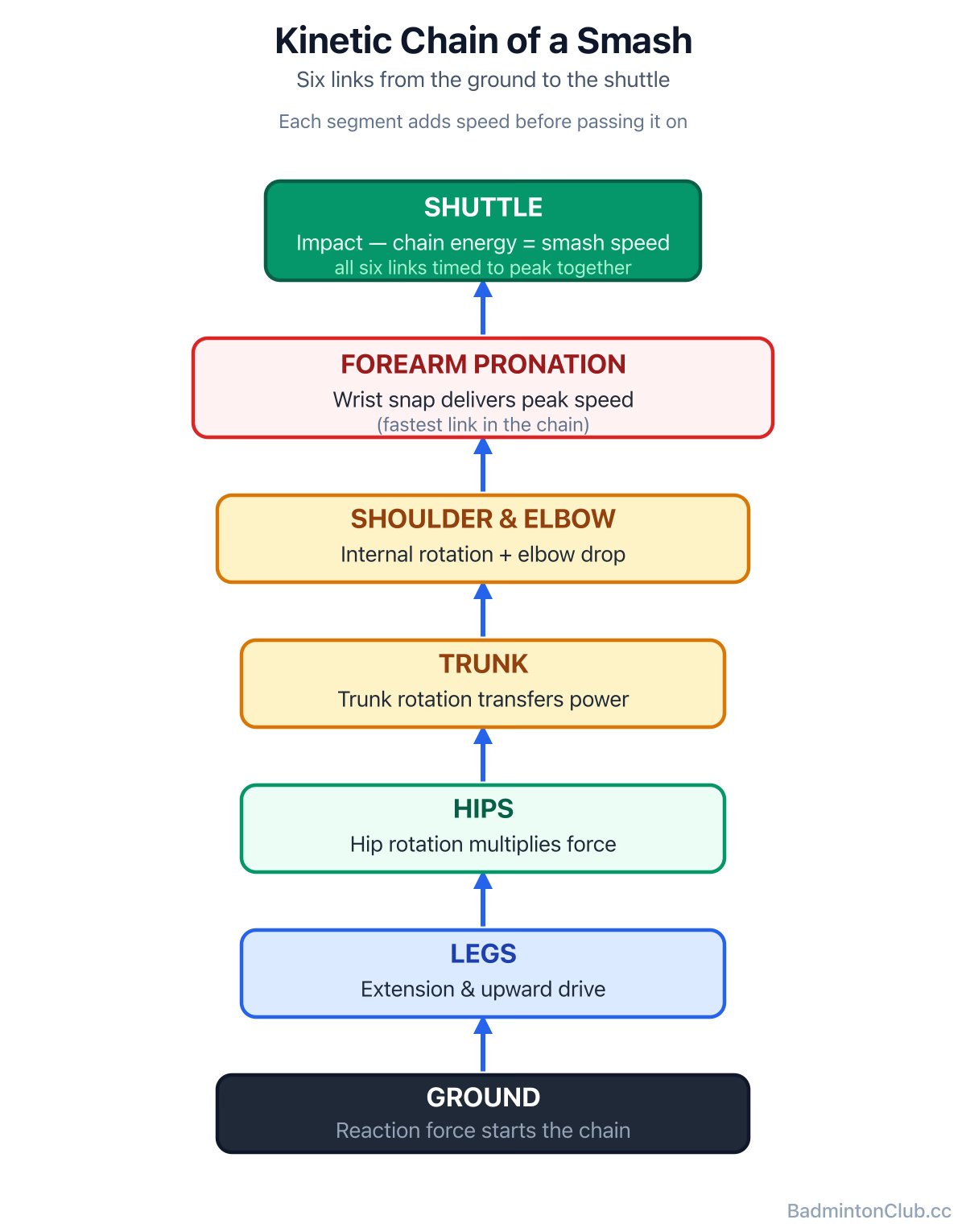
A smash isn't an arm action; it's a whole-body sequence. Force begins at the ground (legs pushing down and up), travels through hip and trunk rotation, up through the shoulder and elbow extension, and is finally released as the forearm pronates through the shuttle. Each link adds and passes on speed like a whip — and like a whip, if any link fires out of order or weakly, the tip (the racket head) slows. This is why strong people with bad sequencing smash softly, and why technically sound players generate frightening pace with little visible effort. Train the chain, not the arm.
Ankle stability and the body that supports it
The chain starts at the floor, so the ankles, knees and core that anchor and rotate the body are part of the stroke, not separate from it. Ankle stability matters twice over: it's where your ground force is transmitted from, and it's the joint most exposed in badminton's sudden stops, lunges and landings — rolled ankles are among the sport's most common injuries. The split step and chassé movements covered in badminton footwork drills are built around exactly this need: landing and re-accelerating without compromising ankle integrity. Single-leg balance work, calf and ankle strengthening, and controlled landing drills both improve power transfer and protect you from the lunge-and-land loads the game imposes. Strong, stable foundations don't just prevent injury; they make the whole kinetic chain more efficient.
What this looks like on a club night
Tell a frustrated club player "it's pronation, not power" and you can watch the lightbulb go on — suddenly the shuttle cracks off the strings instead of being shoved. The biggest, strongest player in most halls rarely has the best smash, because power here is a sequencing skill, not a strength one; the wiry teenager who's been coached properly out-hits them every time. The other under-appreciated truth is the ankles: I've seen far more seasons ended by a rolled ankle on a bad landing than by any dramatic injury. Build the rotation, build the chain, and build the stable base underneath it — in that order.
What the whip should feel like
A properly sequenced smash feels like the racket throws itself — the wrist isn't doing work, it's releasing energy that came from below. The hand should feel almost passive in the last centimetres, and the racket head should seem to flick out on its own. If you feel your hand "gripping" through contact, you're tensing instead of letting the chain release. The whip effect is real in the hand: a relaxed grip that whips tight at the last instant. This same loose-to-tight grip is the physical basis for the wrist snap and double-action deception that freezes opponents — the deceptive potential comes directly from the forearm rotation being held and then released at the last split second. A useful drill: hit slow half-smashes at first, paying total attention to the feeling in the wrist — you should sense the chain arriving in your hand, not your hand forcing the chain. The moment you "let go" into the snap, the shuttle sounds completely different.
FAQ
- Q: What is forearm pronation in badminton? The inward rotation of the forearm (palm turning down) released at contact on forehand overheads — it's what finally generates racket-head speed on a smash or clear.
- Q: What is supination in a badminton swing? The outward rotation of the forearm (palm turning up) that powers backhand overheads like the backhand clear and smash — the mirror of pronation.
- Q: What is the kinetic chain in a badminton smash? The ground-up sequence — legs, hips, trunk, shoulder, elbow, then forearm — that builds and passes on speed like a whip, released through the forearm into the shuttle.
- Q: Why is timing more important than strength for power? Because power comes from sequencing the kinetic chain and releasing forearm rotation at the right instant; poor sequencing wastes strength, good sequencing multiplies it.
- Q: Why does ankle stability matter in badminton? It transmits ground force into the kinetic chain and protects you from the rolled-ankle injuries the sport's sudden stops and landings cause — so it aids both power and durability.
- Q: How do I get a relaxed-then-fast forearm? Use a "loose-to-tight" grip — hold the racket lightly so the forearm can rotate freely, and squeeze hard only at the moment of impact.
Forearm pronation and supination are the final release points of a smash's kinetic chain — a ground-up sequence through legs, hips, trunk, shoulder, and elbow. This piece explains how the chain works, why timing beats strength, and why ankle stability underpins both power and injury prevention. For anyone wanting to smash harder without swinging harder.