Badminton Lunges & Court Movement: Net Lunge, Rear-Court Steps, Scissor Kick & China Jump
6 June 2026 · Badminton Fans
The lunge is how you reach and recover at the net (a final long step onto the racket leg, knee over toes, that absorbs your momentum and pushes you straight back to base); the scissor kick is the in-air leg swap that lets you smash from the rear court and land facing the net; and the China jump is a fast sideways jump used to intercept flat shots early. These are the specialised movements that get you to the corners and back.
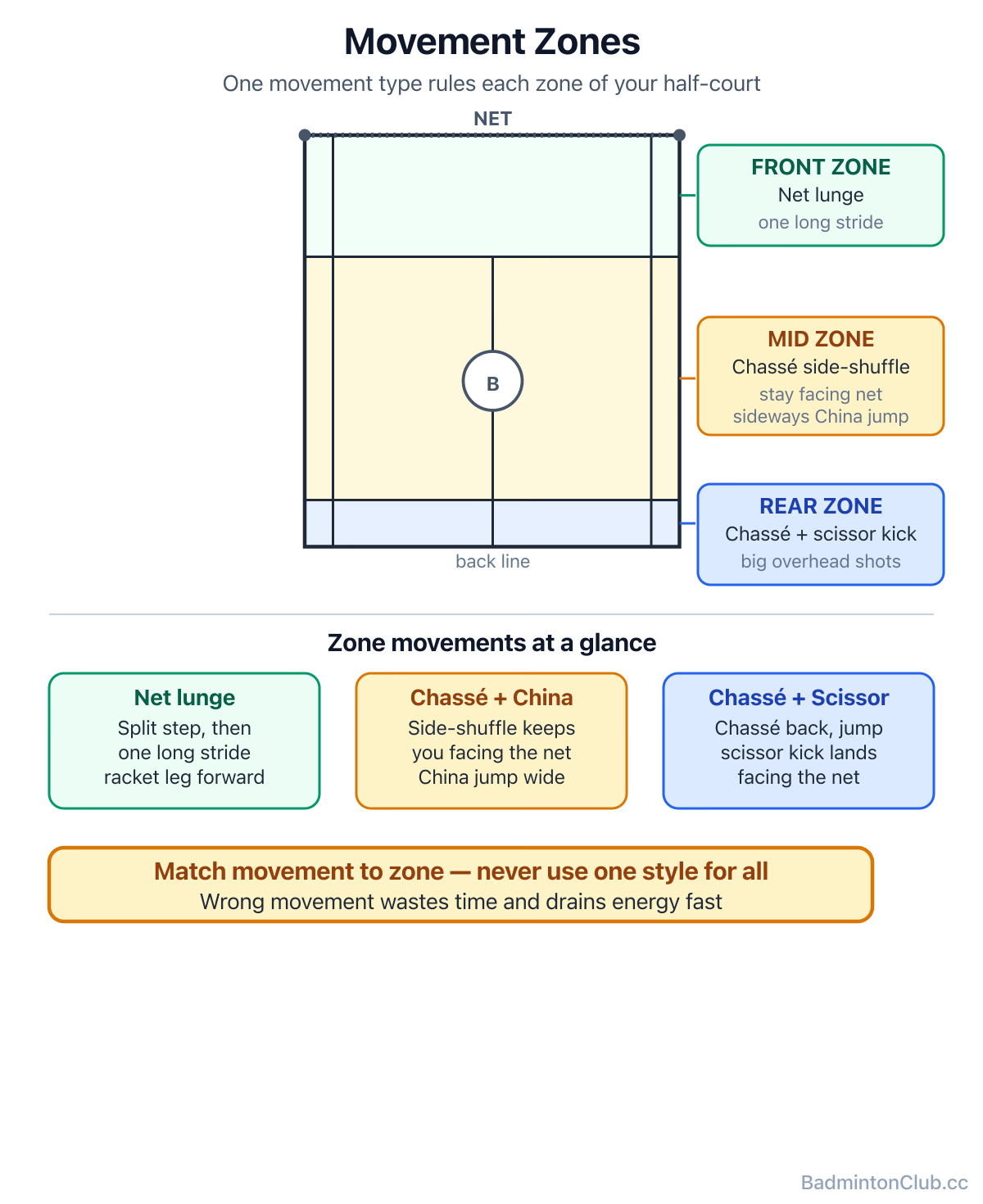
The lunge and lunging recovery
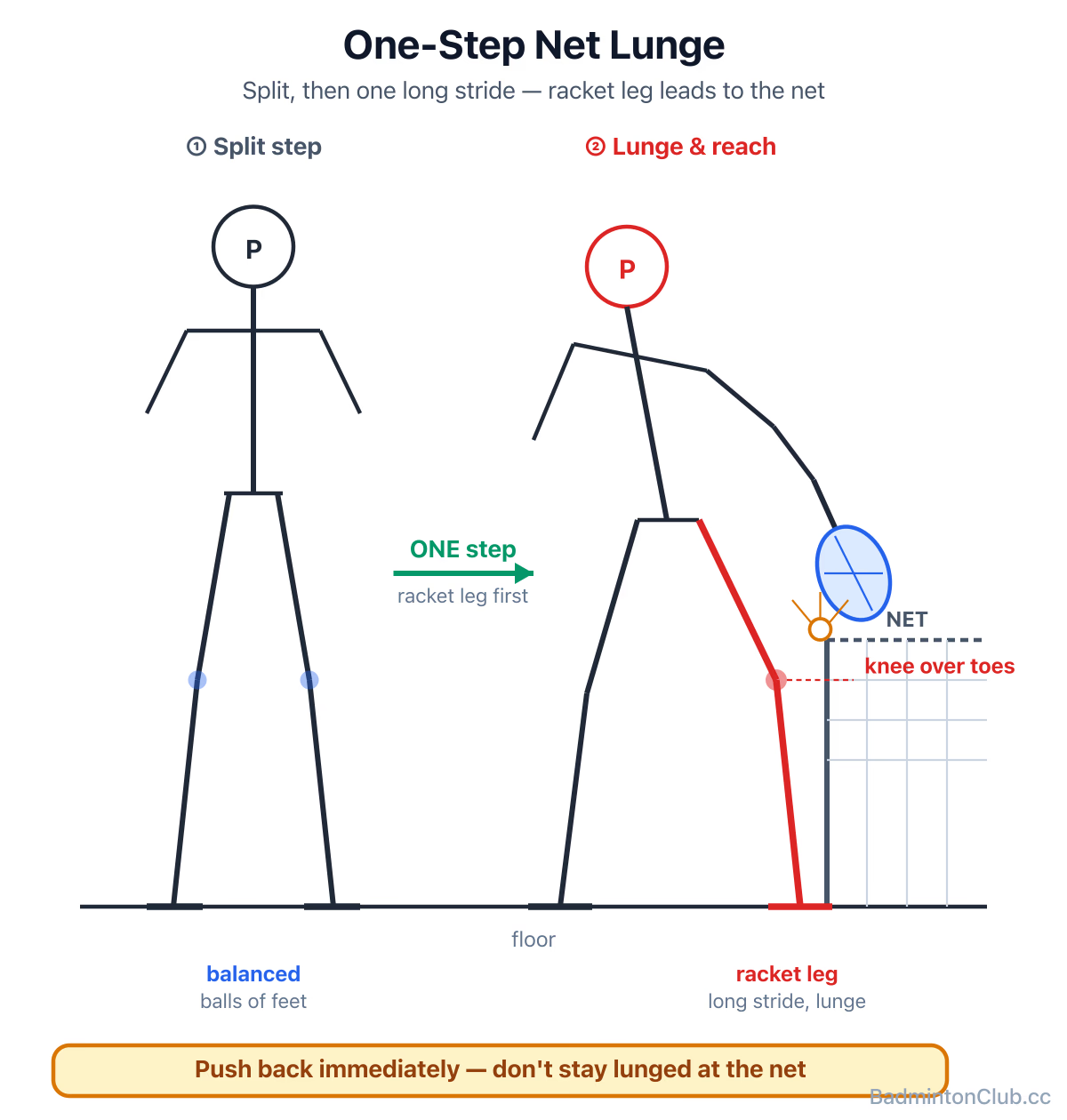
A lunge is the last step into the front and mid-court: a long stride onto the racket-side leg, front knee bent over (not past) the toes, back leg trailing for balance, body lowered so you can reach the shuttle out in front. Crucially, the lunge is also a recovery tool — landing on a bent front leg loaded like a spring lets you push back off it immediately toward base, instead of stepping out of the corner slowly. The one-step net lunge (split step, then a single explosive lunge to the net) is the quickest way to attack a net shuttle. Protect the front knee with good alignment; sloppy lunges are where a lot of badminton knee niggles come from.
Rear-court movement and the scissor kick
Getting to the rear court combines a turn, chassé or crossover steps back, and often a jump to hit. The classic finish is the scissor kick (jump-and-switch): you jump to smash or clear and swap your legs in the air — racket leg swinging back, non-racket leg coming forward — so you land balanced, facing the net, already moving back to base. It both adds reach/height to the overhead and solves the recovery problem in one motion. Rear-court interception movement is the aggressive version: stepping in to take a shuttle early in the mid/rear court before it drops, to keep the attack, rather than retreating and letting it fall.
The China jump and explosive sideways movement
The China jump (a sideways scissor/jump used by many top Asian players) is a fast lateral take-off to intercept flat shots and drives early — you spring sideways off the outside leg, hit, and land ready. It's an advanced way to take the shuttle earlier and higher in fast exchanges, keeping you on the front foot. All of these share one principle: explosive push-off and balanced landing. The power to lunge deep, scissor-kick high or China-jump sideways comes from the legs and a strong core, which is why off-court strength and plyometric work pays straight back into court coverage.
What this looks like on a club night
Whether you're running rotations on BadmintonClub.cc or just organising a casual session, the lunge is where club players quietly wreck their knees, because they lunge with the knee caving inward or drifting past the toes, and they don't load the leg to recover — so they're stuck in the corner after every net shot. Fix the alignment (knee tracking over the foot) and learn to bounce back out of the lunge, and both your court coverage and your knees will thank you. The scissor kick looks athletic and intimidating, but its real gift is mundane: it gets you back to base after a rear-court hit. Most people who can't cover the back court don't lack speed — they lack the recovery step.
The "quiet feet" cue
On a wooden or sprung hall floor, listen to your feet as you play. The better movers are almost silent — soft landings, no scraping on the chassé, no scuff on the lunge. Loud feet are usually rushed feet; quiet feet mean balanced, controlled movement with the energy going into the shuttle, not into the floor. It's a free, immediate audio cue for whether you're moving with economy or just running. Practise a 10-minute session deliberately trying to make no sound on the chassé; you'll find the knees bend a touch deeper, the landing softens, and the whole movement becomes a beat more controlled. The same cue also works for the opponent — listening to their feet tells you whether they're hurried or composed.
FAQ
- Q: How do you lunge correctly in badminton? A long final stride onto the racket-side leg with the knee bent over (not past) the toes and the body low, reaching the shuttle in front — then push back off that loaded front leg to recover.
- Q: What is a one-step net lunge? A split step followed by a single explosive lunge straight to the net — the fastest way to attack a net shuttle.
- Q: What is a scissor kick in badminton? An in-air leg swap on a rear-court overhead — racket leg back, front leg forward — that adds reach and lets you land balanced, facing the net, ready to recover.
- Q: What is the China jump? A fast sideways jump used to intercept flat shots and drives early, springing off the outside leg to take the shuttle higher and keep the attack.
- Q: How do I protect my knees when lunging? Keep the front knee tracking over the foot (not caving in or past the toes), land softly on a bent leg, and build leg strength off court.
- Q: Why can't I cover the rear court? Usually a missing recovery step, not a lack of speed — the scissor kick and a prompt return to base are what get you back in time.
Master the key badminton movement techniques — the net lunge, scissor kick, and China jump — that get you to the corners and back. Covers correct lunge alignment, rear-court scissor recovery, explosive sideways movement, and the "quiet feet" cue that shows whether you're moving with control or just rushing around the court.