Is the Line In or Out in Badminton? The Boundary Rule (With Diagrams)
6 June 2026 · Badminton Fans
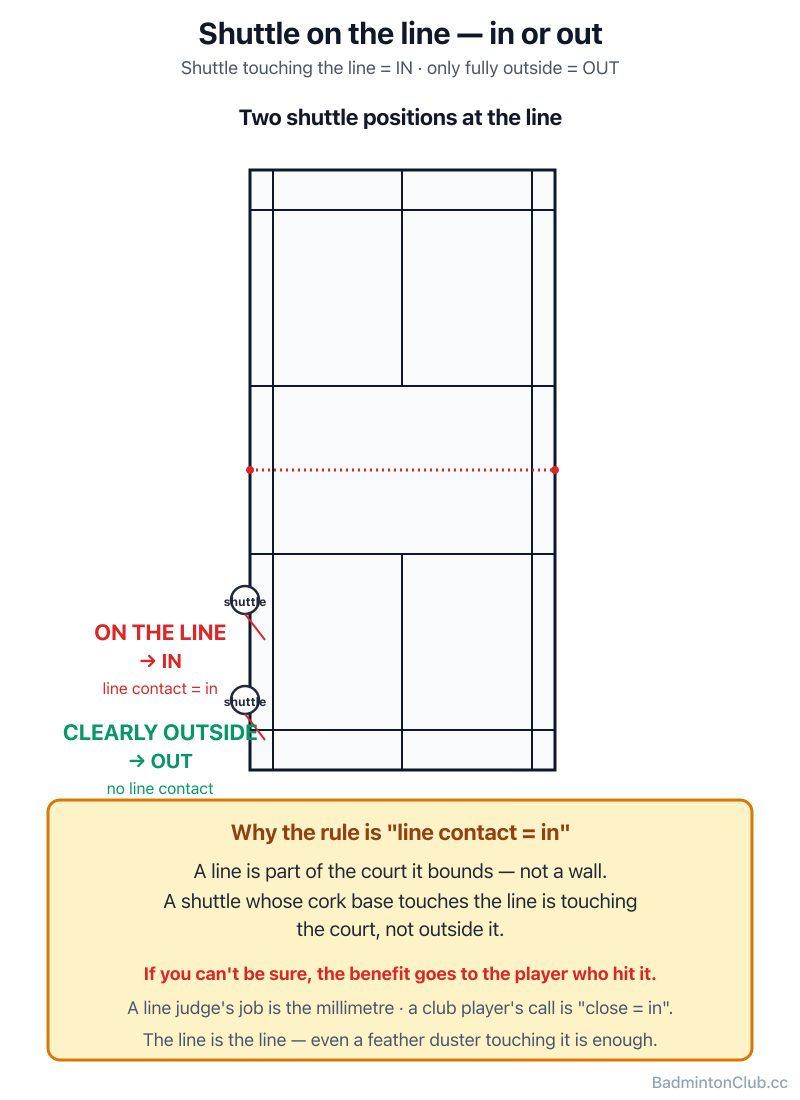
If any part of the shuttle touches a boundary line, it is in. A shuttle is judged by where it first lands, and the line counts as part of the court — so a shuttle clipping the line is good.
How a line judge actually watches a shuttle land
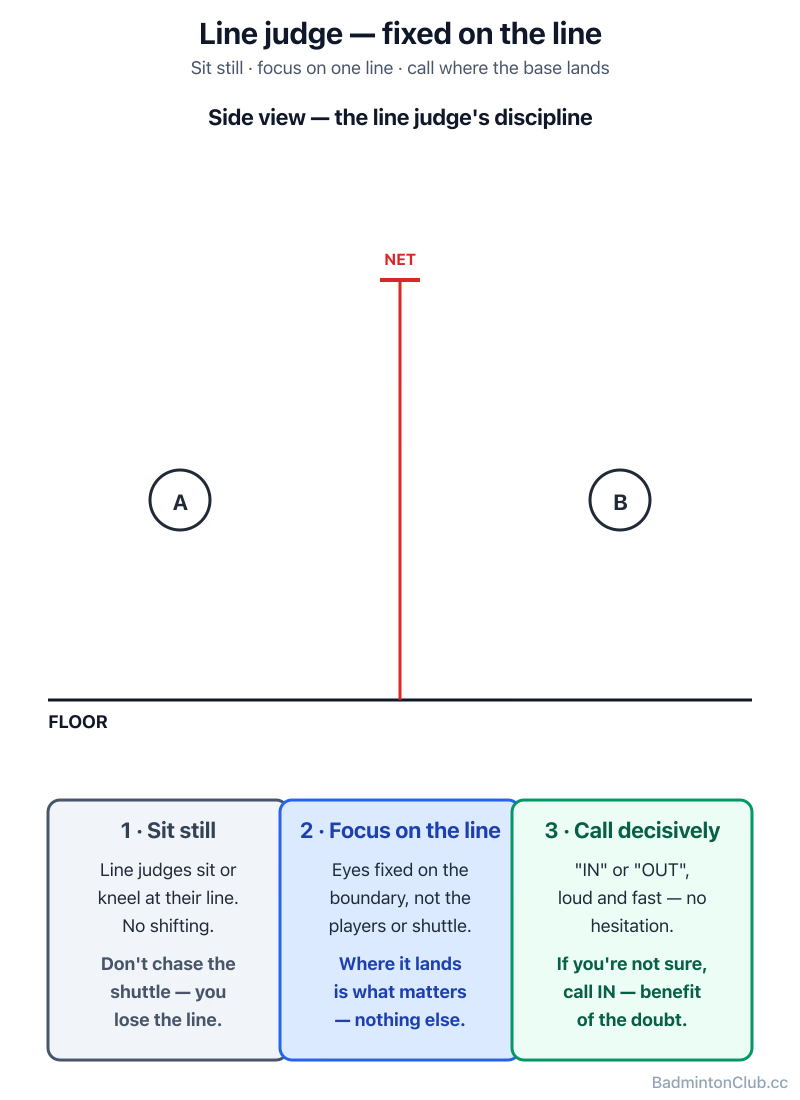
Good line judges don't follow the flight — they lock onto their line and wait for the base to arrive, because the only thing that counts is the first point of contact with the floor. A shuttle can lean, skid, or topple outward after it lands and it changes nothing: where the cork first touches is the verdict, and a feather's width of line contact is in. This is why the honest way to call it in casual play is from the side, level with the line, not from across the net where everything looks long. When two of you genuinely can't agree at club level, the fair move is to replay the rally, not to bluff a call you didn't see.
The rule
- The shuttle is in if it lands inside the relevant boundary or touches the line.
- It's judged by the first point of contact with the floor — where the base lands.
- Use the correct boundary for the format: singles uses the inner sidelines (no side alleys); doubles uses the outer sidelines.
Who calls it
In casual play the players (or the side it lands nearest) call it; at tournaments line judges rule on each boundary and their call stands unless overruled by the umpire (or challenged via review where available). Landing outside the boundary is one of the most common ways to lose a rally — for a full breakdown of every way a rally can end, see What Is a Fault in Badminton? Every Fault That Loses You the Rally.
Example
A clear in singles: the shuttle lands on the inner sideline → in for singles. The same shuttle landing in the side alley → out for singles but in for doubles. Boundary rules are just one part of the broader ruleset — the complete 2026 badminton rules guide covers scoring, serving, and court lines in full.
FAQ
- Q: Is a shuttle on the line in or out? In — touching the line counts as inside the court.
- Q: How is "in or out" decided? By where the shuttle first touches the floor.
- Q: Are the boundaries different in singles and doubles? Yes — singles excludes the side alleys; doubles includes them.
- Q: Who decides close calls? Players in casual play; line judges and the umpire at tournaments.
- Q: Does the shuttle's lean or skid matter? No — only the first point of contact counts.
In badminton, any shuttle that touches a boundary line counts as in — the rule is decided by where the base first contacts the floor, not where it skids or leans afterward. This guide explains the exact boundary rule, how line judges apply it, and why singles and doubles use different court lines.