Badminton Smash Variations: Stick Smash, Half Smash, Around-the-Head & Body Smash
6 June 2026 · Badminton Fans
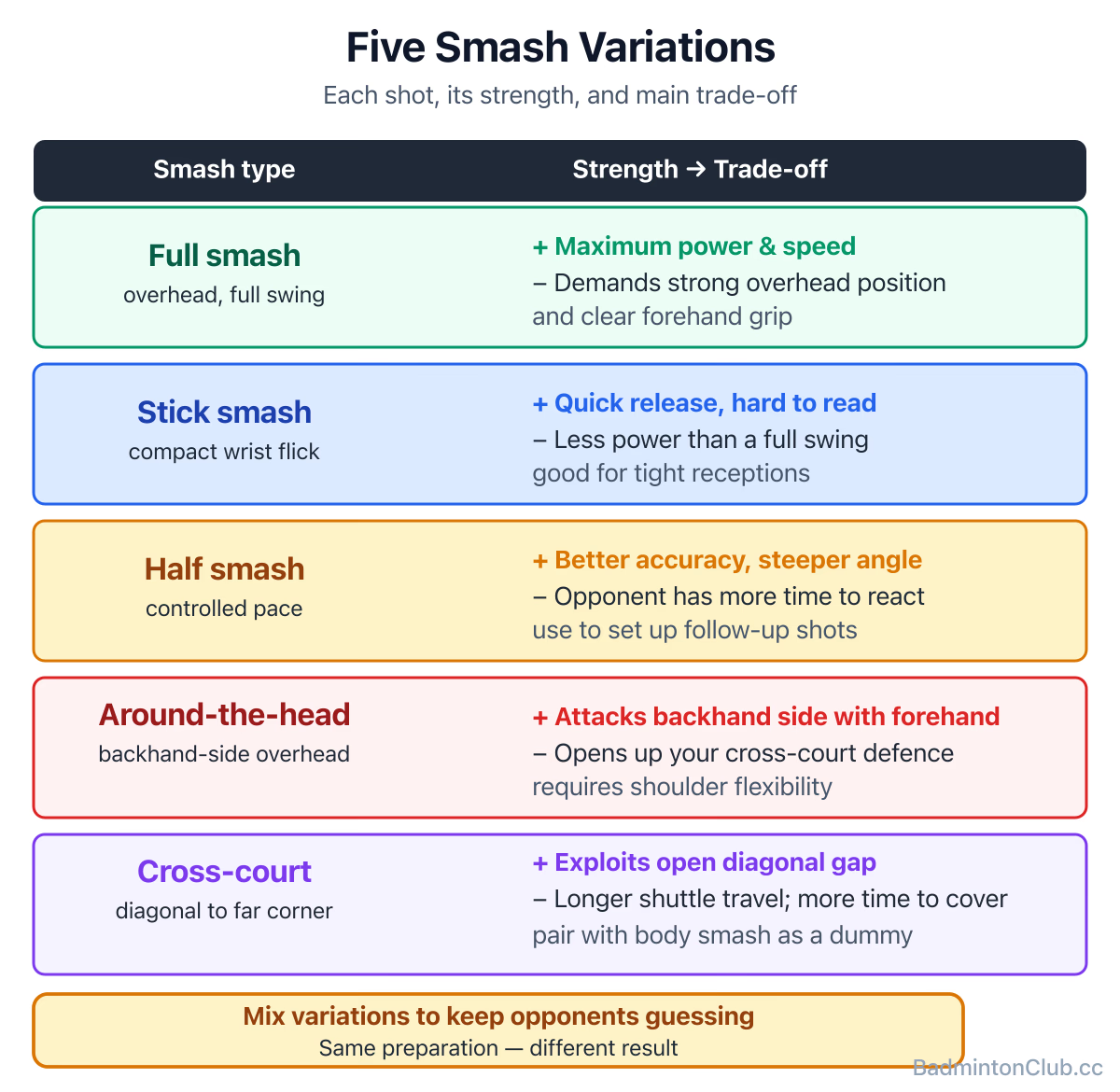
Beyond the full power smash there are five variations worth owning: the stick smash (a short, fast wrist-snap smash with little backswing), the half smash (less power, much steeper angle), the around-the-head smash (a forehand-faced shot taken over your non-racket shoulder), the body smash (aimed straight at the opponent), and the cross-court smash (steep but slower, and risky to your own defence). Each trades raw speed for angle, disguise or placement.
Stick smash and half smash — speed vs angle
The stick smash is the deception specialist: almost no backswing, a compact "stick"-like jab driven purely by a late wrist-and-forearm snap. It's slower than a full smash but arrives early, because you've cut the wind-up the opponent reads. The half smash goes the other way — you deliberately take pace off (maybe 70%) to buy a much steeper angle that dives into the forecourt. On a slow-drop court the half smash is often the smarter attack: it's steep enough to force a weak lift but controlled enough that you keep your balance for the next shot. A full-power flat smash that the opponent blocks back is frequently a worse position than a tidy half smash.
Around-the-head, body and panhandle
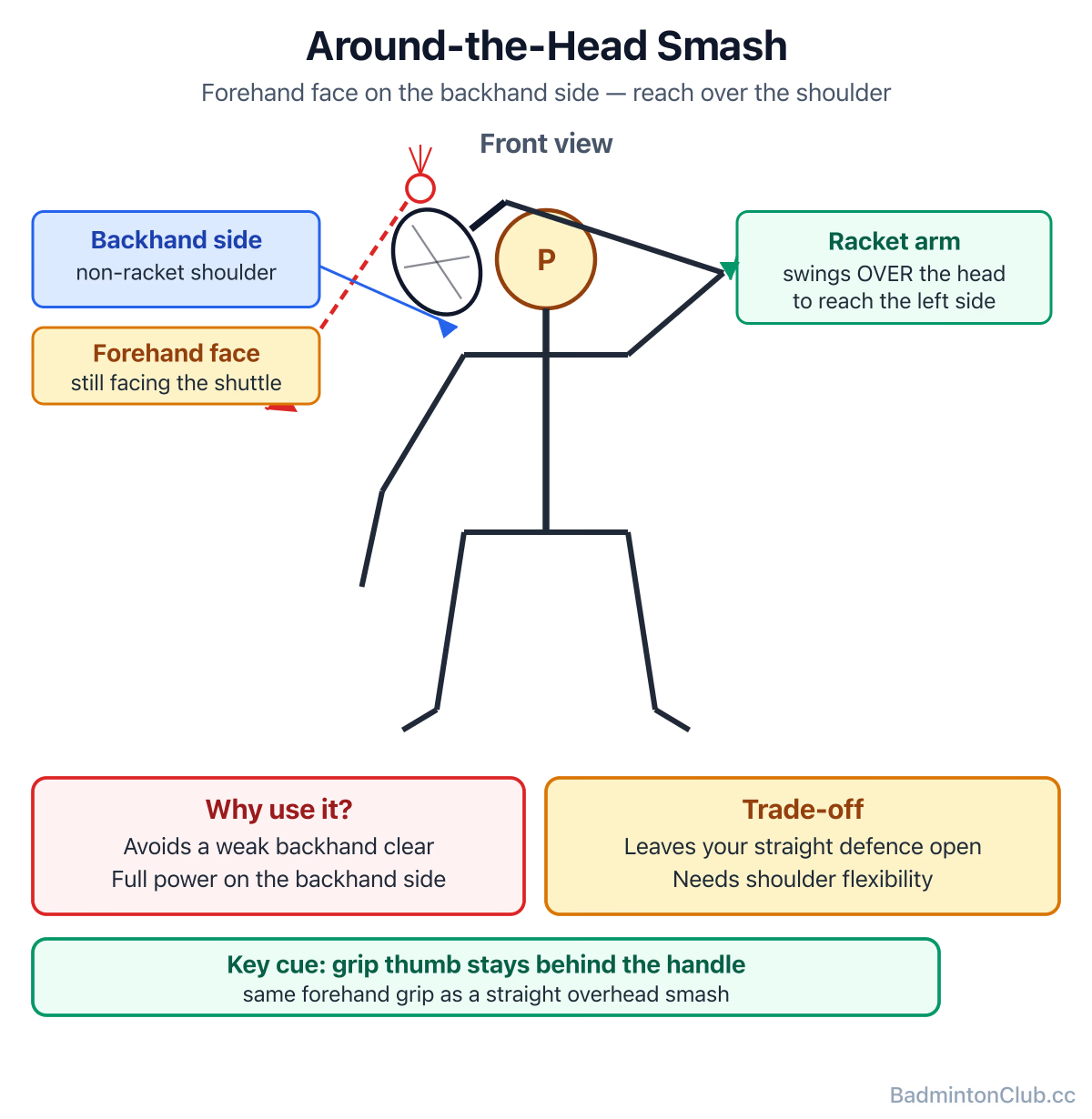
The around-the-head smash lets you hit a forehand-face shot on your backhand side: you reach over your non-racket shoulder, contorting slightly, to keep the stronger forehand stroke instead of resorting to a weak backhand. It's tiring and pulls you off balance, so recover fast. The body smash ignores the corners and fires straight at the opponent's hip or racket shoulder — the hardest place to defend from, because they can't choose forehand or backhand cleanly. The panhandle grip (frying-pan grip, racket face square to the net) shows up here: it's wrong for a standard overhead, but situationally useful for a steep net-area kill or a quick around-the-net jab. Use it deliberately, not by accident.
The cross-court smash (and its hidden cost)
A cross-court smash travels the longest diagonal, so it's slower and it leaves you exposed: you've hit away from your own court centre, and a good block down the line wrong-foots you completely. Treat it as an occasional surprise, not a staple — best when the opponent is leaning to cover the straight smash, or in doubles when your partner is set to intercept the reply. For other ways to mislead defenders before committing to pace, see fake smash and check smash. Drill it as a placement, not a power shot: straight, straight, straight, then cross — the cross only works because the straight one was believed.
What coaches actually shout from the side
"Stop hitting the corners!" — because club players fall in love with the cross-court smash and lose more points to their own bad position than they win with the winner. The shots that actually score at intermediate level are the boring ones: the body smash that jams someone up, the half smash that forces a weak net reply. There's a reason the body smash is sometimes half-jokingly called the most polite way to win a point — nobody enjoys defending a shuttle aimed at their own navel, and it's far higher-percentage than threading a line.
A small dose-to-dose rule
In a real match, the boring rule of thumb for shot mix: of every 30 smashes you hit, about 20 should be full-power, 6–7 half-smashes, 2–3 stick or body. The clever stuff works because the boring stuff is believed. If your last ten points in the notebook were all stick smashes and cross-courts, you've lost the threat of the simple straight one, and you'll start getting blocked for winners. The trick variations are spices — a few per game, well-timed, not a steady diet. Set a quiet mental cap (no more than 3 "fancy" smashes a set) and let the rest of the work be the plain one, played slightly better than last time.
FAQ
- Q: What is a stick smash in badminton? A short, fast smash with almost no backswing, generated by a late wrist-and-forearm snap — slower than a full smash but harder to read and quicker to arrive.
- Q: What's the point of a half smash? It trades power for a steeper downward angle and better control, often forcing a weaker reply than a flat full-power smash.
- Q: Why hit an around-the-head smash instead of a backhand? It keeps your stronger forehand stroke on shuttles over your backhand shoulder, at the cost of balance and recovery time.
- Q: Where should a body smash aim? At the opponent's hip or racket shoulder — the spot where they can't cleanly choose forehand or backhand.
- Q: Is the cross-court smash a good idea? Only occasionally — it's slower and leaves your court open. Use it as a surprise once the straight smash is respected.
- Q: When should I use a panhandle grip? Situationally — steep net kills or quick around-the-net jabs — not for a normal overhead smash.
Master five badminton smash variations beyond full power: stick smash uses a compact wrist snap to disguise timing, half smash trades speed for a steeper angle, around-the-head keeps your forehand on the backhand side, body smash jams opponents at the hip, and cross-court smash surprises when the straight one is respected. Includes shot-mix rules and common coaching fixes.