Badminton shuttlecockBadmintonClub.cc
Skill Level Test
Clubs Near Me
Venues Near Me
Articles
Register Club
Sign Up
Sign In

Badminton Guides, Rules & Gear Reviews

#Badminton Court Rotation System#Badminton Rules#Crowded Badminton Club Rotation#Promotion Relegation Badminton#Random Partner Badminton#American Tournament Badminton#Americano Format Badminton#Americano Rules Badminton#Americano Tournament Generator For Badminton#Asian Badminton Club System#Badminton 2020 Rule#Badminton 30 Point Cap#Badminton Abcd Grading#Badminton Americano#Badminton Box League#Badminton Box System#Badminton Challenge Board#Badminton Club Queue System#Badminton Court Allocation#Badminton Court Queue
Article
6 Jun 2026

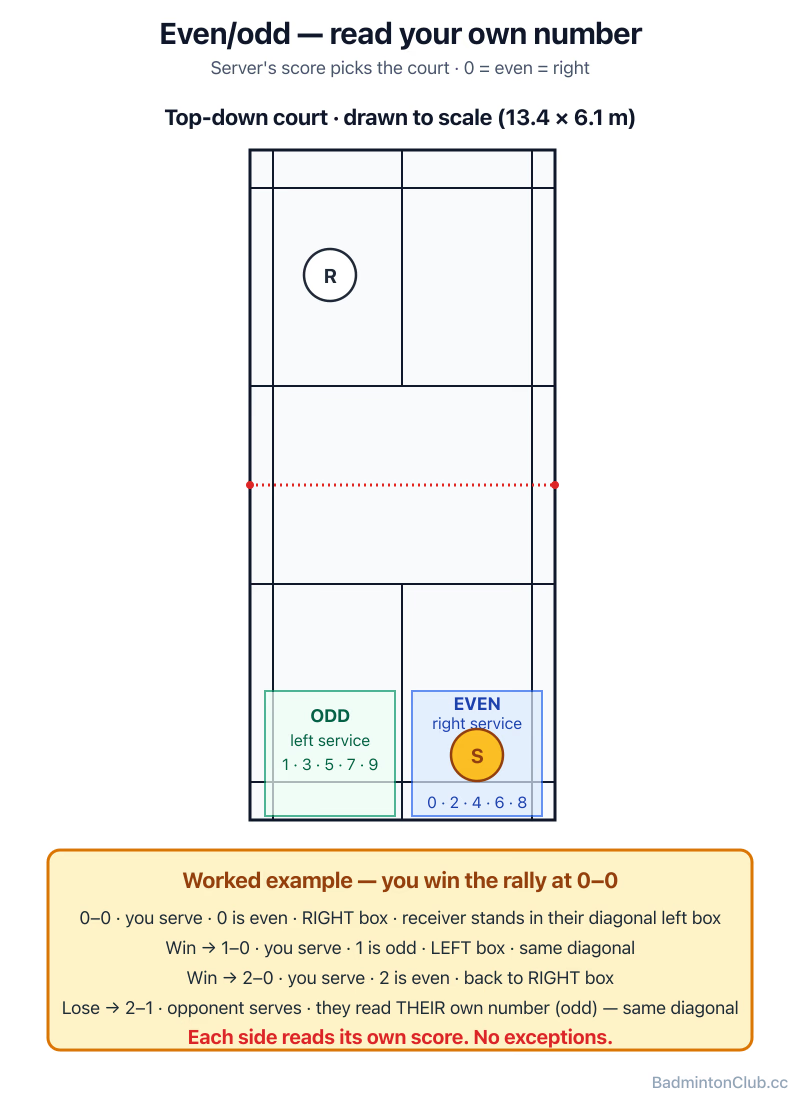
Where Do You Stand When Serving in Badminton? Even & Odd Service Courts Explained

Even score means serve from the right, odd score means serve from the left — and the server's own score is what decides it. This guide explains the even/odd rule for singles and doubles, where the receiver stands, and the one mental habit that stops you serving from the wrong court.

#Badminton Rules#Where Do You Stand When Serving In Badminton#Even Odd Score Serving Badminton#Badminton Service Court Sides
Article
6 Jun 2026

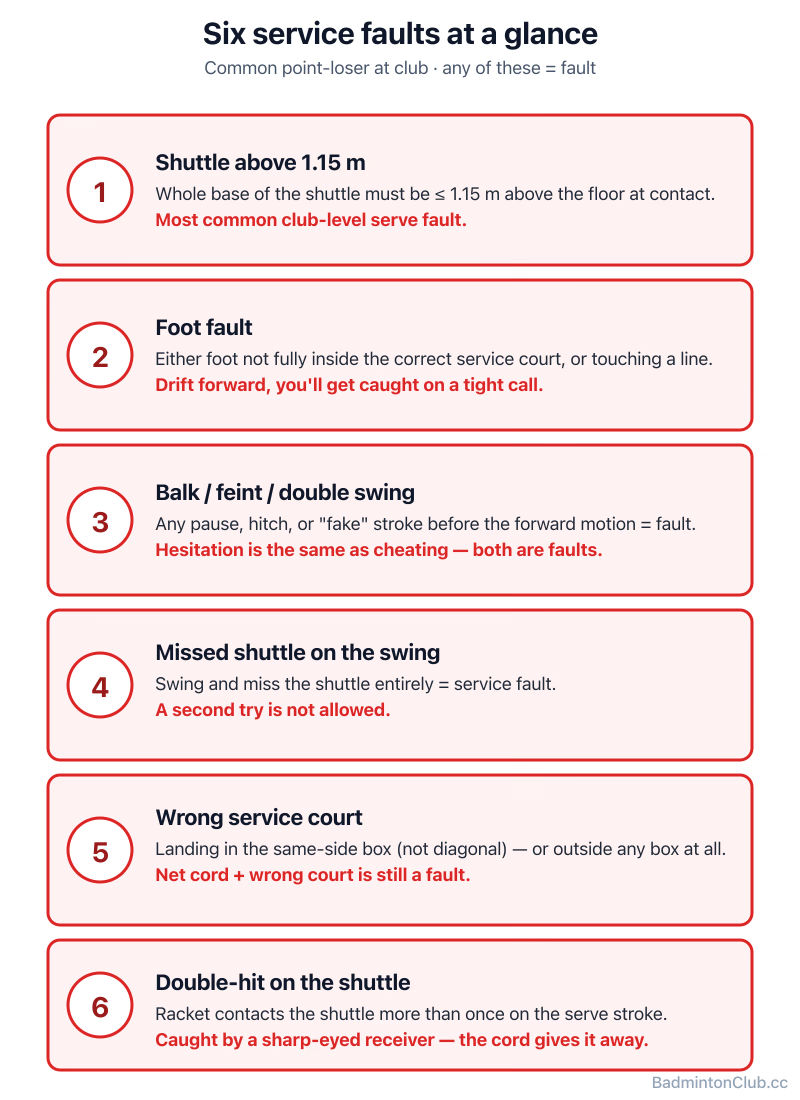
Faults in Badminton Service: Every Way to Lose a Point on Your Serve

Service faults in badminton cover every illegal serve — wrong height, foot fault, balk, missed shuttle, double hit, or wrong court — and each one hands the rally straight to your opponent. This guide lists every server and receiver fault with a plain-English explanation, so you know exactly what to avoid the next time you step up to serve.

#Badminton Rules#Faults In Badminton Service#Badminton Service Fault#Badminton Double Hit On Serve
Article
6 Jun 2026

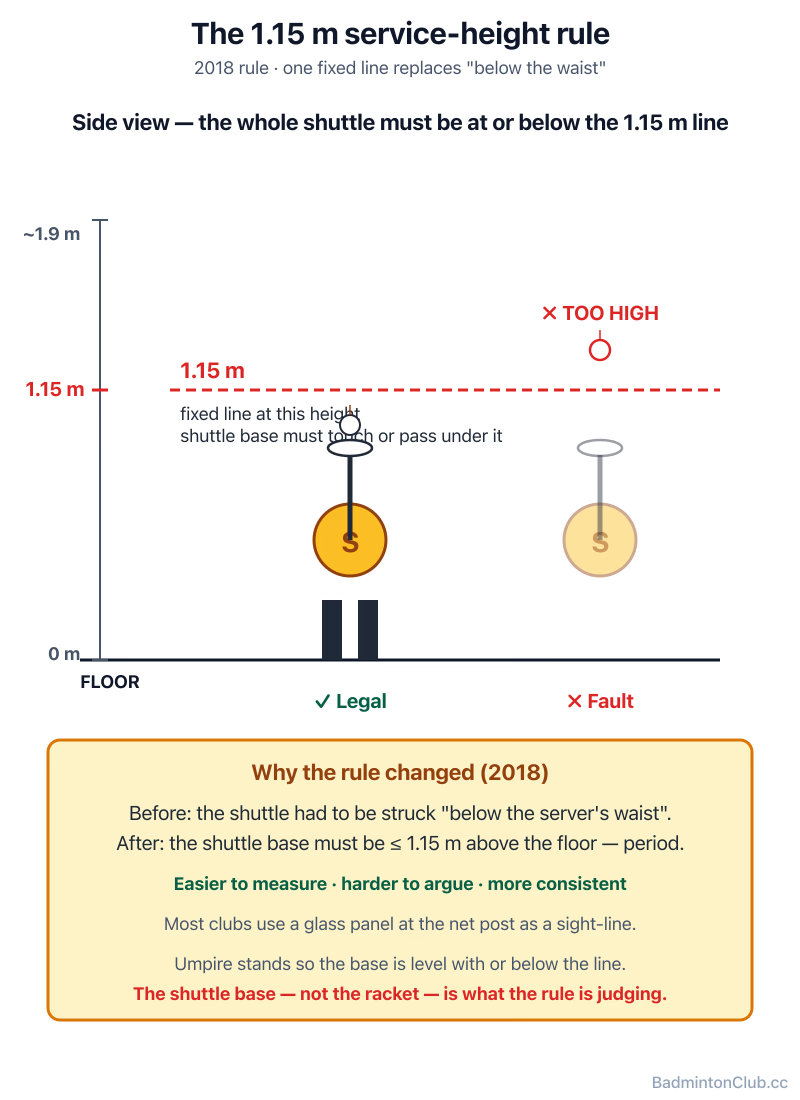
Badminton Serve Height Rule: The 1.15-Metre Service Law Explained (With Examples)

The badminton serve height rule requires the whole shuttle to be below 1.15 metres at the moment of contact. Learn why BWF introduced this fixed line in 2018, how it replaced the old waist-height judgement, and what it means for your low serve and flick serve today.

#Badminton Rules#Badminton Serve Height Rule#Badminton Rule 115 Metres#Badminton Service Height
Article
6 Jun 2026

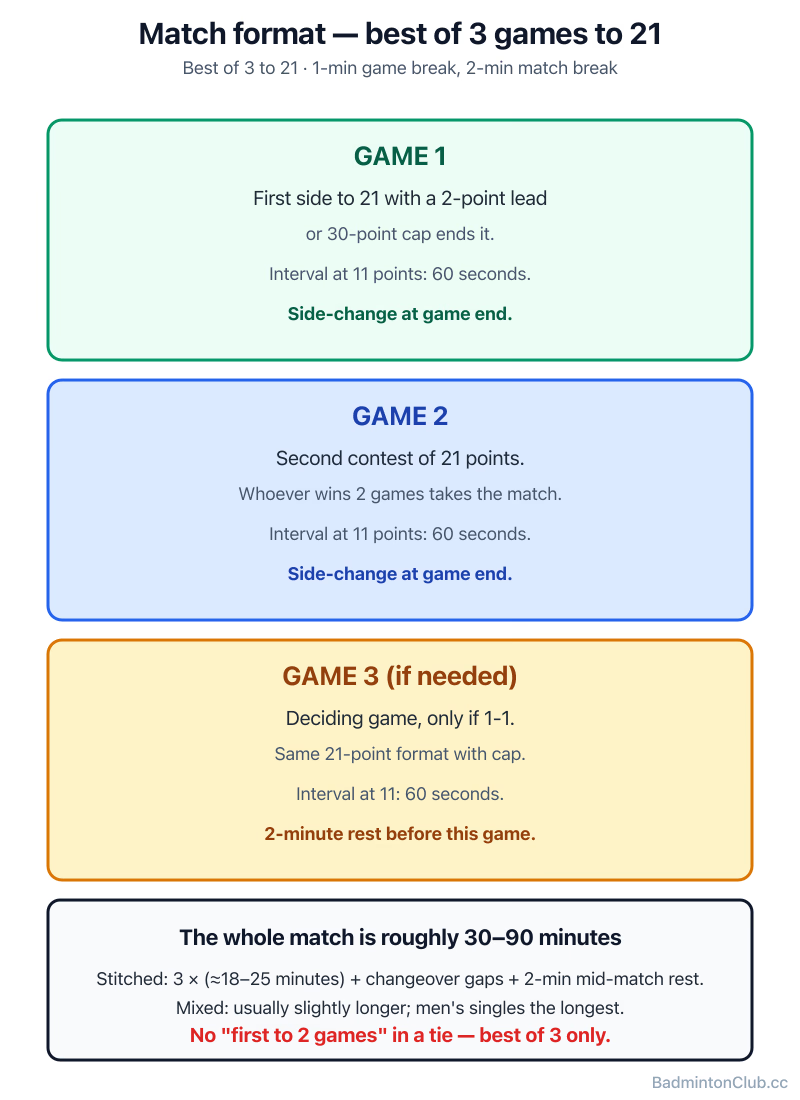
How Many Games (Sets) Are in a Badminton Match? Best-of-Three Format Explained

A badminton match is best of three games — first to win two takes the match. Each game goes to 21 points using rally scoring, with a 2-point lead required and a 30-point cap at deuce. Learn the interval rules, end changes, and how long matches really last.

#Badminton Rules#How Many Sets In A Badminton Match#Badminton Match Format#Best Of Three Badminton
Article
6 Jun 2026

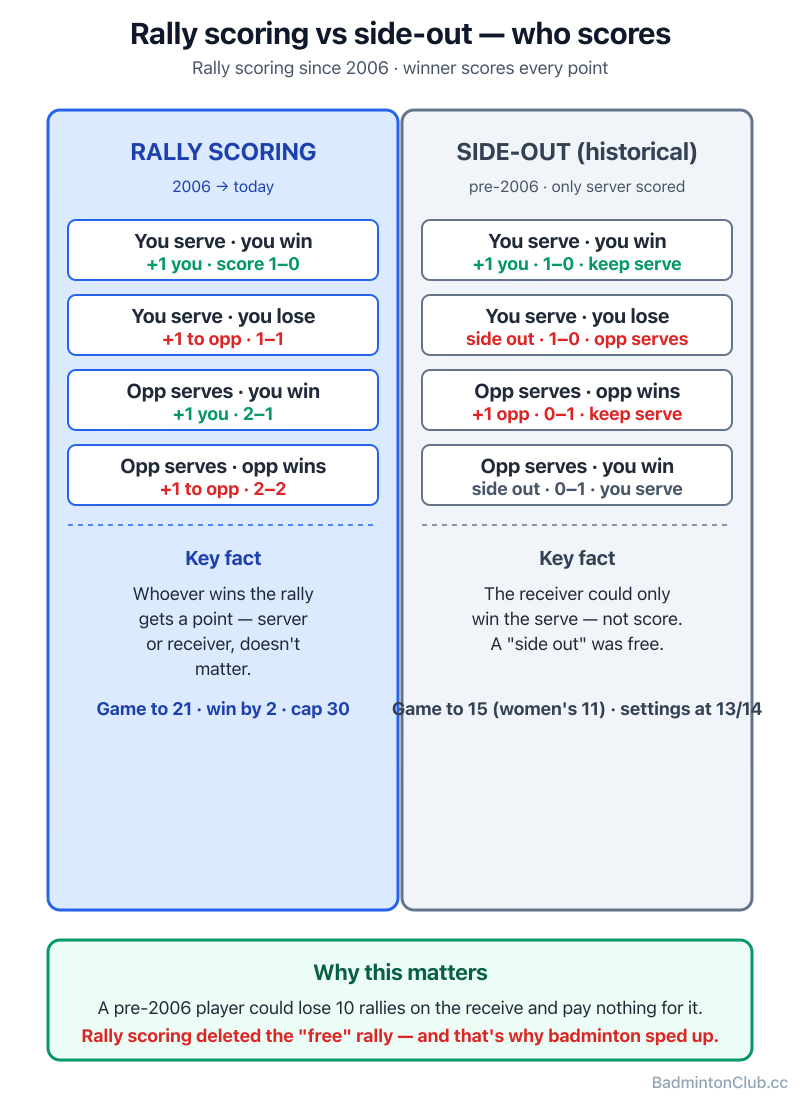
Can You Score a Point on Your Own Serve in Badminton? Rally Scoring Explained

Rally scoring means every rally produces a point — yes, you can score on your own serve in badminton. This article explains how the 21-point rally system works, what changed from the old 15-point side-out era, and why every rally now matters more than ever.

#Badminton Rules#Can You Score A Point On Your Own Serve Badminton#Rally Scoring Badminton#Badminton Service Scoring
Article
6 Jun 2026

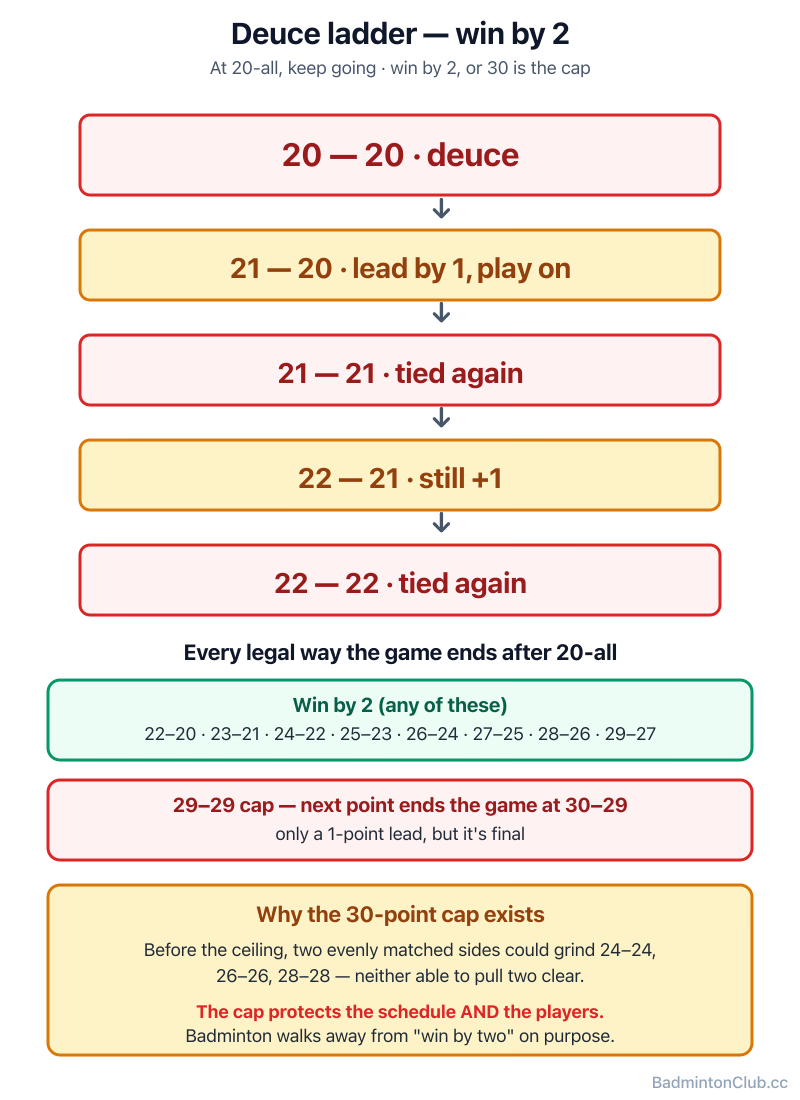
Badminton Deuce & Setting Rule: Winning 20–20 (The 2-Point Lead and 30-Point Cap)

At 20–20 in badminton, the game goes to deuce — you must win by 2 clear points, up to a hard cap of 30. Learn exactly how the deuce rule works, what "setting" means historically, and why 29–29 is decided by a single sudden-death point. Essential for players who want to know the end-game rules cold.

#Badminton Rules#Badminton Deuce Rule#What Is Setting In Badminton#Badminton 2020 Rule
Article
6 Jun 2026

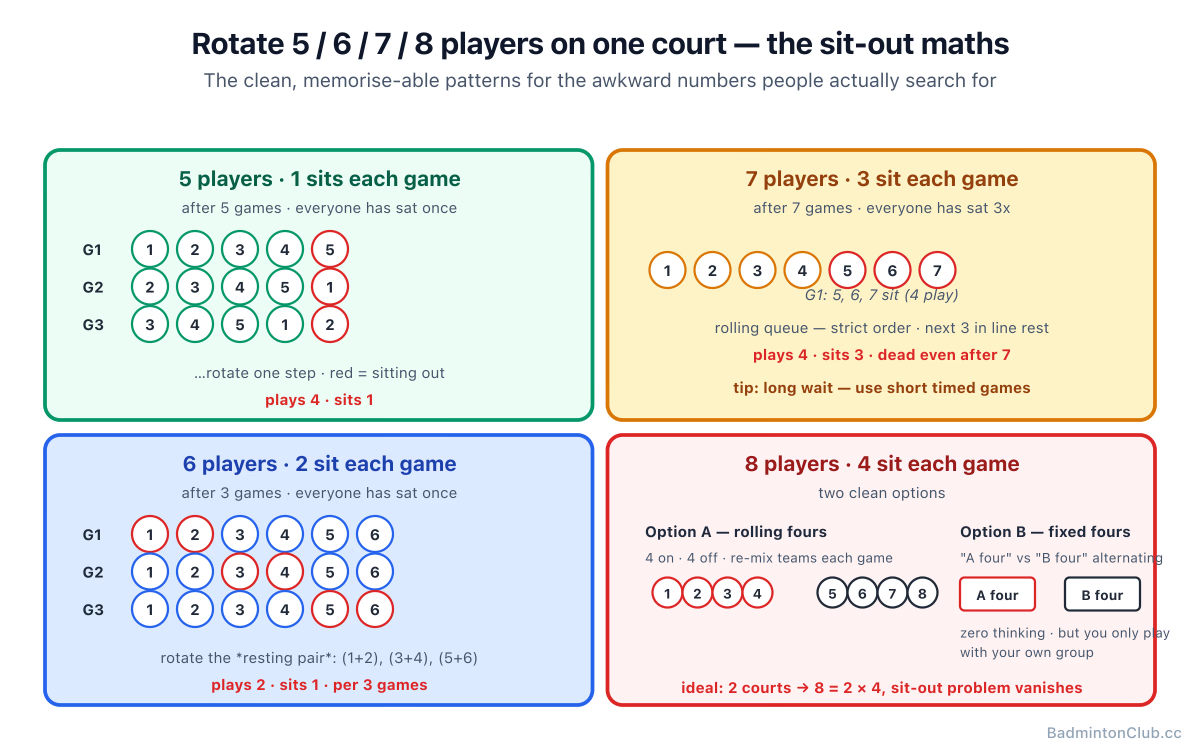
How to Rotate 5, 6, 7 or 8 Players on One Badminton Court (Fair Sit-Out Schedules)

Fair sit-out rotations for 5, 6, 7, or 8 players sharing a single badminton court — rolling patterns that keep everyone equal without arguments. Covers the exact cycle length per player count, practical tips for writing the order down, and when a second court or a rotation app makes more sense.

#Badminton Court Allocation#Badminton Court Rotation#Badminton Court Rotation System#Badminton Sit Out Schedule
Article
featured
6 Jun 2026

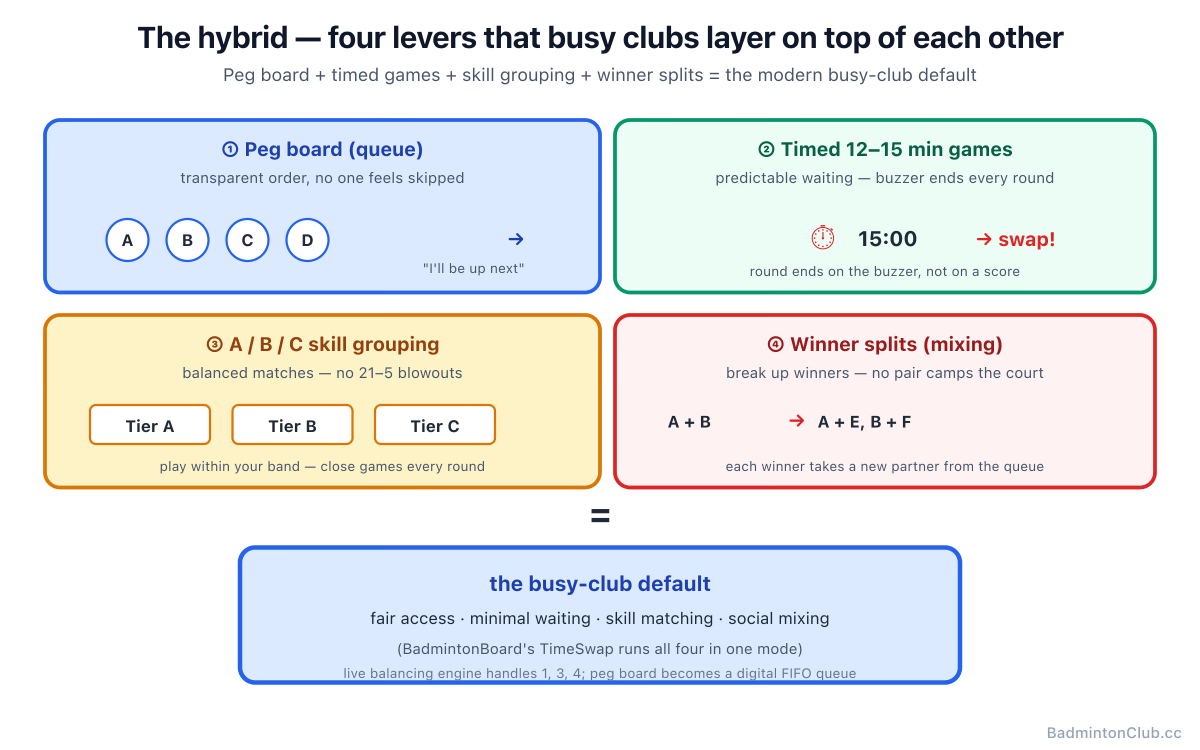
Best Badminton Club Rotation System: The Hybrid Setup Busy Clubs Actually Use (20–40 Players)

The hybrid badminton rotation combines a fair queue, timed games, skill grouping, and winner-splits into one system that actually works for 20–40 players on 3–6 courts. Learn how to layer all four levers, see worked examples for 24- and 36-player nights, and understand why this blend has become the emerging best-practice standard in busy clubs.

#Badminton Court Rotation System#Best Badminton Club Rotation System#Crowded Badminton Club Rotation#How Badminton Clubs Rotate Players
Article
6 Jun 2026

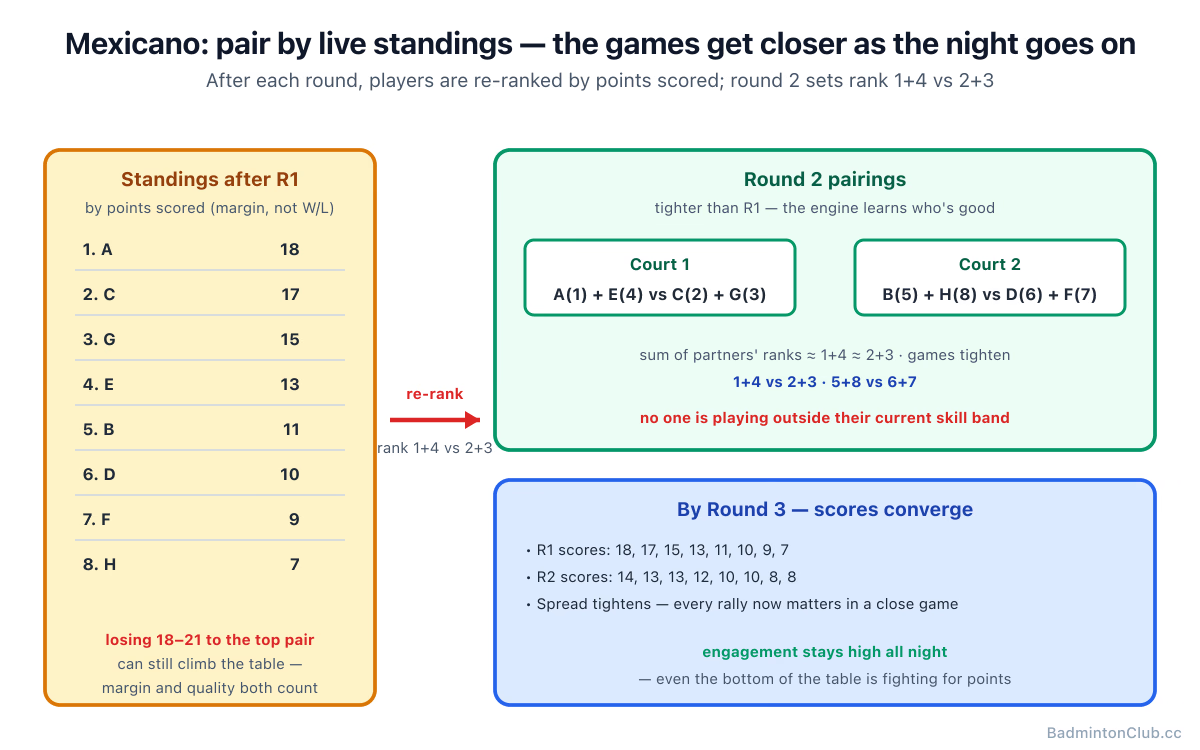
Badminton Mexicano Format: Score-Based Pairings That Make Every Game Close (Rules Explained)

Mexicano pairs players by live score standings each round so games naturally get tighter as the night goes on — no organiser judgement needed. Learn the rules, scoring quirk, pros and cons, and how it compares to other club rotation formats. Great for groups of 8–24 who want every rally to count.

#Badminton Court Rotation System#Badminton Mexicano#Badminton Mexicano Scoring#Mexicano Format Badminton
Article
6 Jun 2026

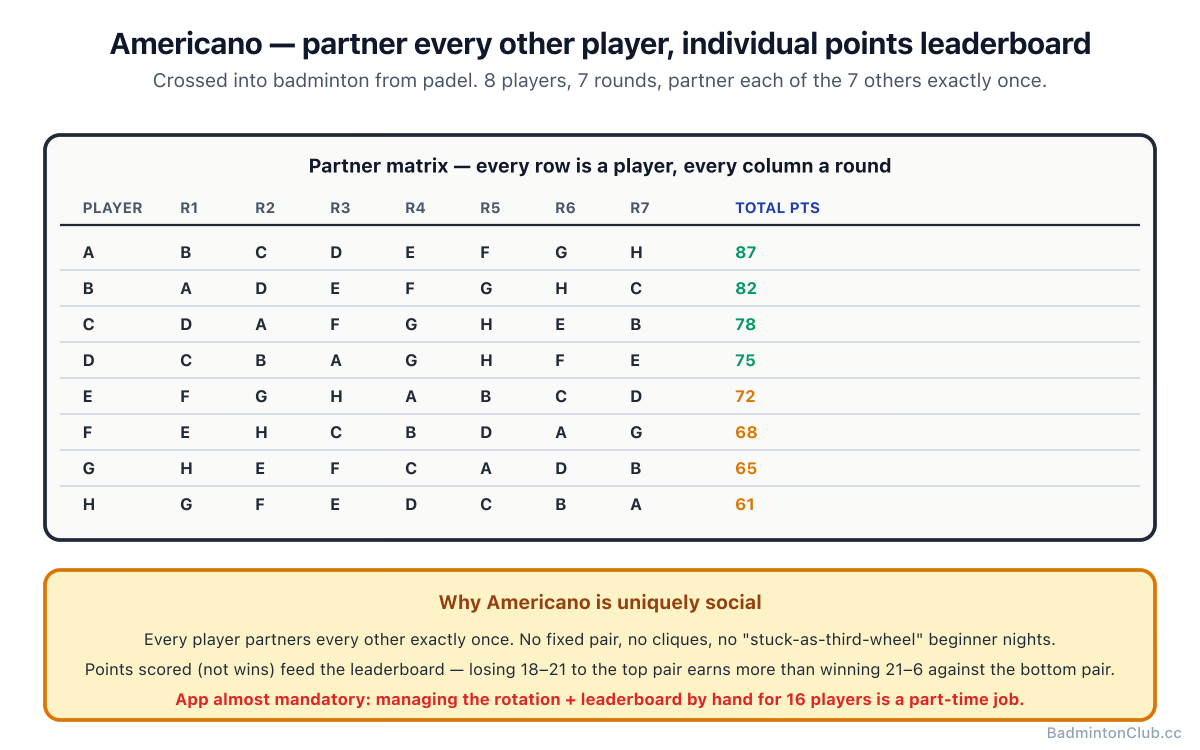
Badminton Americano Format: Rotate Every Partner, Score Individual Points (Rules & How to Run It)

Badminton Americano is a rotating-partner format where everyone plays with everyone and individual points build a personal leaderboard — the most social competitive format on the court. Learn the rules, scoring, ideal group sizes, and how to run it smoothly with or without an app. Ideal for clubs wanting a night that mixes abilities without fixed teams.

#Americano Format Badminton#Americano Rules Badminton#Americano Tournament Generator For Badminton#Badminton Americano
Article
6 Jun 2026

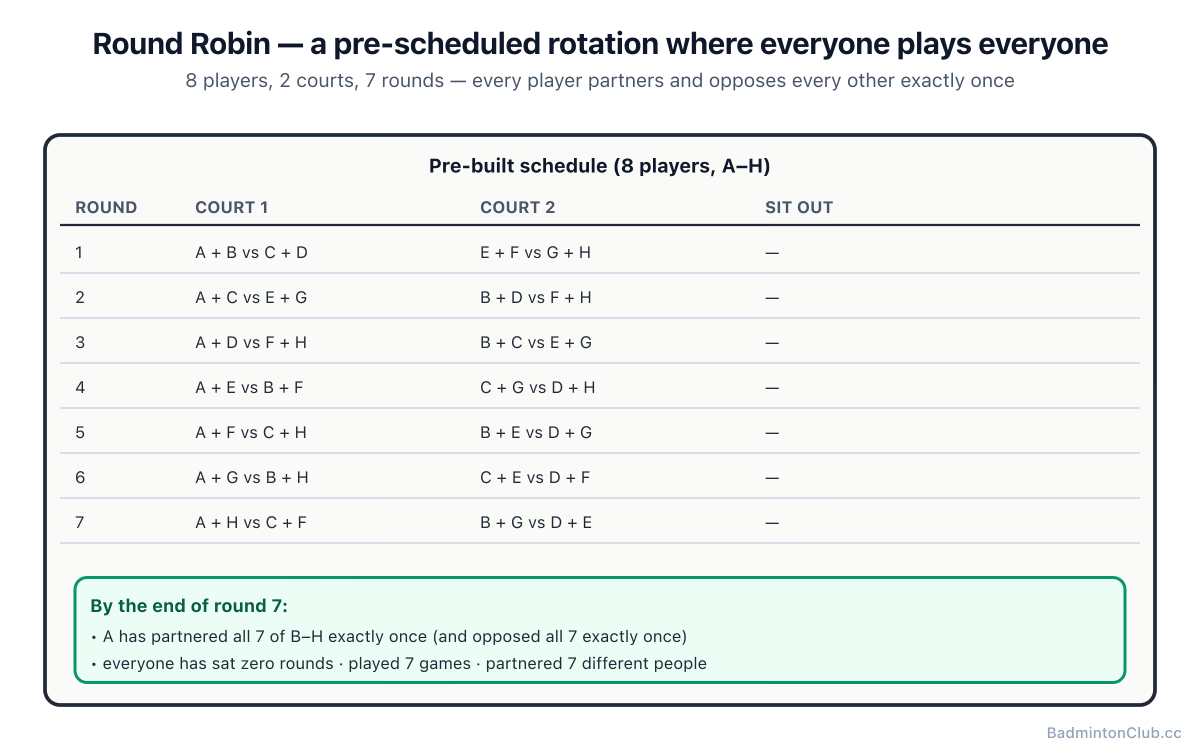
Badminton Round Robin & Swiss System: Pre-Scheduled Doubles Rotation Where Everyone Plays Equally

Round robin and Swiss system scheduling give every player an equal share of games, partners, and sit-outs — ideal for club mixers and one-night tournaments. This guide covers how each format works, the key differences between a static spreadsheet and a live generator, and when Swiss pairing beats a full round robin for a fixed group.

#American Tournament Badminton#Badminton Court Rotation System#Badminton Mixer Schedule#Badminton Round Robin
Article
6 Jun 2026

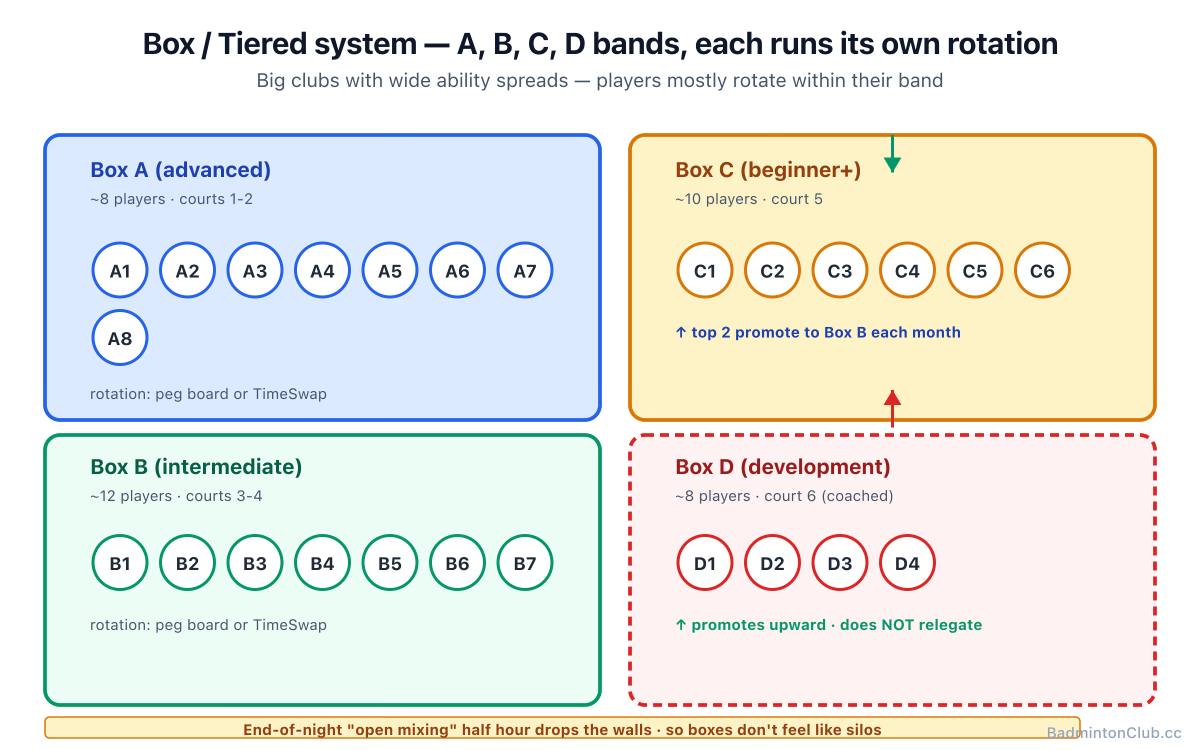
Badminton Box League & Tiered Rotation: Skill-Grouped Play for Big Clubs (A/B/C/D)

A box (tiered) league divides club members into skill bands — A through D — so every player gets balanced, competitive matches. This guide covers grading players without friction, running promotion-relegation overlays that keep the system fair, and combining box tiers with a free-mixing finale. Ideal for clubs of 40-plus players with a wide spread of abilities.

#Badminton Abcd Grading#Badminton Box League#Badminton Box System#Badminton Court Rotation System
Article
6 Jun 2026

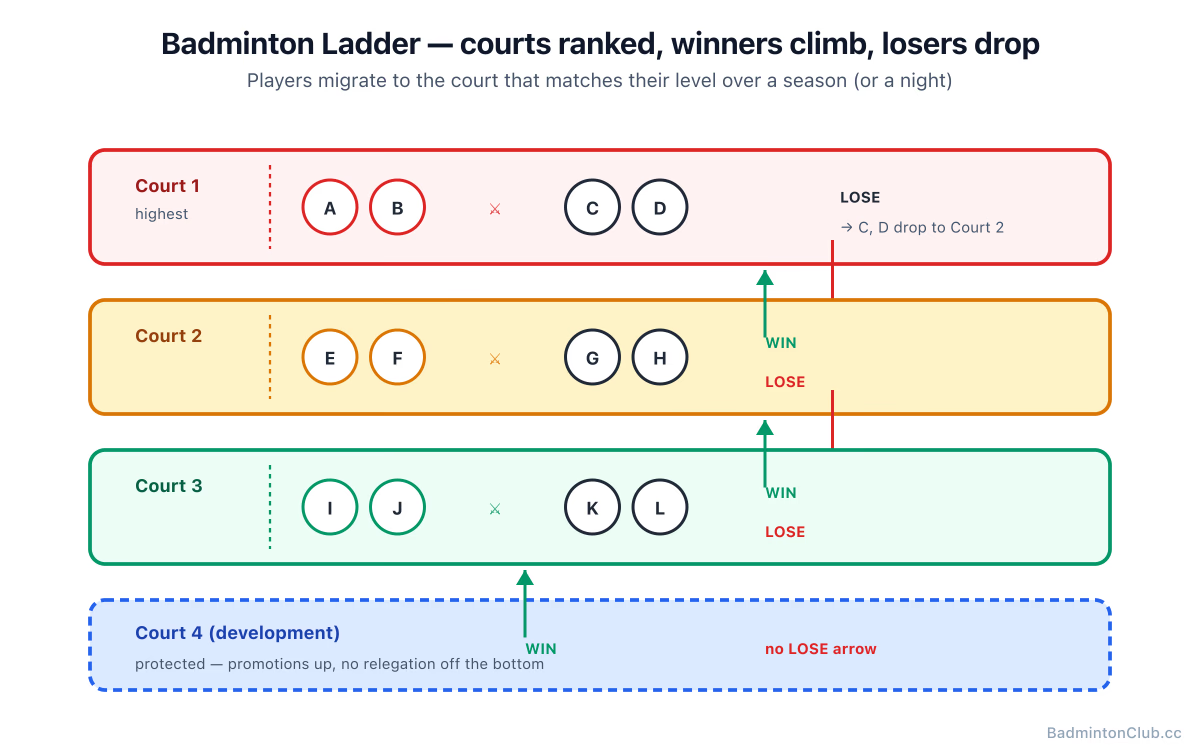
Badminton Ladder System Explained: Courts Ranked by Skill, Winners Move Up

A badminton ladder system ranks courts by ability — winners move up, losers drop down, and players naturally settle where they belong. This guide covers how ladder leagues work, the yo-yo problem and its fixes, protecting beginners with a development court, and when a ladder fits your club better than other rotation systems.

#Badminton Court Rotation System#Badminton Courts Ranked By Skill#Badminton Ladder League#Badminton Ladder System
Article
6 Jun 2026

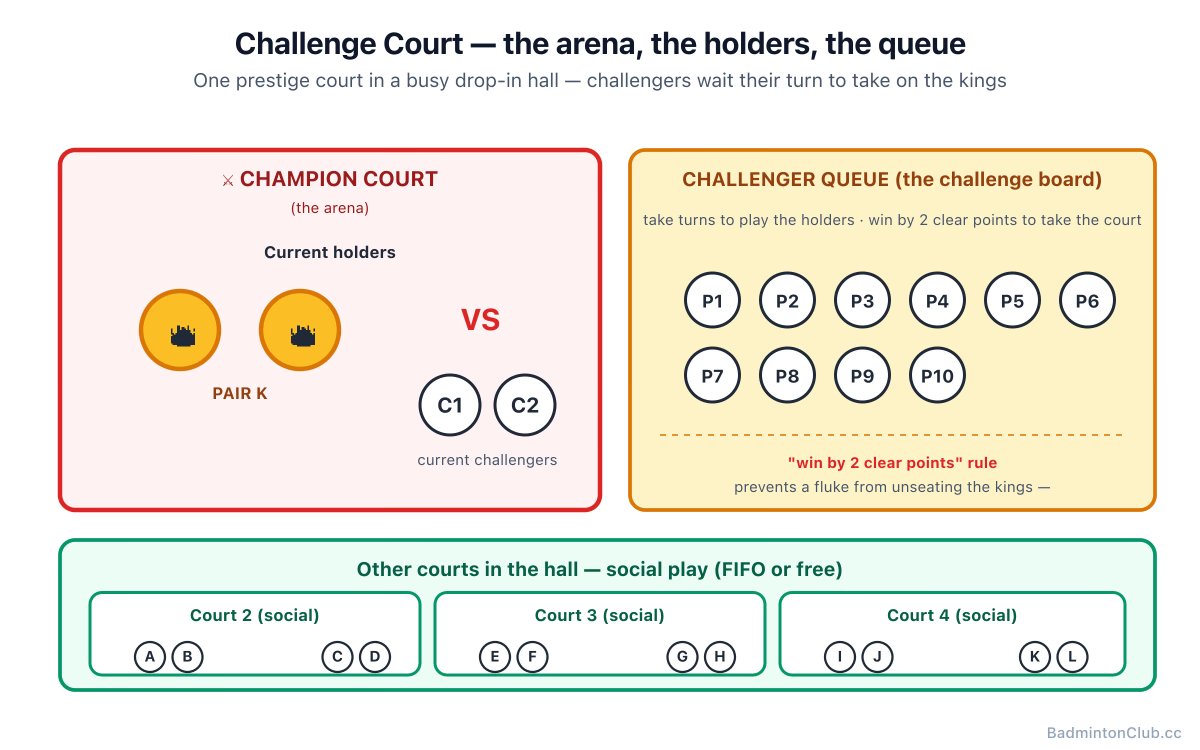
Challenge Court Badminton (Champion Court): The Asian Club Format Where Winners Hold Court

Challenge Court (Champion Court) is the Asian drop-in hall format where winning pairs hold one prestige court and challengers queue to unseat them. Learn how the 2-clear-points rule, defense caps, and challenger etiquette make it work — plus when it shines as a feature court alongside social courts and when it falls flat for beginners.

#Asian Badminton Club System#Badminton Challenge Board#Badminton Court Rotation System#Badminton King Court Format
Article
6 Jun 2026

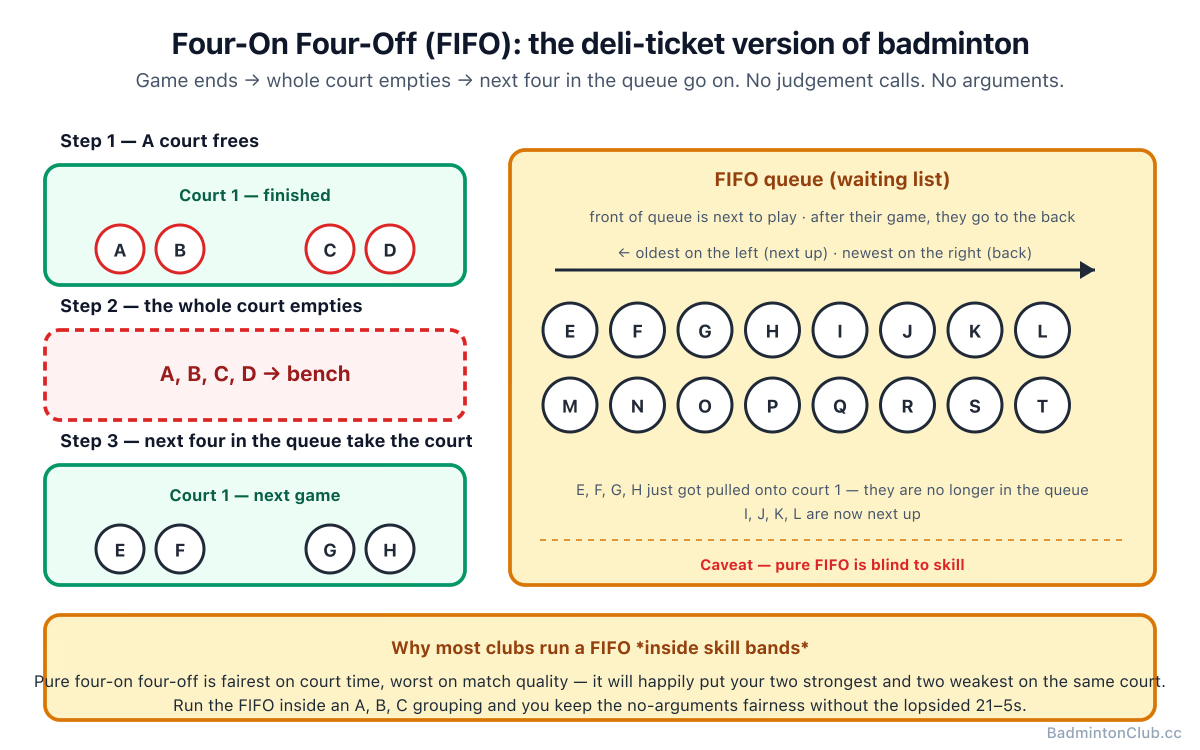
Four-On Four-Off Badminton: The Fairest FIFO Rotation for Crowded & Beginner Clubs

Four-on four-off is the fairest badminton rotation for equal court time: every game ends, all four players leave, and the next four in the queue come on. This guide explains how strict FIFO works, why it suits beginner and school clubs best, how running it inside skill bands fixes the mismatch problem, and when to switch to a different system for competitive continuity.

#Badminton Club Queue System#Badminton Court Queue#Badminton Court Rotation System#Badminton Player Rotation
Article
6 Jun 2026

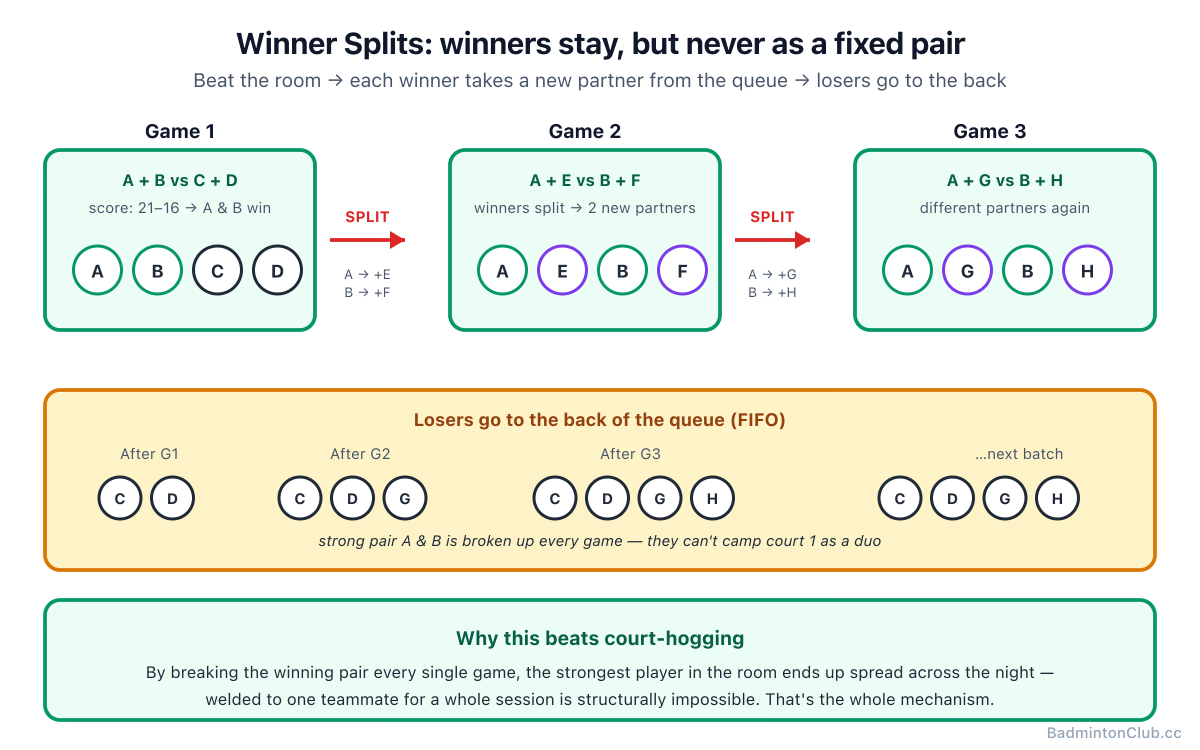
Winner Splits Badminton Rotation: The Social Club-Night System That Beats Court Hogging

Winner Splits breaks up the winning pair every game so no duo can dominate, making it one of the most social club-night formats. Learn the rules, the stronger-winner refinement, pros and cons, and why it keeps newcomers coming back — ideal for 8–20 players on 1–4 courts.

#Badminton Court Rotation System#Badminton Mixed Partner Rotation#Mix And Match Badminton#Partner Rotation Badminton
← PreviousPage 4 of 4
2024 © Automatic shuffle/rotation Badminton Game Courts by BadmintonClub.cc