Explosive Power for Badminton: Plyometric Workouts for Jump Smash & Vertical Leap
7 June 2026
Explosive power for badminton — the kind that fires a jump smash or a deep lunge — is built primarily with plyometric training (box jumps, broad jumps, depth jumps, lateral bounds), supported by heavy-but-fast strength work in the legs and a relaxed-to-fast kinetic-chain swing. A bigger smash isn't found in the gym squat rack alone; it's found in jumps that train the legs and nervous system to fire fast.
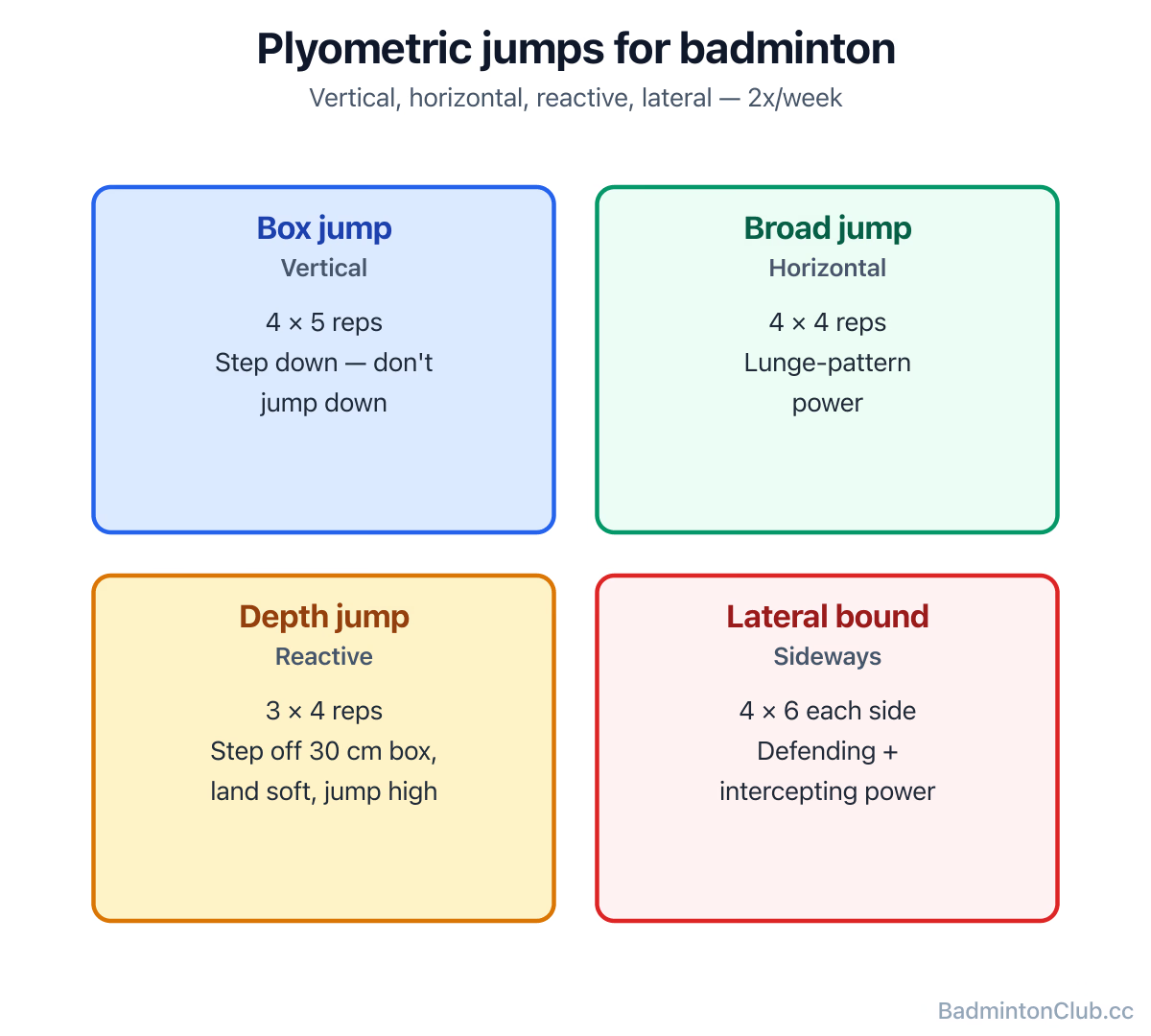
Plyometric exercises that build the jump smash
- Box jumps (vertical): 4 × 5 reps. Jump onto a box you can clear comfortably; step down (jumping down beats the knees). Trains pure upward explosion.
- Broad jumps (horizontal): 4 × 4 reps. Builds horizontal power for lunging.
- Depth jumps (reactive): 3 × 4 reps. Step off a low box (~30 cm), land soft, then immediately jump as high as possible. Trains the stretch-shortening cycle — the rapid muscle "rebound" that powers a real jump smash.
- Lateral bounds: 4 × 6 reps each side. Trains the sideways explosion you use defending and intercepting.
- Skater jumps (single-leg, side-to-side): 4 × 8 reps. Single-leg power for the rear-court scissor kick.
Two plyo sessions a week is plenty; plyometrics are CNS-heavy and over-doing them is a fast track to injury and stagnation. Always plyo fresh, not at the end of a tiring session.
Strength behind the speed
Plyometrics multiply strength you already have. Without a base of leg strength they hit a ceiling fast. So pair plyo with heavy-but-fast compound lifts twice a week:
- Back squat or split squat: 4 × 5 reps at challenging weight.
- Trap-bar deadlift: 3 × 5 reps.
- Calf raises: 3 × 10–12, slow eccentric.
The "fast" part matters: at lighter loads, move the bar fast — you're training the nervous system to recruit muscle quickly, which is what badminton needs. See Badminton Strength Training for the full programme.
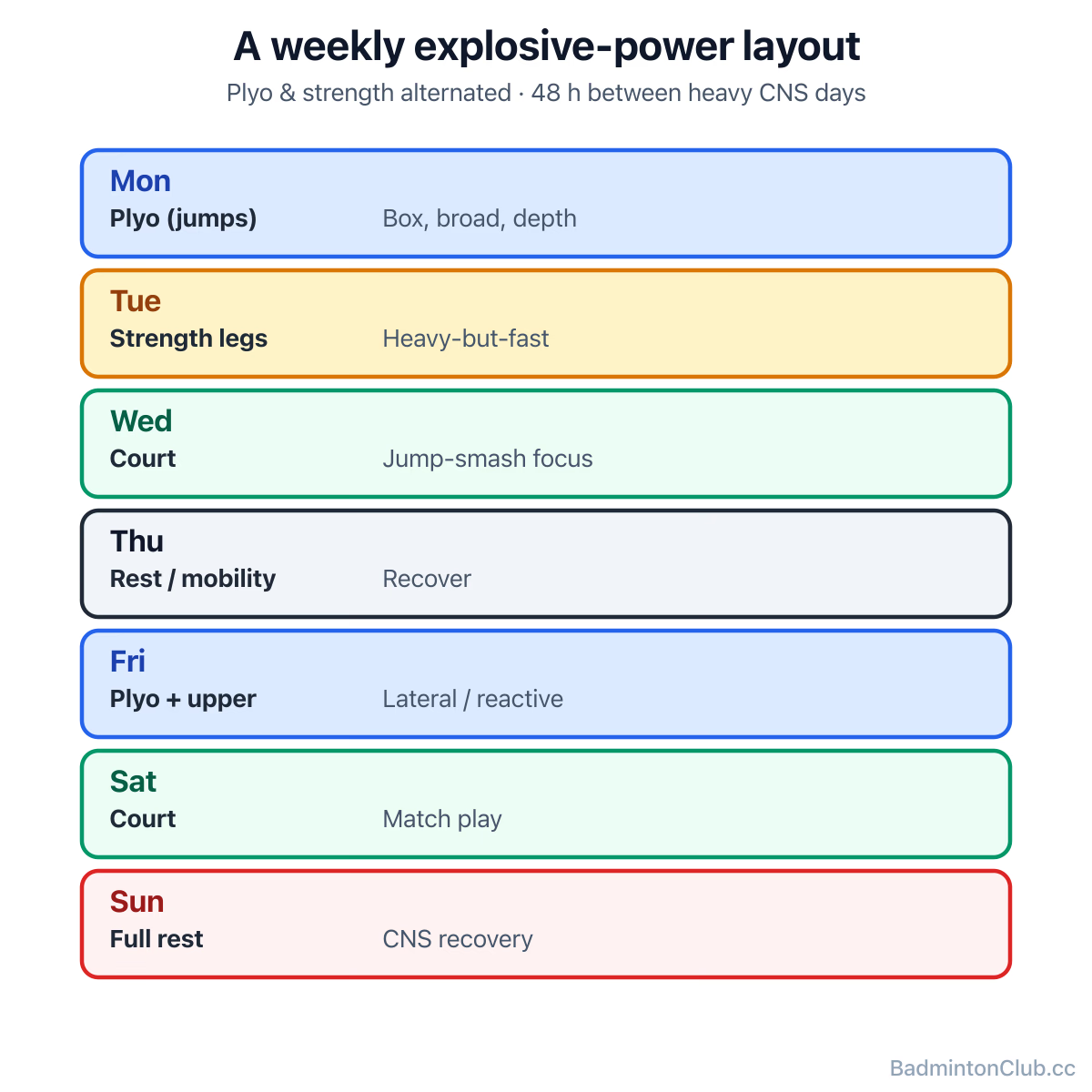
A weekly explosive-power layout
- Mon: Plyo (jumps) + light technical badminton.
- Tue: Strength (legs/back, heavy-but-fast).
- Wed: Court session — focus on jump-smash technique.
- Thu: Rest or light aerobic.
- Fri: Plyo (lateral / reactive) + strength upper body.
- Sat/Sun: Match play / drills.
48 hours minimum between plyo or heavy-leg sessions. Always warm up properly (see Warm-up & flexibility) — cold plyometrics cause more rolled ankles than anything else.
What this looks like on a club night
The biggest, strongest player rarely has the heaviest smash, because smash power is sequencing, not muscle (see techniques: How to smash harder). What plyometrics buy you is the leg contribution — a faster, springier jump that adds a steeper angle and a fraction more racket-head height. That's real, but it's the topping, not the cake. A blunt take: drill pronation and the kinetic chain first; add plyometrics once your standing smash is already heavy. People who chase the jump before the chain end up flying into the air and dropping the shuttle softly. A small but useful thing: pin your plyo days into the team-notes on BadmintonClub.cc so you don't accidentally double up on heavy-leg work the day before league night.
FAQ
- Q: What exercises increase jump smash power? Plyometric jumps (box, broad, depth, lateral bounds) twice a week, paired with heavy-but-fast leg strength work — squat, deadlift and calf variations.
- Q: How do I jump higher for a badminton jump smash? Train the stretch-shortening cycle with depth jumps and box jumps, on a base of leg strength; technique (the scissor kick and contact point) matters as much as raw height.
- Q: How many plyometric sessions per week? Two, with at least 48 hours between them — plyometrics are nervous-system heavy and over-training quickly becomes injury risk.
- Q: Do I need a gym for badminton power? Helpful but not essential — bodyweight plyometrics (box jumps, broad jumps, lateral bounds) build a lot of explosive power without weights.
- Q: Will plyometrics hurt my knees? Done correctly (good landing mechanics, modest box height, controlled volume) they protect knees by building the strength to absorb landings. Sloppy plyo on tired legs is what causes problems.
- Q: Strength or plyometrics first for a bigger smash? Build both, but technique first — pronation and kinetic-chain sequencing matter more than raw leg power for most club-level smashes.
Explosive power for badminton, built with plyometric jumps (box, broad, depth, lateral, skater) that train the stretch-shortening cycle the jump smash actually uses — paired with heavy-but-fast leg strength so the jumps have power to multiply. Two plyo sessions a week, a sample weekly layout, depth-jump form, and a blunt take on why pronation matters more than vertical for most club smashes.