Open Play Badminton & Drop-In Sessions: How Court Release Check-In Works (No Fixed Rotation)
6 June 2026
Open play (drop-in) badminton lets players self-organize who plays on which court, with the club only tracking attendance and payment. There's no enforced rotation — the club publishes its own court-sharing etiquette and players sort games out themselves. BadmintonClub.cc supports this directly as Court Release mode (courtrelease): a clean check-in and payment tracker layered over your club's published open-play rules.
How open play works
In open play, the club provides courts and a posted set of rules ("max one game then make way if people are waiting," "rotate after 21 points," etc.), and players self-govern. The organizer's only real job is the door: who's here, who's expected, who's left, and who has paid. It's the lightest-touch format — perfect for casual, friendly, or beginner-heavy sessions.
How Court Release works in the app
Court Release deliberately uses no matchmaking engine. Instead it gives the organizer a fast roster:
- Each player has a check-in status — Available (here), Pending (expected), or Left.
- Each player has a payment status — Paid / Not paid, with a paid-at timestamp.
- The club's published Court Release rules (your open-play etiquette) display to everyone so expectations are clear.
- Players appear as roster cards with one-tap check-in and payment toggles.
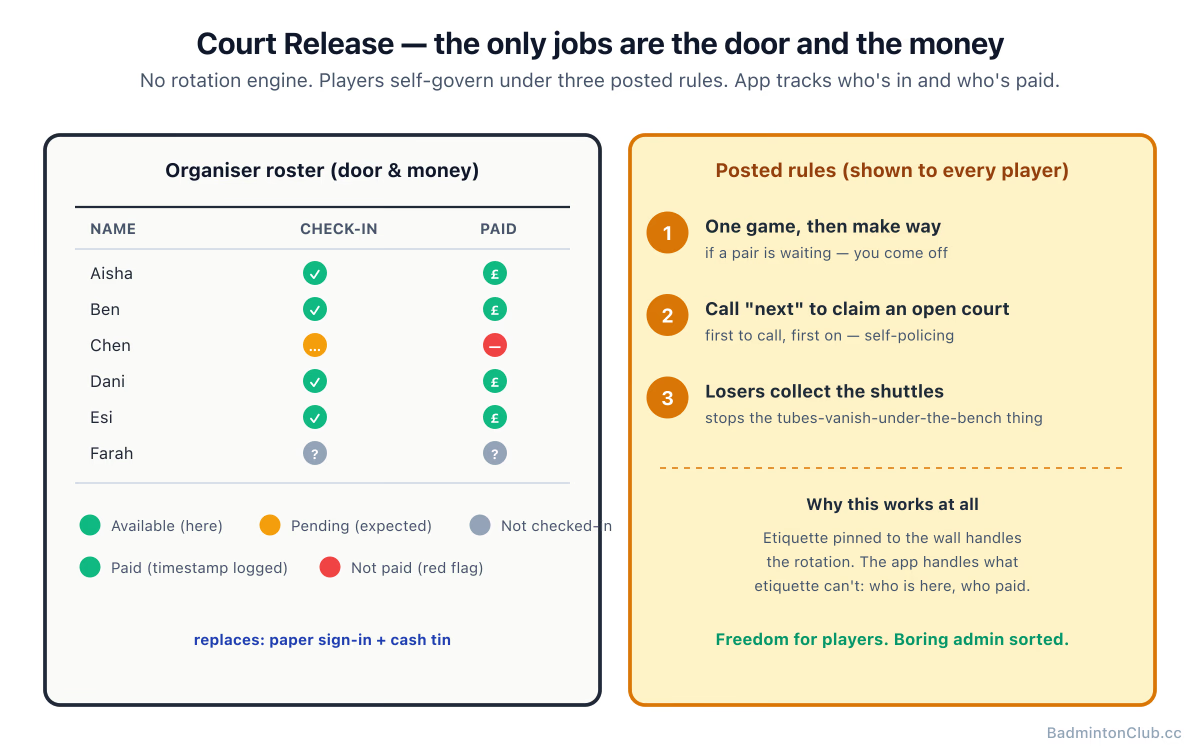
That's it — no timers, no skill settings, no pairing logic. The app handles the boring admin (attendance + money) and gets out of the way of the play.
The three rules every good open-play club actually posts
Open play only works because of the etiquette pinned to the wall, and most well-run drop-in nights converge on the same three lines. Steal them verbatim if you're organising social badminton nights and don't want to invent your own:
- One game, then make way if anyone's waiting. Not "play till you're tired" — one game to the agreed points, and if there's a pair sitting, you come off. This single rule prevents 90% of court-hogging arguments — and when etiquette alone isn't enough, a winner-splits rotation builds the fix into the format itself.
- Call "next" to claim the open court — first to call, first on. It replaces the silent stand-around where two groups both edge toward a freeing court. Whoever shouts "next" owns it; everyone can hear it, so it's self-policing.
- Losers collect the shuttles. Trivial, but it stops the slow death of a club where tubes of shuttles vanish under the bench and nobody owns the mess.
That's the whole "sign-up board" culture in three lines. Court Release just puts those rules on the screen everyone already has open, and handles the two things etiquette can't — who's actually here and who's paid — so the organiser isn't running a cash tin and a paper list at the door.
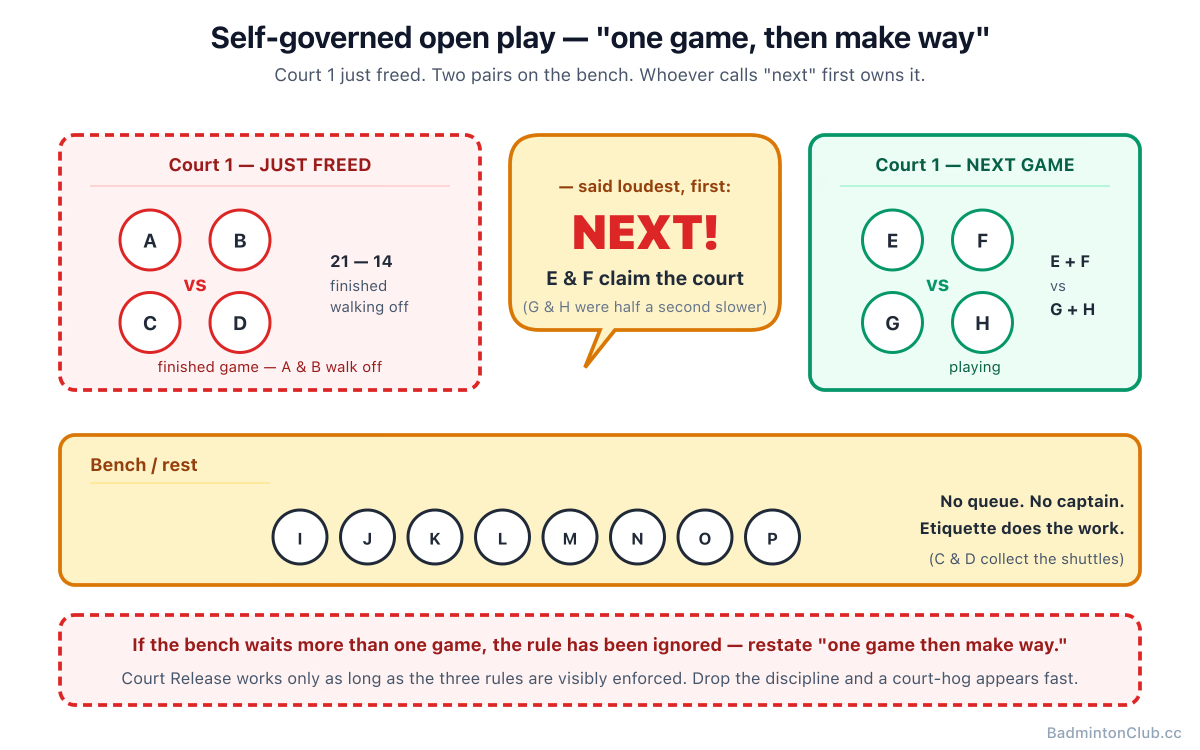
Two more small conventions that quietly make an open-play night work. The "rotate at 21" rule — even with no queue, ask people to step off at 21 points, not "play till you're tired." A tired pair will play a lopsided 21–3 with a beginner and not notice they're being a problem; a point cap makes it obvious to everyone. And put a wall clock somewhere visible from every court — phones go into pockets and battery dies, and nothing sours a casual session faster than a "how long have we been on?" argument with no answer. The clubs that get drop-in right treat the rules as a wall you can point at, not a speech you have to give every week.
How Court Release handles the pros & cons
Open play's risks are court hogging and fuzzy attendance/payment tracking. Court Release helps by:
- Making the club's rules visible to every player (so "make way after a game" isn't just folklore).
- Giving the organizer a single source of truth for who's in and who's paid, replacing paper sign-in sheets and cash confusion.
- Leaving the actual play entirely player-led — which is the whole point of drop-in culture.
When to recommend it: casual public/drop-in sessions, friend groups, and venues where players prefer total freedom over an enforced rotation. If they later want fairness/structure, TimeSwap or a peg board are one switch away.
Pros and cons
Pros
- ✅ Lowest possible admin — just check-in + payment.
- ✅ Maximum player freedom and social flexibility.
- ✅ No rigid rotation to manage or enforce.
- ✅ Clear, published rules + clean payment tracking.
Cons
- ❌ No guaranteed court-time fairness (relies on etiquette).
- ❌ Court hogging possible without good rules.
- ❌ No automatic skill balancing.
Three quick examples
- Public drop-in, 30 players: organizer checks people in and marks payments; players self-rotate per the posted "one game then make way" rule.
- Friends' casual booking: no rules needed — just attendance, so everyone knows who's confirmed.
- Pay-at-door club night: payment toggles replace a cash tin and a paper list.
Where it's popular & estimated market share
Open/drop-in play is ubiquitous worldwide for casual and public sessions — extremely common in Asian commercial drop-in halls and Western community-centre "pay and play" nights. As a named club system it's hard to quantify because it's the informal default; think of it as the baseline a large share of casual sessions run on.
FAQ
- Q: What is open play badminton? A drop-in session with no fixed rotation — players self-organize games under the club's posted rules.
- Q: How is open play different from a peg board? A peg board enforces a queue order; open play leaves court-sharing to the players.
- Q: Does Court Release assign courts or matches? No — it only tracks check-in and payment; play is self-governed.
- Q: Can I publish my own court rules? Yes — Court Release shows your rules to every player.
- Q: Can I track who paid? Yes — per-player paid/not-paid with a timestamp.
- Q: Is open play good for beginners? It's friendly and low-pressure, but offers no skill balancing — TimeSwap is better if matches feel lopsided.
- Q: Best for what size? Any size, especially casual or churning drop-in crowds.
- Q: Can I switch to a structured mode later? Yes — change the session's rotation mode anytime.
- Q: Does the app show me who hasn't paid? Yes — paid/not-paid has its own column with a red flag for unpaid; chase at break time.
- Q: How do I handle a regular who "forgets" to pay? Add them to a "credit" list during check-in and reconcile at the end of the month — much less confrontational than chasing in front of a hall.
- Q: Is this OK for kids / school groups? Yes — set the rules slightly more conservative ("max 1 game if anyone waiting") and most kids self-police better than adults.
Open play badminton lets players run their own courts while the club only tracks check-in and payment — there's no fixed rotation. This guide explains how drop-in sessions actually work, the three etiquette rules every good club pins to the wall, and how Court Release keeps attendance and pay-at-door straight without a paper list or a cash tin.