Badminton Peg Board System Explained: How the Queue & Captain Rotation Works (Digital Peg Board)
6 June 2026 · Badminton Fans
A badminton peg board is a queue-based rotation where each player has a marker (peg, paddle, or name tag) in a line, and the next players off the board take the open court. It's the de-facto rotation of UK, New Zealand, Australian and Canadian clubs because it's transparent, fair, and needs no organizer. BadmintonClub.cc turns the physical board into a digital Peg Board (pegboard): a race-safe FIFO queue with a rotating captain who picks the next game.
How a peg board works
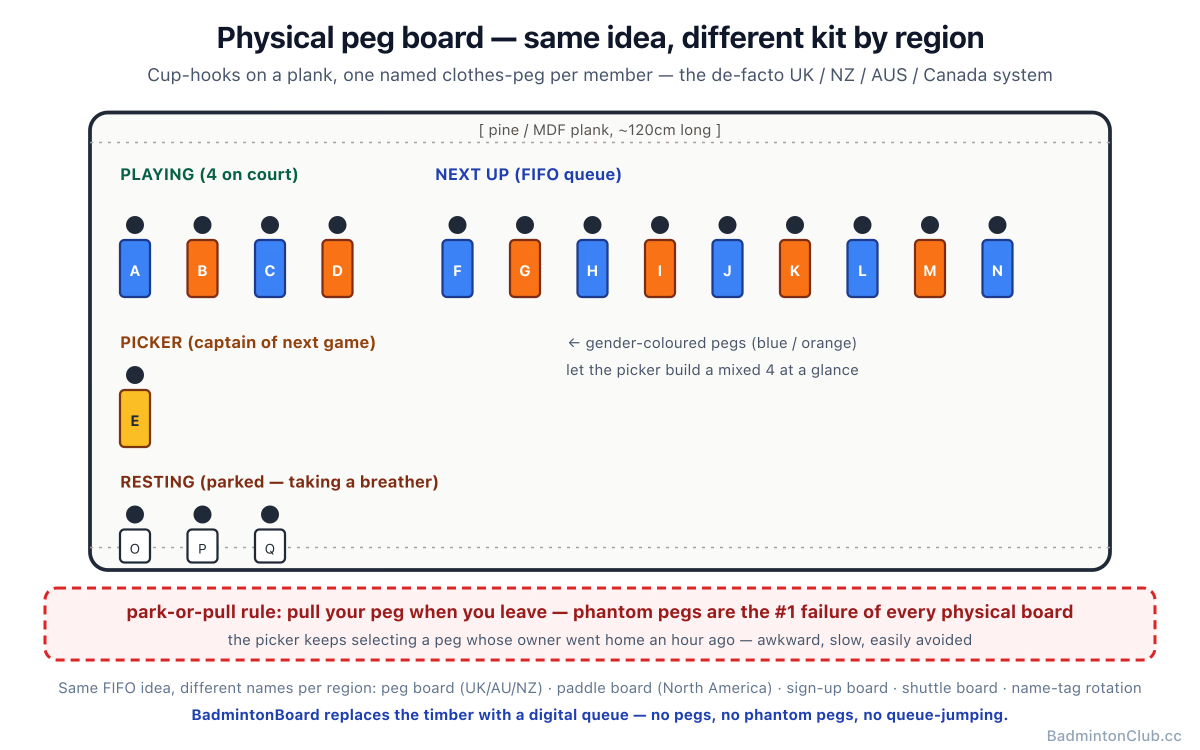
Each player places a marker at the back of a queue on arrival. When a court frees, the markers at the front go on; after the game they return to the back. Many clubs add a twist: the winning pair places their pegs ahead of the losers on return, blending a mild winner's reward into the plain FIFO order. Boards typically have zones: playing courts, next-up, the "picker," and a rest zone.
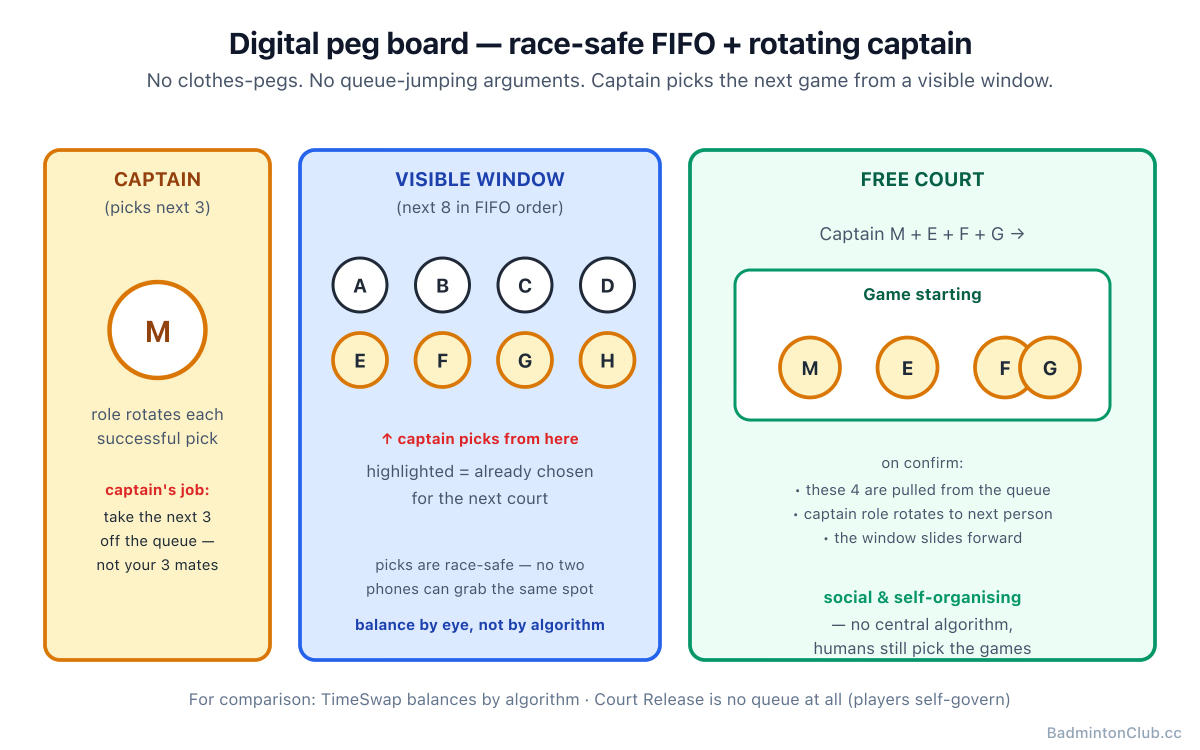
How the digital Peg Board works
Our Peg Board mode is a faithful, decentralized digital version — no auto-matchmaking, the club self-governs:
- Players join a race-safe FIFO queue (backed by a dedicated queue table, so two phones can't grab the same spot).
- A rotating captain is elevated to the front.
- The captain picks
playersPerCourt − 1others from a visible window of the next ~8 players in the queue. - On confirm, those players are pulled from the queue, the game starts, and the captain role rotates to the next person.
It keeps the social, self-organizing feel of a real peg board — just without lost pegs, queue-jumping arguments, or a wall full of clothespins.
Peg board, paddle board, shuttle board, name-tag board — same idea, different kit
If you've searched for a peg system, a paddle system, a shuttle board system or a name-tag rotation and wondered which is "right," the answer is they're the same queue with different markers — it's mostly a regional naming thing. In the UK, New Zealand and Australia it's a peg board: a strip of pine or MDF with a row of cup-hooks or slots, and a wooden clothes-peg per member with their name in Sharpie. Across North America the same wall gets called a paddle board or sign-up board, sometimes using little rackets or laminated name tags instead of pegs. A common touch worth copying: colour-code the markers by gender (e.g. blue and orange pegs) so whoever's picking can build a mixed four at a glance.
The bits that aren't obvious until you run one: you need a "picker" (the front marker — that person rounds up the next three and claims a free court), a clearly drawn "next up" zone and a separate "rest"/parking column for people taking a breather. That parking column exists to solve the single most annoying failure of every physical board — the phantom peg: someone goes home without pulling their marker, so the picker keeps "selecting" a ghost. Park-or-pull is the rule that fixes it. And the one piece of etiquette that makes or breaks the night: as picker you take the next four off the board — not your three mates. Stacking a super-team when you reach the front is the fastest way to kill a club's goodwill. (A digital queue sidesteps both problems — no phantom pegs, no queue-jumping — which is the main reason clubs eventually move the board onto a screen.)
One more thing about the physical version, from a venue that ran one for nearly a decade: the peg names fade. Sharpie on a wooden clothes-peg looks fine in week one and is unreadable by week twenty. Re-label the pegs every season, or use laminated name tags instead — they survive wipe-downs and the occasional dropped shuttle tube. The cost difference is trivial; the goodwill of a queue you can actually read is real.
How the digital Peg Board handles the pros & cons
A physical peg board's downsides are setup/discipline and that plain FIFO ignores skill. BadmintonClub.cc addresses these:
- No physical board to buy or police — the queue lives on players' phones / a shared screen, and the FIFO order is enforced (no jumping).
- The captain + window model lets the club apply its own judgment (balance the next game by eye from the visible 8) without forcing a rigid algorithm — preserving the human, social character clubs love.
- For clubs that want automatic balance instead, we point them to TimeSwap (auto-balanced) — same club, different mode.
Why clubs pick it: maximum transparency and player agency, with the admin overhead of a paper board removed.
Pros and cons
Pros
- ✅ Transparent — everyone sees their place in line.
- ✅ No favoritism; no organizer needed.
- ✅ Scales cleanly from ~20 to 50+ players.
- ✅ Digital version is race-safe (no double-booked spots).
Cons
- ❌ Plain FIFO doesn't balance skill (use captain judgment, or switch to TimeSwap).
- ❌ Relies on players engaging with the queue.
Three quick examples
- 6-court club, 40 members: the captain at the front rounds up three others from the visible window and picks a free court — 40 people rotate with no organizer.
- Winners-first variant (physical): finished players return markers to the back, winners ahead of losers, for a small competitive incentive.
- Digital on a wall tablet: the queue and "you're up next" prompts show on a shared screen players glance at between games.
Where it's popular & estimated market share
The single most common organized-club system in the UK, NZ, AUS and Canada — effectively the default. Estimated ~20–25% of clubs globally as a primary system; far higher within Commonwealth membership-club culture, near-zero in Asian drop-in halls (which lean Challenge Court).
FAQ
- Q: What is a badminton peg board? A queue board where each player's peg marks their place in line for the next available court.
- Q: How does a peg board rotation work? Front-of-queue players go on; after their game their pegs return to the back of the line.
- Q: How many players can a peg board handle? Comfortably 20–50+, which is why big clubs use it.
- Q: What's the captain in the digital Peg Board? A rotating role: the front player picks the next game from the visible queue window, then the role passes on.
- Q: Does the peg board balance skill? Not automatically — it's FIFO with human picking. For auto-balance, use TimeSwap.
- Q: Do winners get an advantage? Optional — many clubs let winners' pegs go ahead of losers on return.
- Q: Can two people grab the same spot? No — our digital queue is race-safe.
- Q: Pegs, paddles, or magnets? All are real-world variants; BadmintonClub.cc replaces them with a digital queue.
- Q: What's a badminton paddle system? The North American name for the same queue board — players hang a paddle or name tag instead of a peg. "Paddle system explained" and "peg board" describe the same FIFO rotation.
- Q: Do you have peg board examples I can copy? The simplest working board is a row of cup-hooks on a length of timber, one named clothes-peg per member, plus a "playing / next up / resting" layout — replicate that and you're done.
- Q: Is a challenge board the same as a peg board? Close — a "challenge board" usually adds a winners-stay element on top of the queue (challengers sign up to take on the holders); a plain peg board is pure FIFO.
- Q: Does the captain change every game? Yes — successful picks hand the captaincy to the next person in the queue, so the role rotates fairly.
- Q: What if I want a winners-stay twist on the board? Our Winners Stay mode does the score tracking for you; the peg board is pure FIFO without the winners-first return tweak.
- Q: Can I use it for a 12-court club tournament? It works at that scale, but you'll want to group courts by skill and run one peg board per group to keep windows readable.
A badminton peg board is the fairest FIFO queue rotation used by clubs across the UK, New Zealand, Australia and Canada. Learn how the physical board works, what the captain role does in a digital peg board, and why clubs are moving their pegs onto a phone screen. Covers setup tips, the winners-first variant, phantom-peg problems, and how the digital version keeps the queue race-safe.