When to Lift vs Block in Badminton: Choosing the Right Defence Against a Smash
8 June 2026 · Badminton Fans
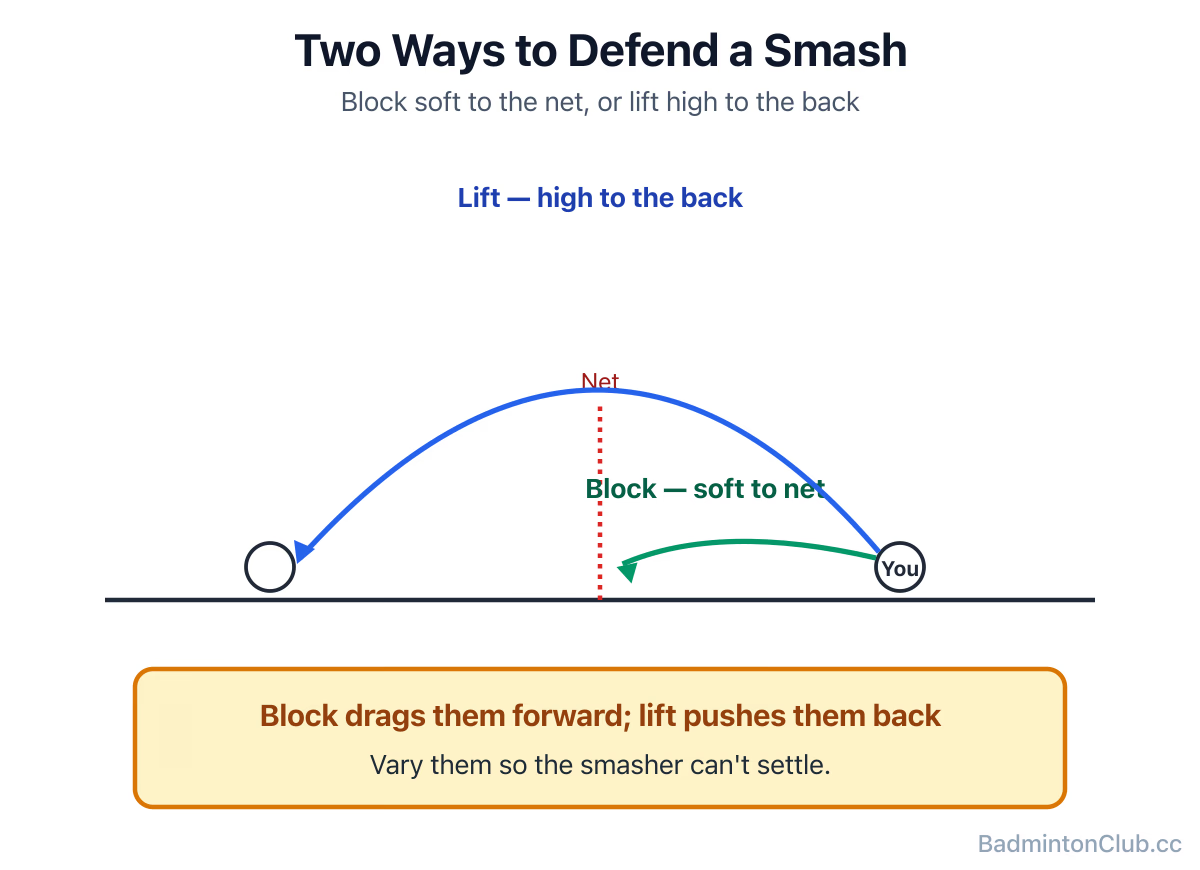
When someone smashes at you, you've got two main options and the one you pick changes the whole shape of the rally. The block is your default: a soft, controlled reply that drops the shuttle just over the net. It's the easiest shot to make under pressure, and it's the only smash defence that drags the attacker forward — they've just hit a power shot and now they have to sprint to the net. The alternative is the lift: an underarm clear that sends the shuttle high and deep, resetting the rally and pushing them back. The lift buys you time and can surprise someone who's rushing forward expecting a block. Neither is right every time. The art is varying them so the smasher can never settle into a rhythm. If you're predictable, you're dead.
What each shot actually does
These two replies have opposite effects, and that's the whole point of having both:
- Block — a soft, controlled reply that drops the shuttle just over the net. It's the only smash defence that forces your opponent to move forward into the forecourt, off the back of their smash. It's also the easiest to play when you're under pressure, because it needs touch, not power. A good block neutralises the attack and lets you contest the net.
- Lift — an underarm clear that sends the shuttle high and deep to the back. It concedes the attack — they get to smash again — but it resets the rally, buys you time to recover, and pushes the attacker back out of the net. Crucially, it surprises an opponent who's rushing forward expecting a block.
When to block (your default)
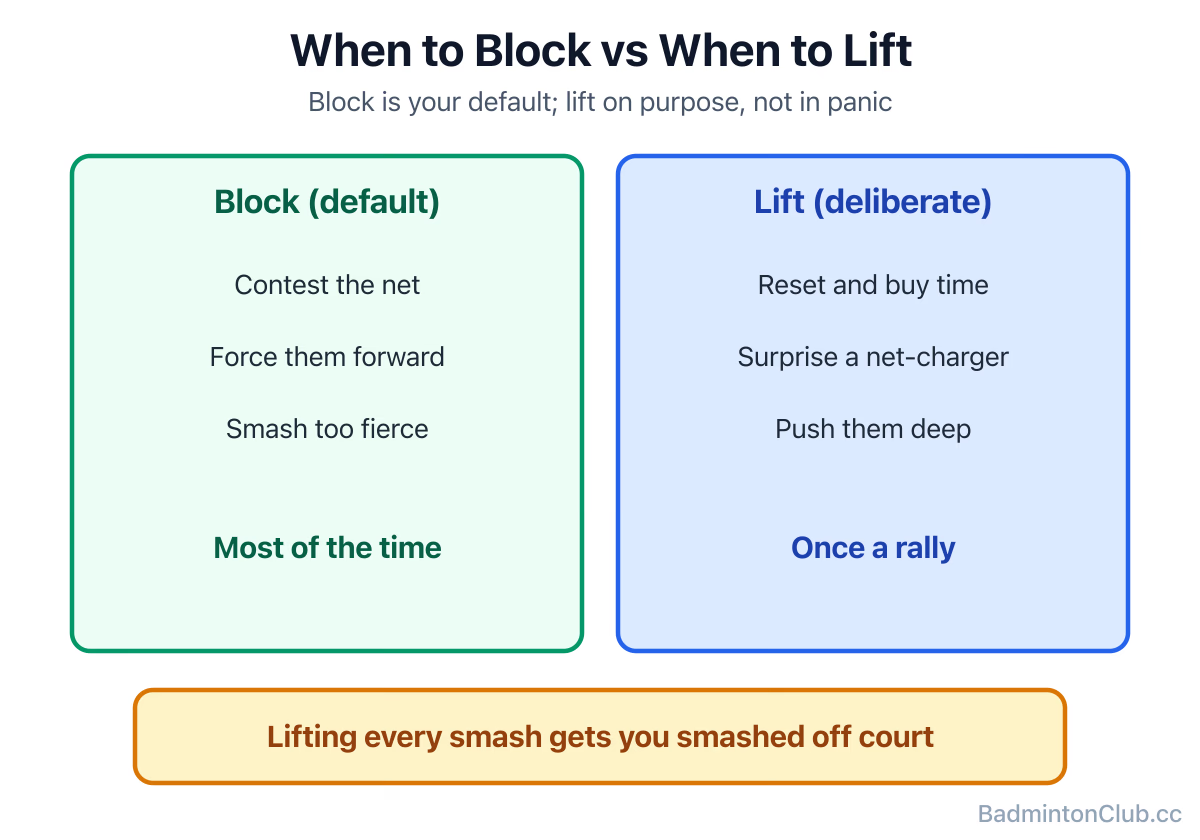
Block by default. The block keeps the shuttle low, gives the attacker nothing to hit down, and forces them forward — turning their attack into your chance to take the net. Block especially when you want to contest the net and flip the rally, or when the smash is so fierce that a controlled soft reply is all you can manage. The beauty of the block is that it's both the safe option and the aggressive one: done well, it doesn't just survive the smash, it takes the initiative. Most of your smash defence should be blocks.
When to lift (deliberately, not in panic)
Lift when you have a reason, not just because you panicked. Good reasons to lift: you're stretched and need to reset and buy time; your opponent has been charging in to attack your blocks, so a sudden lift catches them moving the wrong way; or you want to push the attacker deep and test their movement. A lift is a deliberate change-up, not a default. The mistake is lifting every smash — that just lets a strong attacker smash you off the court, over and over.
Where to place each one (the detail that matters)
Placement turns a defensive shot into a weapon. For the block, aim tight to the net — as a rough guide, have it land around the short service line — and ideally away from where the smasher is recovering. A neat trick the Badminton Bible recommends: against a straight smash, the cross-court block is the most punishing, because it makes the attacker change direction and cover the most ground. It's a harder shot, though, so if the smash is ferocious, settle for a safe straight block rather than netting an ambitious cross. For the lift, the rule depends on intent: under heavy pressure, lift high and deep to the middle (it gives them the least angle for their next smash); but when you want to pressure their movement, lift away from them — if they smashed straight, lift cross-court; if they smashed cross-court, lift straight. A lift dropped right back to the attacker is a wasted shot; a lift to the far corner makes them run.
The defensive mind-game I learned the hard way (original)
Here's the insight that turned my defence from a liability into a weapon, and it's pure psychology. **The value of the lift isn't the lift itself — it's the threat of the lift that makes your blocks deadly.** Let me explain. A smart attacker, after smashing, immediately charges the net expecting you to block, so they can pounce on your soft reply with a tight net shot or a kill. If you only ever block, they learn this and start moving in earlier and earlier, until they're killing your blocks before they've even tumbled. I lost a lot of points this way before the penny dropped. The fix isn't a better block — it's mixing in the occasional well-placed lift. Once you've burned them once or twice with a surprise lift over their head while they're sprinting forward, they can no longer charge the net with confidence. They have to hesitate, hedge, cover the back. And the instant they hesitate, your blocks become twice as effective, because they can't commit to the forecourt. So the lift you play once a rally protects the blocks you play all the time. The best defenders aren't the ones with the softest block or the deepest lift — they're the ones who keep the attacker honest by never being predictable. Defence isn't about surviving; it's about making the attacker doubt. See shot selection for how this fits the bigger picture, and the doubles defence angle for side-by-side play.
A defence drill
Have a partner smash at you repeatedly while you alternate: block, block, lift, block, lift — mixing them deliberately and placing each one (blocks tight and wide, lifts to the far corners). Don't just get the shuttle back; choose each reply. The aim is to make your defence unpredictable and well-placed, so a smasher can never settle into a rhythm against you.
FAQ
- Q: When should I lift and when should I block a smash? Block by default — it's easiest under pressure and drags the smasher forward so you can contest the net. Lift deliberately to reset, buy time, or surprise an opponent who's charging in expecting a block.
- Q: Is the block or the lift better against a smash? The block is the better default: it keeps the shuttle low, gives nothing to attack, and forces the opponent forward. The lift is a deliberate change-up that resets the rally and stops your defence becoming predictable.
- Q: Where should I place a defensive lift? Under heavy pressure, high and deep to the middle (least angle for their next smash). To pressure their movement, lift away from them — cross-court if they smashed straight, straight if they smashed cross-court.
- Q: Why does lifting every smash lose? Because a lift concedes the attack, so lifting every time just lets a strong opponent smash you off the court repeatedly. The lift should be an occasional, deliberate reset, not your standard reply.
- Q: How do I make my smash defence harder to read? Mix blocks and lifts, and vary placement. The threat of an occasional surprise lift stops the attacker charging the net, which makes your blocks far more effective. Unpredictability is the whole game.
- Q: What does a block do that a lift doesn't? A block forces the smasher to move forward into the forecourt off the back of their smash — the only smash reply that does. It keeps the shuttle low and lets you take the net rather than conceding the attack. See shot selection.
Defending a smash, you have two main replies: lift it high to the back, or block it soft to the net — and choosing right is what separates good defence from desperate defence. This guide explains when to lift vs block in badminton, what each shot does to your opponent, where to place them, and why varying the two keeps a smasher guessing. Practical defensive decision-making for club players who currently just panic and hope the shuttle goes back.