Badminton Court Booking: How to Book a Court, Costs and Off-Peak Tips
8 June 2026 · Badminton Fans
Booking a badminton court in 2025 is mostly done through an app or website — the days of ringing up and hoping someone answers are mostly behind us. You pick a date, see which courts are free, pay online, and a slot is yours. A standard booking is 45 or 60 minutes, and the price is per court, not per person (so whether two or four of you turn up, you pay the same). The main things to figure out are how far ahead bookings open, whether members get a cheaper rate or earlier access, and how much you can save by going off-peak. And yes — weekday evening slots vanish fast, so if you have a regular game, learn the booking window and set an alarm for it.
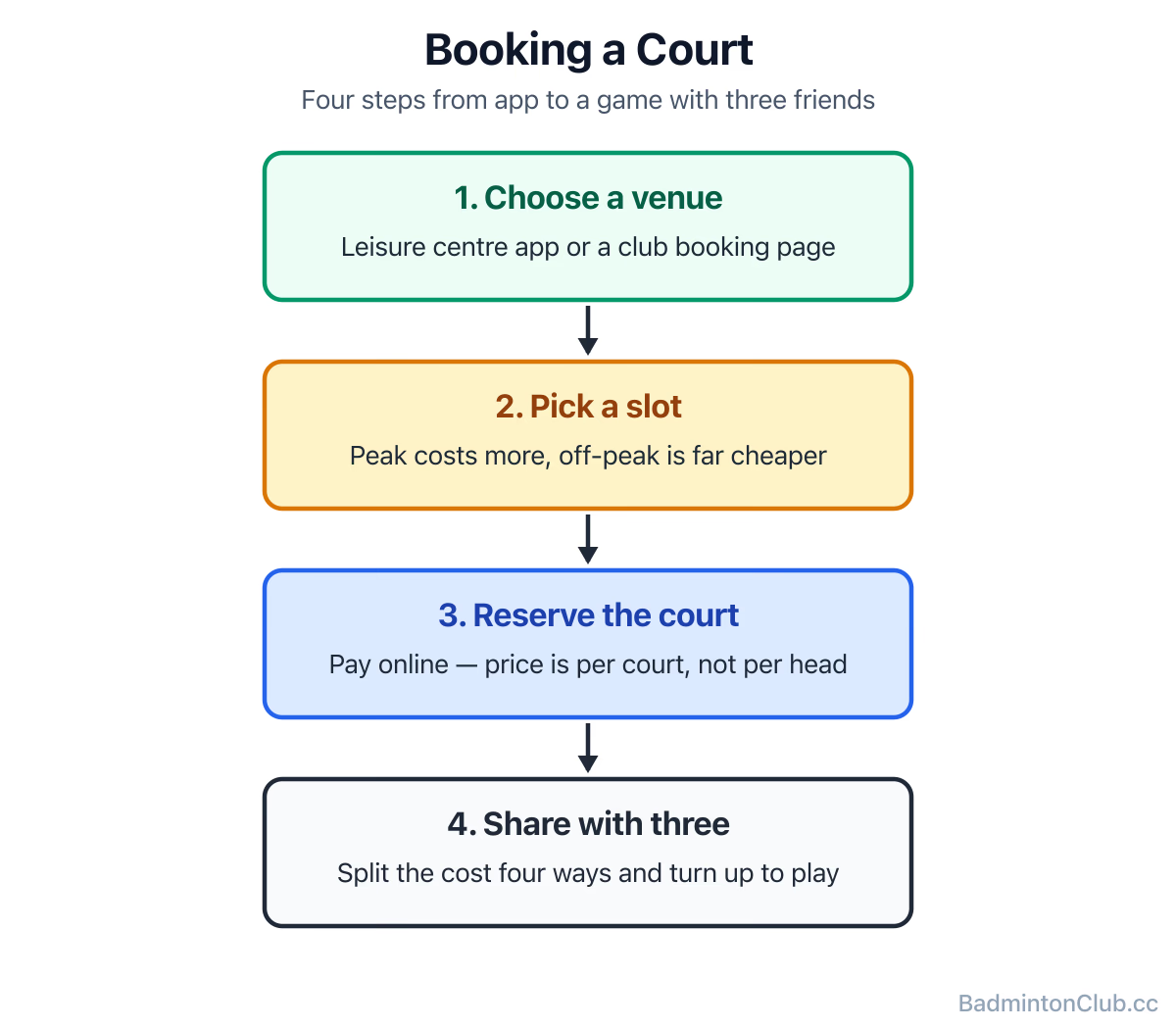
How court booking actually works
Most leisure centres now run booking through an app or website (Better, Everyone Active, university sport portals, and so on) where you pick a date, see the free courts, and pay to reserve a slot. Dedicated badminton centres often use their own booking page or take reservations by phone. A standard slot is 45 or 60 minutes, and the booking is for the court, not per person — so whether two or four of you turn up, the price is the same.
A few practical rules. Centres usually open bookings a fixed window ahead (often 7–8 days for the public, longer for members), and prime evening slots vanish the moment that window opens. Members frequently book before non-members and pay less. And many venues now ask for payment at booking, which makes no-shows their problem, not yours — but also means cancelling late may forfeit the fee.
Peak vs off-peak — where the money is
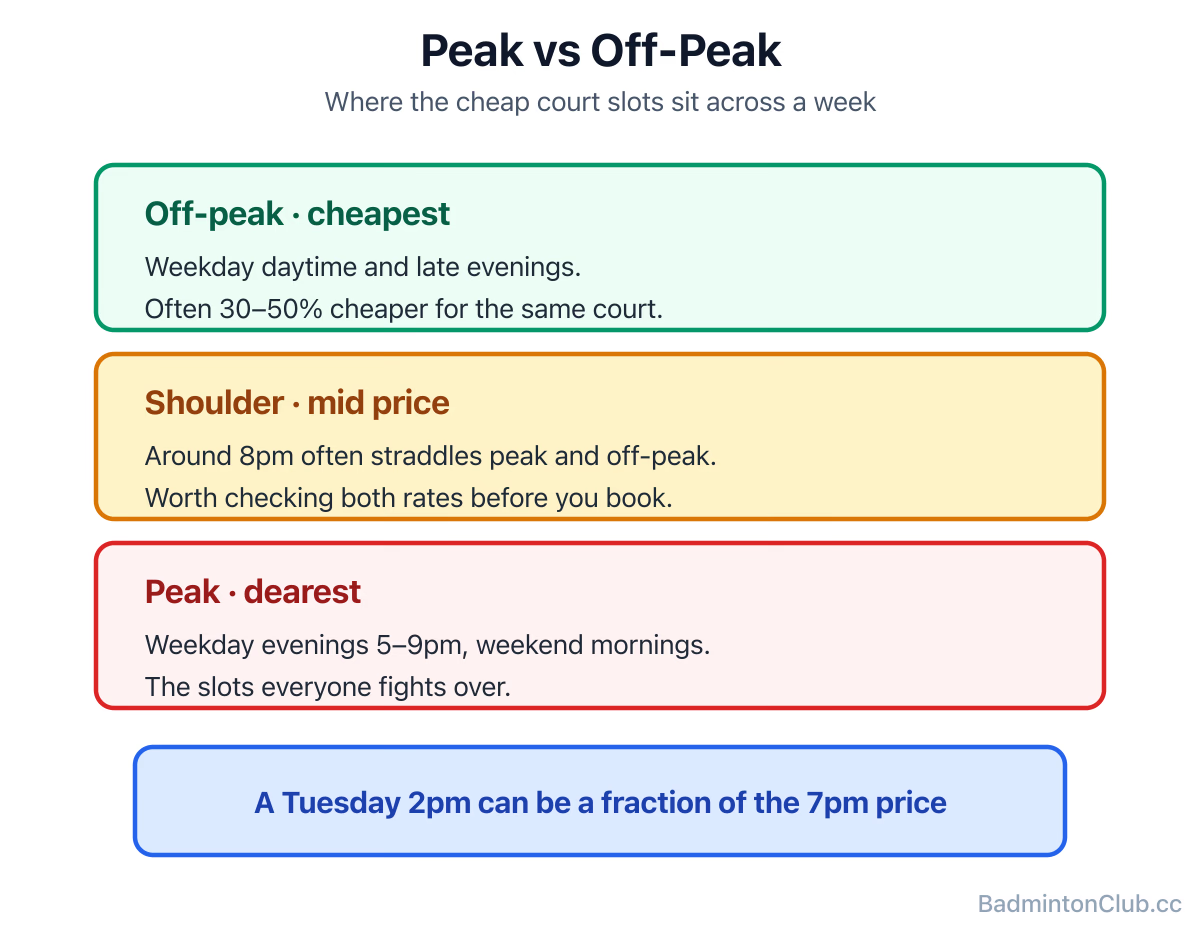
This is the single most useful thing to understand about booking. Peak time is weekday evenings (roughly 5–9pm) and weekend mornings — the slots everyone fights over, and the dearest. Off-peak is weekday daytime and late evenings, and it's often 30–50% cheaper. If your schedule has any flex, a Tuesday at 2pm or a 9pm slot can be a fraction of the 7pm price for the same court.
Booking for a group or a whole club night
Booking one court for four friends is easy. Booking several courts every week for a club is a different job — you're holding a block booking, collecting money from a rotating cast of people, and making sure the courts you paid for don't sit half-empty because three regulars dropped out on the night. That admin sinks a lot of casual groups.
A regular block booking plus a way to track who's actually coming is what keeps a weekly game alive. Plenty of organisers run the headcount and on-court rotation through a peg board or an app like BadmintonClub.cc so they know they've got enough players before they're on the hook for four courts. If you book three courts and only five people show, you've wasted two-thirds of your money — confirming attendance beforehand is the whole game.
The booking tricks regulars actually use
A few things you only learn after losing slots and money. First, set an alarm for the moment the booking window opens — if the centre releases slots 8 days ahead at midnight, the good evening courts are gone by 12:05, and a calendar reminder is the difference between playing and not. Second, stack a recurring booking if the venue allows it; a standing weekly slot saves you the weekly scramble entirely. Third, learn the venue's cancellation rule before you need it — some refund up to 24 hours out, some keep your money, and finding out the hard way stings. And honestly: if you book regularly, just become a member. The per-visit saving plus priority booking usually pays for the membership within a term if you play weekly. For the full money picture, see how much badminton costs.
A worked example: booking a Thursday club night
Say your group wants three courts, 8–10pm on Thursdays. You'd open a block booking with the centre for that recurring slot, confirm the off-peak/peak rate (8pm often straddles both), and lock it in for the term. Each week you confirm who's coming — aim for 12 players for 3 courts so a couple of drop-outs don't leave a court empty. You take payment up front or per head, run a fair rotation so everyone gets games on the court you booked, and you've turned a fragile "anyone fancy badminton?" message into a reliable weekly fixture. That reliability is what turns a one-off into a club.
FAQ
- Q: How do I book a badminton court? Use the venue's app or website (leisure-centre portals like Better or Everyone Active, or a club's own booking page), or phone the front desk. Pick a date and slot, pay to reserve the court, and you're booked — the price covers the whole court, not per player.
- Q: How far in advance can I book a badminton court? Public bookings typically open a fixed window ahead — often 7–8 days — with members getting a longer window. Prime weekday-evening slots go fast, so set a reminder for when the window opens.
- Q: How much does it cost to book a badminton court? Roughly £6–£16 per court per hour in the UK and $15–$55 in the US, depending on the venue and whether it's peak time. Split between four players that's cheap; see how much badminton costs for the detail.
- Q: What is the difference between peak and off-peak booking? Peak is weekday evenings and weekend mornings — busiest and most expensive. Off-peak (weekday daytime, late evening) is often 30–50% cheaper for the same court. If your schedule is flexible, off-peak is the obvious saving.
- Q: How long is a typical court booking slot? Usually 45 or 60 minutes. That's enough for a couple of casual games of doubles to 21; see how long a badminton match takes to plan how many games fit a slot.
- Q: How do I book courts for a whole club night? Take out a recurring block booking for several courts at a fixed weekly slot, then confirm attendance each week so you don't pay for empty courts. Tracking the headcount and rotation with a peg board or BadmintonClub.cc stops you booking three courts for five people.
A simple guide to badminton court booking: how to reserve a court at a leisure centre or badminton club, how far ahead to book, how peak and off-peak pricing works, and the booking mistakes that cost you money or a wasted trip. Whether you're organising a weekly game for four or running a club night across several courts, here's how to lock in court time reliably — and the tricks regulars use to get the cheap slots.