How Long Is a Badminton Match? Game, Match and Session Times Explained
8 June 2026 · Badminton Fans
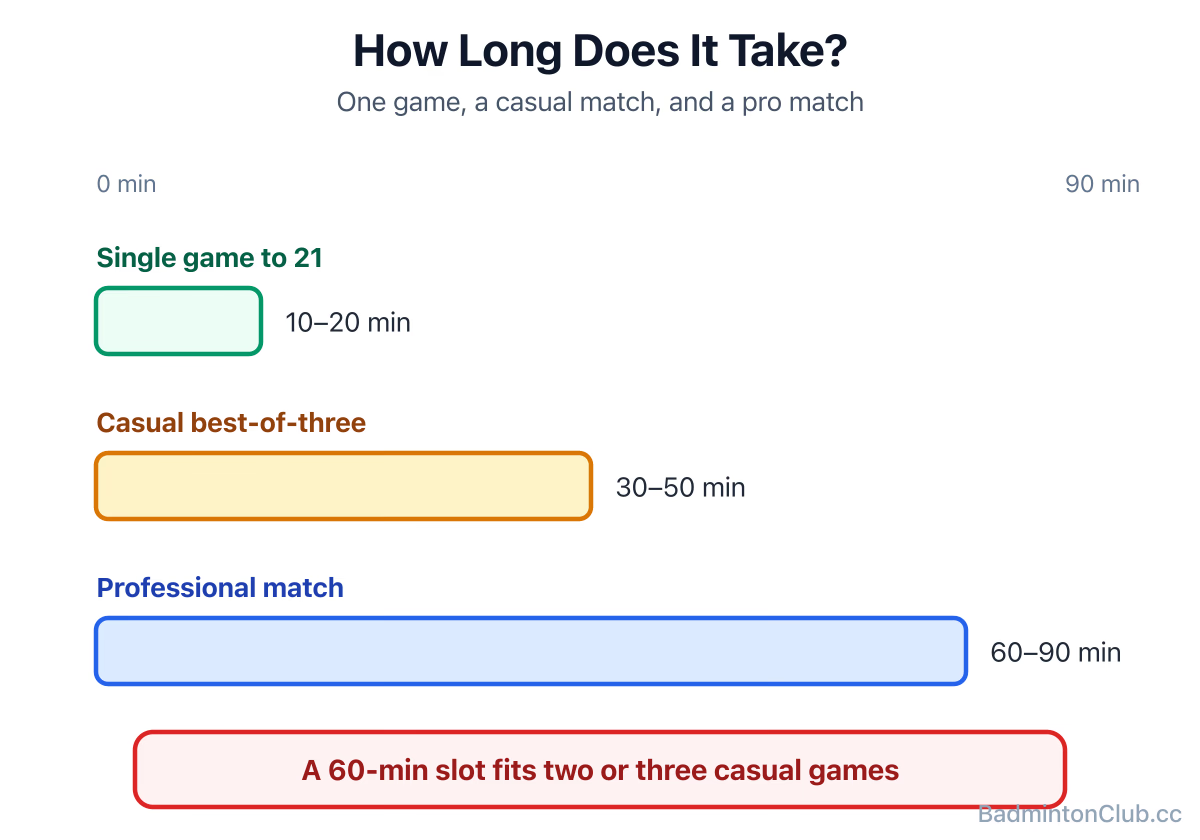
If you've booked a court and you're wondering how much badminton you'll actually fit in the slot, here's the real-world answer. A single game to 21 points takes roughly 15 to 25 minutes for recreational players. A full best-of-three match runs about 30 to 45 minutes. Professionals average 40 to 50 minutes, with tight singles occasionally pushing past an hour — but that's at a completely different level of fitness and rally length. The big variable is how evenly matched the players are: a 21-9 blowout is over in no time, while a 24-22 seesaw that goes to deuce can stretch twice as long. I've had a game last twelve minutes and another one last nearly forty. Same score format. Very different evening.
Game vs match vs session — three different questions
People asking "how long is a badminton match" usually mean one of three things, so let's separate them:
- A game is a single race to 21 points (win by 2). Recreationally that's about 15–25 minutes; faster between mismatched players, longer in a grinding singles game.
- A match is best of three games. Casually that's roughly 30–45 minutes; professionally about 40–50 minutes on average.
- A session is your whole time at the hall — usually a booked 45- or 60-minute court, or a 2–3 hour club night where you play many short games and rotate.
Most casual play is the third kind: lots of quick games to 21, not one long formal match.
What actually decides the length
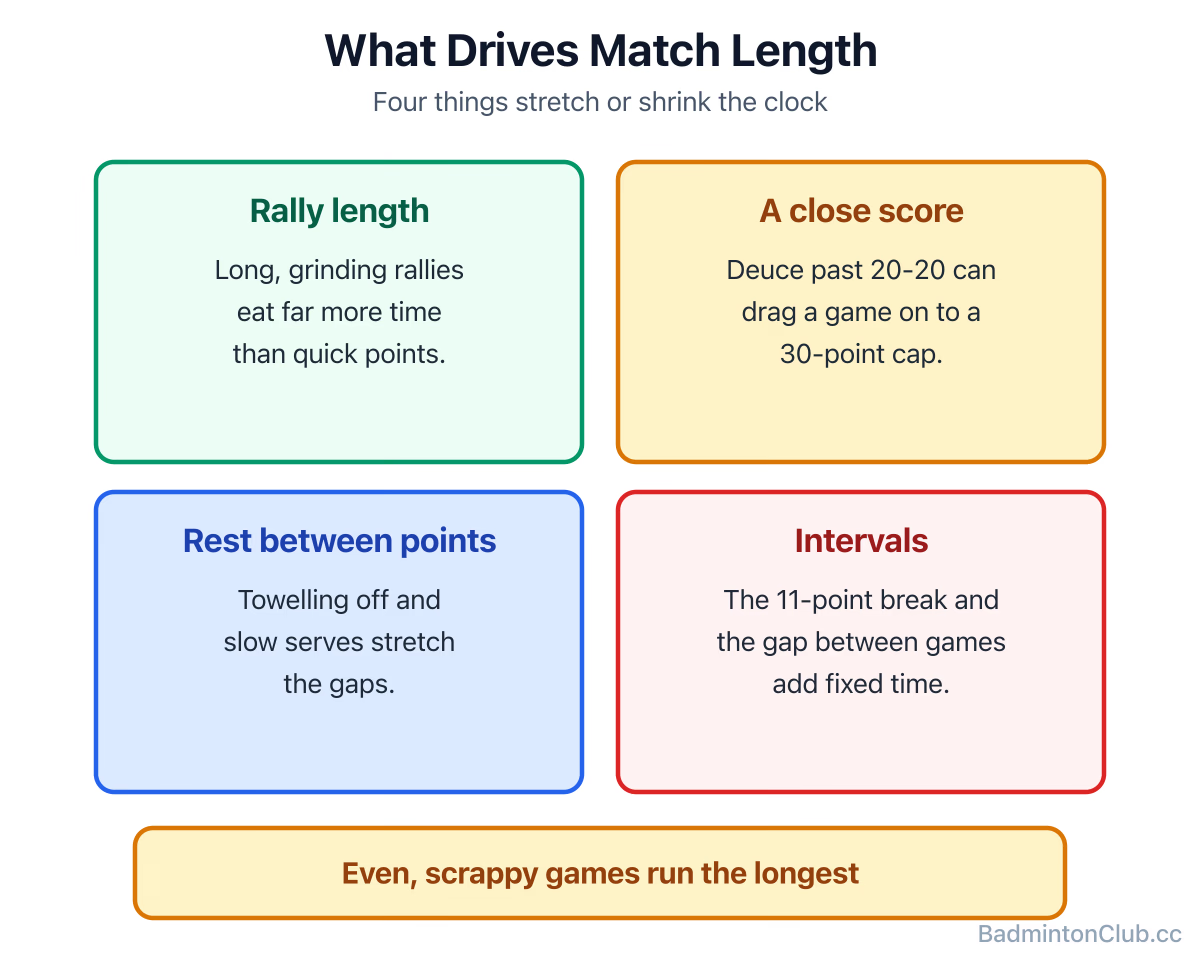
The scoring system sets the skeleton, but four things flex the real time. Rally length — long defensive rallies between good players stretch a game; quick winners shorten it. How close it is — a 21-19, 24-22 thriller takes far longer than a 21-9 rout, and deuce (no cap until 30) can drag a game out. Rest between points — the unofficial pauses to towel off and breathe add up fast. And the interval at 11 points in each game, plus the gap between games, adds a couple of minutes.
How many games fit a court booking
This is the practical question for anyone who's booked a court. In a 60-minute slot of casual doubles, four players comfortably get through two to four games to 21, depending on pace, plus warm-up. A 45-minute slot is more like two games once you've knocked up. If you've booked a court and want maximum play, skip full formal matches and play single games to 21, rotating partners — you'll fit more games and everyone gets more variety. On a club night with several courts and a queue, a quick game to 21 (about 12–15 minutes) is the natural unit, which is why most clubs rotate on completed games rather than the clock.
Why the clock is the wrong way to organise a club night
A small but strongly-held opinion, from running plenty of busy halls: rotating players by completed game beats rotating by a timer. Timed rotations sound fair but cut rallies off mid-game and leave people fuming over an unfinished 19-all. Rotating when a game finishes — winners off or losers off, your house rule — respects the natural unit of the sport and feels fair because nobody's robbed of a finish. The snag is that games to 21 vary from 12 to 25 minutes, so courts free up unevenly and it's a headache to track who's next across four courts. That's precisely the job a peg board or an app like BadmintonClub.cc is built for: it watches which game ends next and pulls the right waiting players on, so the variable game length stops being a problem. Organise by game, not by clock — and let something else track the chaos.
The record that puts it in perspective
If your knees ache after a 40-minute match, spare a thought for the longest match on record. At the 2016 Badminton Asia Championships in Wuhan, a women's doubles semi-final — Japan's Fukuman and Yonao against Indonesia's Polii and Maheswari — ran 161 minutes, two hours and 41 minutes (13-21, 21-19, 24-22), a brutal see-saw marathon and the longest match ever recorded. The longest singles match is a separate beast: the 124-minute 1997 World Championships men's final between Peter Rasmussen and Sun Jun. Both are outliers that prove the rule. Almost every match you'll play or watch lands inside the 30–60 minute band; those epics are famous precisely because they're so far off the norm. Don't budget your court time around them.
FAQ
- Q: How long is a badminton match? A casual best-of-three match runs about 30–45 minutes; a professional match averages 40–50 minutes, with tight singles sometimes passing an hour. A single game to 21 takes roughly 15–25 minutes recreationally.
- Q: How long is one game of badminton? A game is a race to 21 points (win by 2) and takes about 15–25 minutes in recreational play — quicker between mismatched players, longer in close, rally-heavy games. A match is the best of three such games.
- Q: How many games can I play in a one-hour court booking? In a 60-minute casual doubles slot, four players usually fit two to four games to 21 after a warm-up. To maximise play, run single games and rotate partners rather than full formal matches. See court booking for slot lengths.
- Q: Why do some badminton matches take so much longer than others? Rally length, how close the score is (deuce has no cap until 30), and how much players rest between points all flex the time. A 21-19 thriller can take twice as long as a 21-9 rout with the same number of points scored.
- Q: What is the longest badminton match ever? A women's doubles semi-final at the 2016 Badminton Asia Championships (Japan v Indonesia) lasting 161 minutes — two hours and 41 minutes. The longest singles match is the 124-minute 1997 World Championships men's final. Both are famous outliers; virtually every match falls within the normal 30–60 minute range.
- Q: How long is a typical club badminton session? A drop-in club night usually runs two to three hours, during which you play many short games to 21 (about 12–15 minutes each) and rotate partners, rather than one long match. Booked private courts are normally 45- or 60-minute slots.
How long is a badminton match? A recreational game to 21 takes about 15–25 minutes, a full casual best-of-three runs roughly 30–45 minutes, and a professional match averages 40–50 minutes — with tight singles sometimes passing an hour. This explains what actually drives the time (scoring, rally length, rest breaks), how many games fit a typical court booking, and where the record longest match of 161 minutes came from.