Winner Stays On Badminton (King of the Court): Rules, Rotation, Pros & Cons
6 June 2026
Winner Stays On — also called King of the Court — is a badminton rotation where the winning pair keeps the court and the losing pair rotates off to be re-matched. It rewards winning with more court time and creates a competitive, high-energy atmosphere, but without a cap it can leave weaker players waiting. In BadmintonClub.cc this is the Winners Stay mode (winnersstay), with built-in result reporting and skill-rating (ELO) updates.
How Winners Stay works
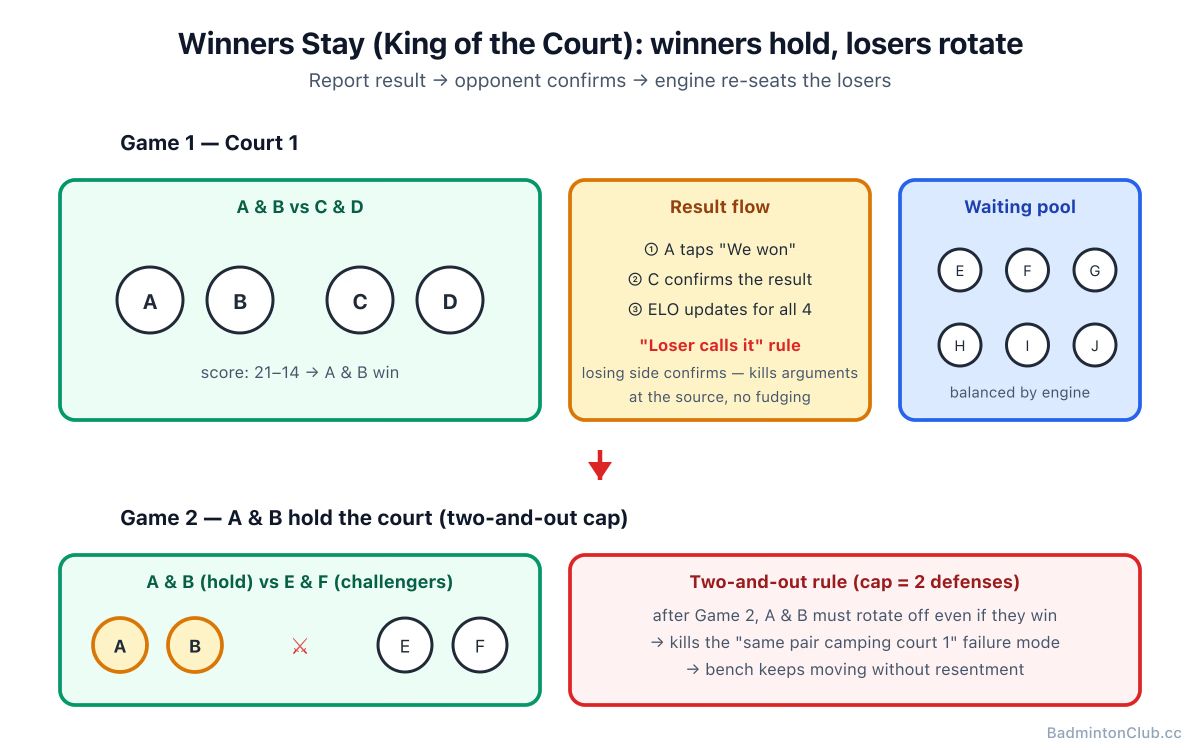
Four players take a court and play a game. The winners stay on; the losers rotate off and are re-matched with other off-court players for the next round. Beat the holders and you become the ones who stay. It's the most universally recognized "earn your spot" format in racket sports.
How Winners Stay works in the app
In Winners Stay mode, the rotation app:
- Lets a player on each court report the result — a "We won / They won" tap.
- Requires an opponent to confirm the result (so scores aren't gamed).
- Keeps the winning pair on their court and feeds the losers back into the pool, then builds the next round with our balancing engine around that constraint (rest fairness, skill grouping, gender rules).
- Updates each player's skill rating (ELO) from confirmed results, so future balanced games get more accurate over time.
This means Winners Stay isn't just "winners camp the court" — the losers' next games are auto-balanced, and the whole club's skill ratings improve session over session.
How the app handles the pros & cons
The classic problem with Winner Stays On is court-time unfairness (strong pairs dominate; beginners wait). The app softens this by:
- Balancing the loser pool intelligently so the players who rotated off get fair, competitive next games rather than random ones.
- Using confirmed results + ELO so winners are matched against genuinely competitive challengers, keeping games close instead of letting one pair steamroll forever.
- (Roadmap-friendly) pairing this with rest-fairness in the surrounding rounds so non-holders still cycle on regularly.
Tip we surface to admins: Winners Stay shines for competitive/intermediate-plus nights and 1–3 court venues. For inclusive beginner nights, point them to TimeSwap or Peg Board instead.
A house rule worth stealing: "two and out, and the loser calls it"
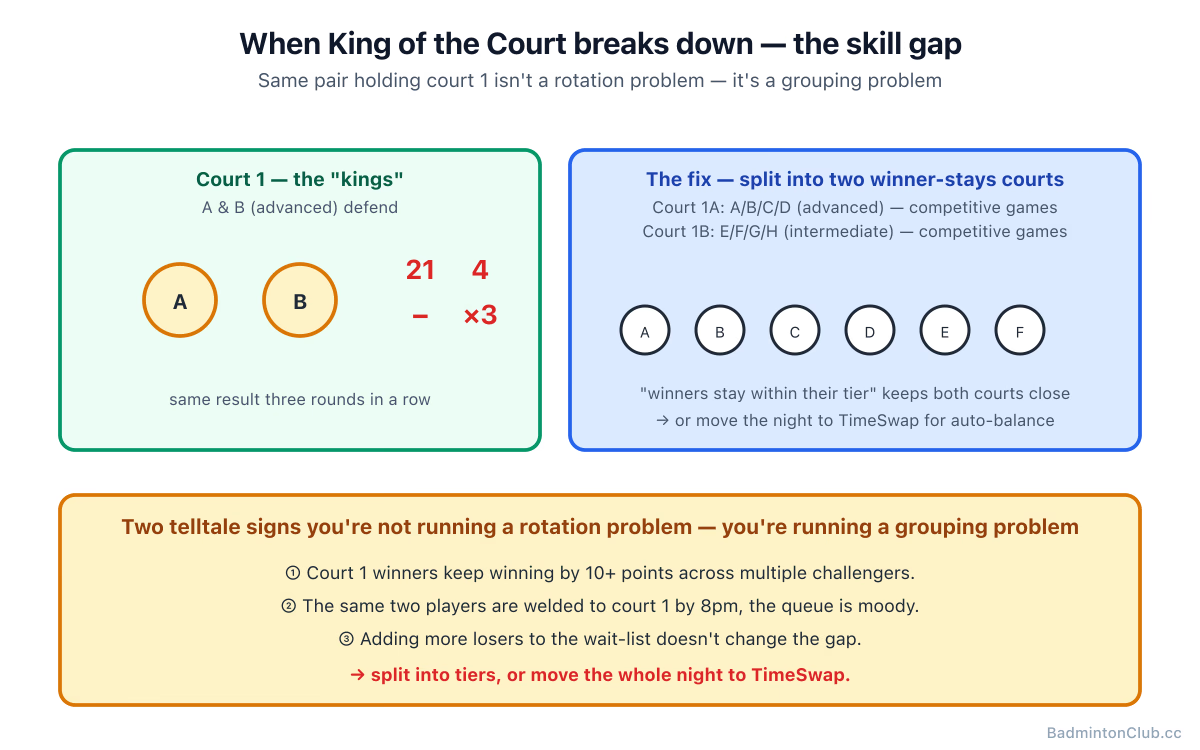
Two small conventions turn winner-stays-on (the "king court format" people search for) from a court-hog magnet into something that actually works. The first is "two and out": a pair can defend a maximum of two games, then they're off regardless — long enough to feel rewarded for a good run, short enough that the bench keeps moving. Clubs that skip the cap always end up with the same two ringers welded to court 1 by 8pm and a quietly resentful queue.
The second fixes the awkward bit everyone hits — who reports the score? Make it the losing side that confirms the result, not the winners. It sounds backwards, but it kills the "did you really win that?" friction completely: nobody argues a loss they themselves logged, and it removes any incentive to fudge. In BadmintonClub.cc that's exactly the flow — one side reports, an opponent confirms — so the etiquette is baked in rather than relying on goodwill. The honest caveat: winner-stays only stays fun when the gap between your strongest and weakest player isn't a chasm. If court 1's kings beat the next challengers 21–4 three times running, you don't have a rotation problem, you have a skill-grouping problem — split into two winner-stays courts by level, or move that night to a timed rotation format.
A third rule that gets missed: let the defenders leave on a high. When the holders are forced off by the win cap, give them the option of "I stay and play social" or "I take a full rest round." Otherwise the cap feels like a punishment for winning, and the strongest players quietly stop coming. Most clubs that have run winners-stay for years will tell you the cap is fine — the delivery of the cap is everything.
Pros and cons
Pros
- ✅ Rewards winning — competitive, exciting.
- ✅ Dead simple to understand; minimal admin.
- ✅ Great for small venues (1–3 courts) and stronger players.
- ✅ With confirmed results + ELO, ratings stay accurate.
Cons
- ❌ Court time skews to the strongest (mitigate with a win cap).
- ❌ Beginners can wait through several games.
- ❌ Can entrench cliques if unmanaged.
Three quick examples
- 1 court, 8 players: A+B win twice; a 3-win cap forces them off so the queue keeps moving.
- Skill-split, 2 courts: Winners stay within their court's tier so games stay competitive.
- Singles King of the Court (drill): one "king's side," challengers rotate in — a staple academy conditioning drill from Denmark to Indonesia.
Where it's popular & estimated market share
The most globally recognized format. As a primary club system, estimated ~15–20% worldwide, skewing higher in Asian drop-in halls (China, Malaysia, Indonesia, Vietnam, Philippines) and casual public play, lower in fairness-focused UK/AUS/NZ membership clubs.
FAQ
- Q: What are the rules of winner stays on in badminton? Winners keep the court; losers rotate off and are re-matched. First to the agreed points (often 15 or 21) wins the game.
- Q: Is winner stays on fair? Not for court time — winners play more. Add a 2–3 game win cap to keep it moving.
- Q: What's a good win cap? 2–3 consecutive wins, then the holders must rotate off.
- Q: How is it different from winner splits? Winner Stays keeps the pair together; Winner Splits breaks them up each game for more mixing.
- Q: How many courts does it suit? Best with 1–3 courts and 8–16 players.
- Q: Does the app track who won? Yes — one player reports, an opponent confirms, and ratings update via ELO.
- Q: Can beginners enjoy it? Better in a skill-split or with a win cap; otherwise consider TimeSwap.
- Q: Singles or doubles? Both — "King of the Court" works as a singles drill or a doubles club format.
- Q: What if no-one reports the result? The engine keeps the holders on court for a default 2-game cap regardless; you'll lose the accuracy of the skill rating but the rotation keeps moving.
- Q: Is 1 court + 8 players really the sweet spot? Yes — the format loses its energy past 3 courts because the action scatters; keep it tight and loud.
- Q: How long should each game go? First to 15 (or 21) is the common choice; timed 12-min games also work well to keep the queue cycling.
Winner Stays On — also known as King of the Court — is the competitive badminton rotation where the winning pair holds the court and losers rotate off. Learn the core rules, the two-and-out win cap, how to keep it fair for mixed-level groups, and when to use it over other formats.