Winner Splits Badminton Rotation: The Social Club-Night System That Beats Court Hogging
6 June 2026
Winner Splits is a badminton rotation where, after each game, the winning pair is broken up and each winner takes a new partner, while the losers rotate off. It keeps the small reward of staying on but prevents any pair from dominating — making it one of the most social club-night formats. (Closest BadmintonClub.cc modes: Winners Stay when you want the competitive cousin — see Winner Stays On Badminton (King of the Court) for a full comparison; or Timed Badminton Rotation Done Right for full auto-mixing.)
How it works
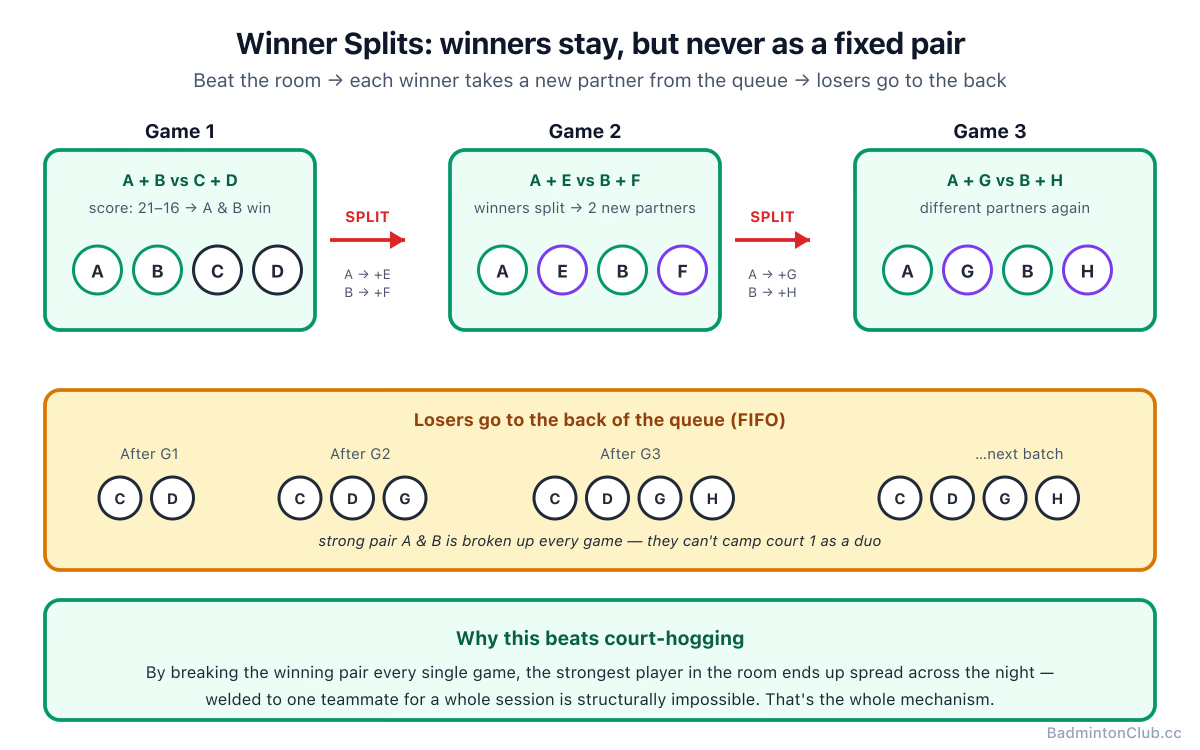
After a game, the winning pair splits — each winner stays but is re-paired with a player from the front of the queue; the losing pair leaves to the back. Winners keep playing, but never as a fixed, unbeatable unit.
From the club floor: the "mix and match" night that keeps newcomers coming back
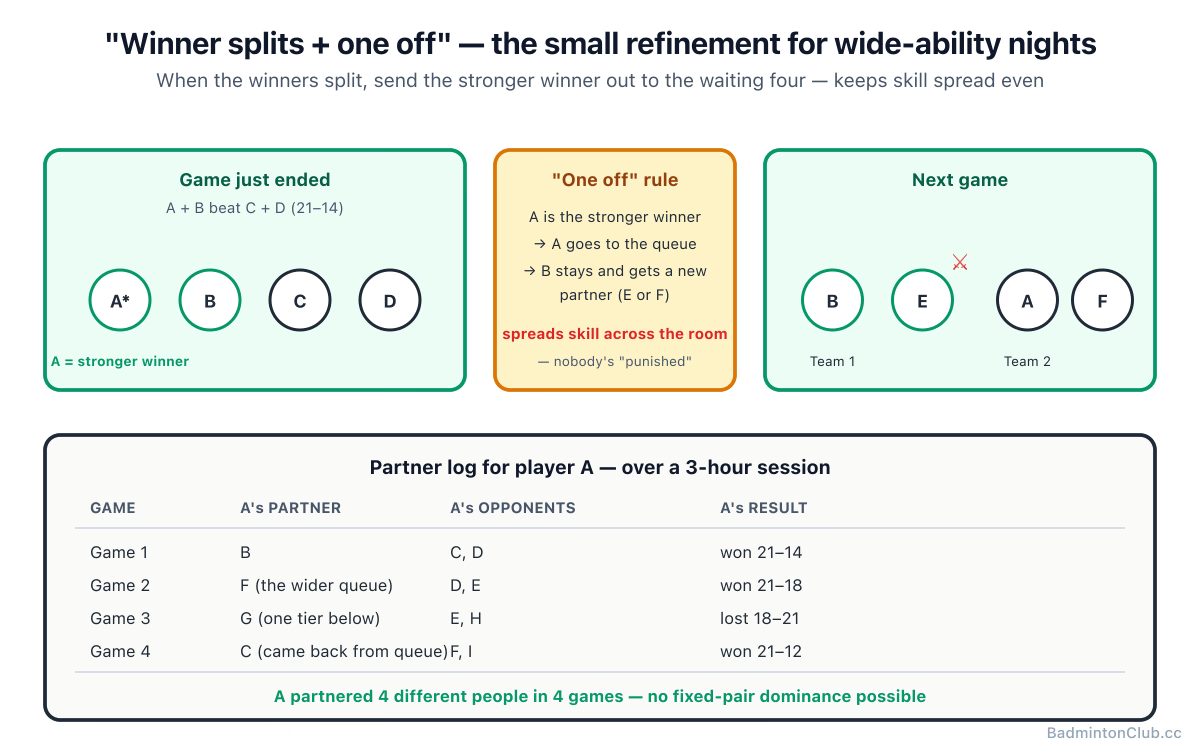
Winner splits is the quiet workhorse of social, mix-and-match badminton — the format clubs reach for when the goal is "everyone goes home having played with people they didn't arrive with." The mechanism that does the work is subtle: by breaking the winning pair every single game, you make it almost impossible for a dominant partnership to form, so the strongest player in the room ends up spread across the night rather than welded to one teammate. New members feel that. The fastest way a beginner decides a club "isn't for them" is playing four games as the third wheel to a settled pair; random-partner rotation structurally prevents it. One small refinement worth running on a wide-ability night: when the winners split, send the stronger of the two over to the waiting four and keep the weaker one on — over an evening it pulls the average game closer without anyone feeling singled out.
Pros and cons
Pros: ✅ no court monopolies · ✅ maximal partner mixing · ✅ fairer court time than Winner Stays. Cons: ❌ slightly less competitive · ❌ strong pairs can't build chemistry · ❌ a moment of re-pairing each game.
Examples
- A+B beat C+D → next game A+E vs B+F; C+D to the back.
- 4 courts: rotate one winner up / one down each round to level courts.
- "Winner splits + one off": the stronger winner rotates off entirely to spread skill.
Where it's popular & estimated share
A staple of UK, AUS, NZ and Canadian club nights; estimated ~10–15% as a primary system, higher in Commonwealth social-club culture.
FAQ
- Q: Winner stays vs winner splits — what's the difference? Stays keeps the pair; splits breaks it up for more mixing.
- Q: Is winner splits fair? Fairer on court time than winner stays; very social.
- Q: Best club size? ~8–20 players on 1–4 courts.
- Q: Does it balance skill? Not automatically — for that use a balanced app mode like TimeSwap.
- Q: Why use it over winner stays? To stop one pair hogging and to mix partners.
- Q: How are new partners chosen? From the front of the waiting queue.
- Q: What if a winner doesn't want to split up? It's a rule, not a suggestion — clubs that let winners stay paired "just this once" always regret it within ten minutes.
- Q: Does it work for 2 players on one court (singles)? Yes — winner stays, loser rotates with the next waiting player. Same idea, simpler maths.
- Q: Can I run winner splits inside a box / tier system? Yes — keep the pairs within the same skill band so the winners you're splitting are still competitively matched.
Winner Splits breaks up the winning pair every game so no duo can dominate, making it one of the most social club-night formats. Learn the rules, the stronger-winner refinement, pros and cons, and why it keeps newcomers coming back — ideal for 8–20 players on 1–4 courts.