Reading the Game in Badminton: Anticipation, Court Reading, Net Strategy & Shuttle Drift
6 June 2026
Reading the game is the layer above technique: anticipating your opponent's shot from their body and racket position so you move early, recognising patterns in how they play, adjusting for the hall's shuttle drift, and choosing strategies — like playing longer net shots to deny spin — that exploit what you've read. It's the difference between reacting to the shuttle and being already on your way to it.
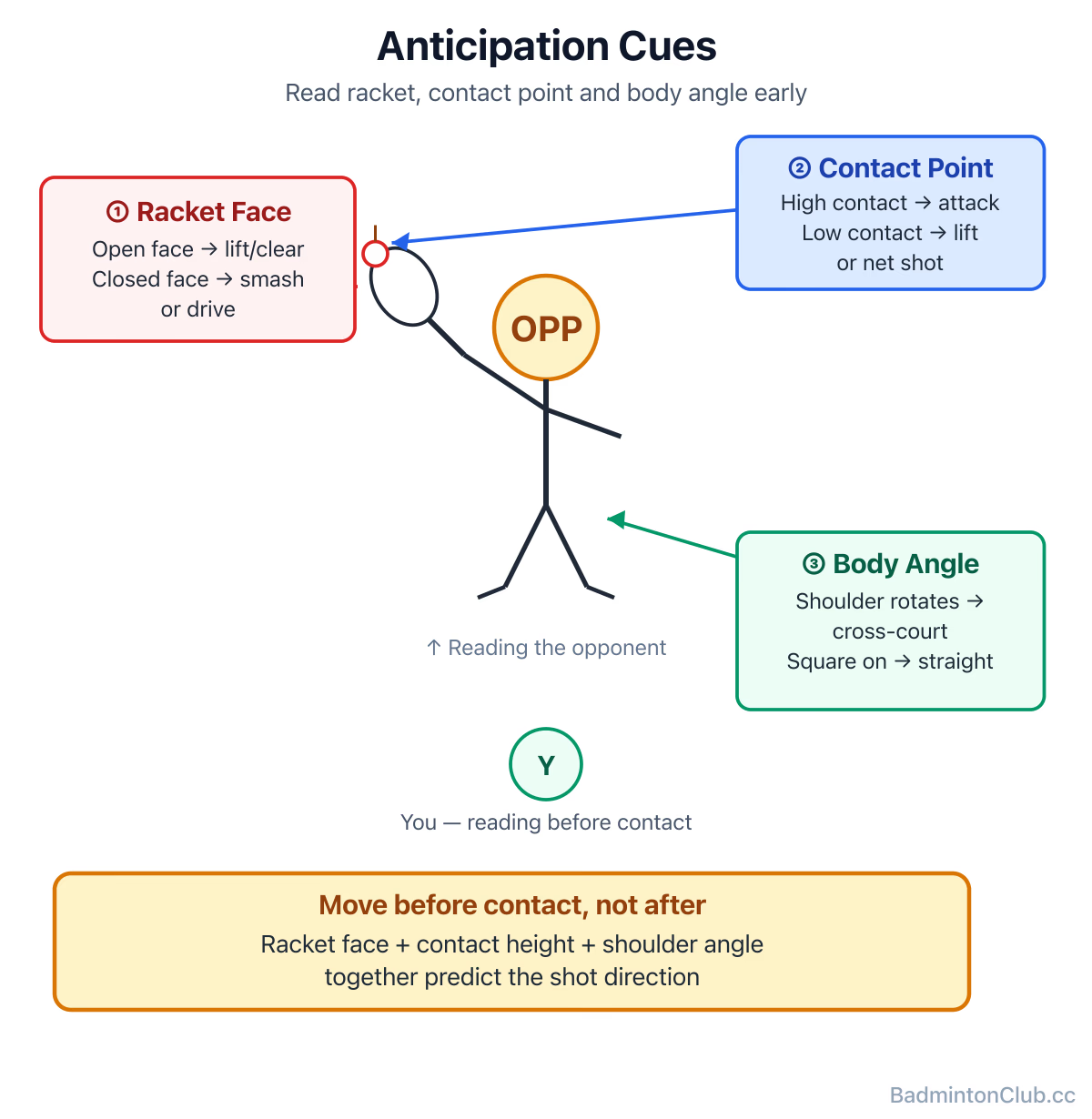
Anticipation — reading before the hit
Elite-looking "speed" is often anticipation: reading the cues that betray a shot before it's struck — the racket face angle, the contact point (early/high vs late/low), the body's set, where the opponent is looking. A late, low contact behind the body can only really be a lift or a defensive clear; a high early contact with a steep face screams smash. By watching the hitter rather than the shuttle, good players trigger their split step and first movement fractionally early, which is why they always seem to "have time". Train it by watching opponents (and pro matches) and consciously predicting the shot — then checking if you were right.
Court reading and patterns
Beyond single shots, court reading is spotting the patterns: this opponent always goes cross-court off a backhand; they reliably lift when stretched to the deep forehand; they crowd the straight net and never cover the cross. Once you've read the pattern you can pre-empt it — leaning to cover their favourite reply, or deliberately feeding the situation that triggers their predictable shot, then punishing it. (The reverse also applies: deception and double-action shots are designed to make you misread their pattern, so understanding tells helps you resist those fakes too.) Most players are far more repetitive than they think. A point or two spent diagnosing an opponent early in a match pays off all the way through it.
Net strategy and shuttle drift
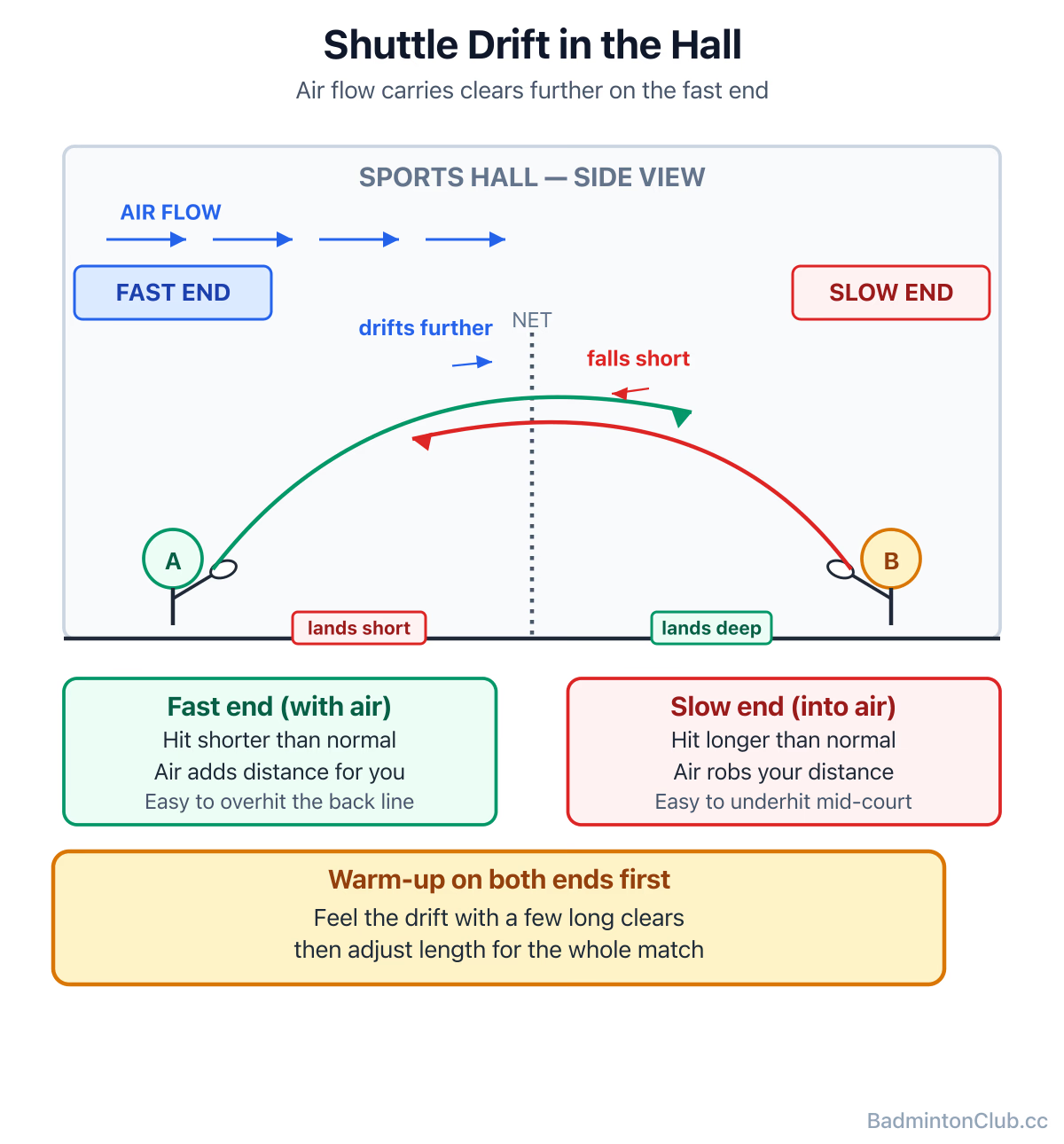
Tactical choices follow from what you read. A long net strategy — deliberately playing net shots a touch deeper rather than ultra-tight — can deny a spin-happy opponent the tight loose shuttle they thrive on, trading a little tightness for control and safety. And every hall has its own shuttle drift: air conditioning, open doors and temperature push the shuttle along the court, so a clear that's perfect on one end sails out on the other. Good players test the drift in the knock-up and adjust — hitting with the drift more cautiously and into it more freely, and using ends to their advantage. Shuttles also fly faster in warm air and slower in cold, so the same swing has different length day to day.
What this looks like on a club night
The player who always seems to be "in the right place" usually isn't faster — they're reading better, and it's a skill you can learn far more cheaply than raw speed. Start simply: pick one opponent habit per game and exploit it. Notice which end the shuttle drifts toward and stop hitting your clears out on the fast end. These small reads win tight matches that technique alone won't. My honest take: club players obsess over strokes and almost never practise watching, yet a sharper eye for the opponent's tells and the hall's conditions is one of the quickest routes to winning more of the close ones.
The "one tell" game
A practise game with a friend: pick one tell per opponent (their grip change, their shoulder, their eye flick, the way they plant their back foot) and try to call five shots in a row correctly before the rally starts. You'll start to see how readable the average club player actually is — far more than they think. The exercise also forces you to look at the hitter, which is most of the skill, because most players default to watching the shuttle. By the third opponent you've played, you'll have a small library of tells you can take into every match. Reading is the cheapest upgrade in badminton, and it's almost never practised on purpose.
FAQ
- Q: How do you anticipate shots in badminton? Watch the hitter — racket face, contact point, body angle and gaze — rather than the shuttle, so you read the likely shot before it's struck and move fractionally early.
- Q: What is court reading? Recognising an opponent's recurring patterns (favourite replies, predictable lifts) so you can pre-empt them or set up and punish their habitual shot.
- Q: What is a long net strategy? Deliberately playing net shots slightly deeper rather than ultra-tight to deny a spin-reliant opponent the loose tight shuttle they thrive on, trading tightness for control.
- Q: What is shuttle drift and how do I adjust? Air movement and temperature push the shuttle along the court; test it in the knock-up and hit more cautiously with the drift, more freely into it, and use ends to your advantage.
- Q: Why does the shuttle go out on one end but not the other? Drift and conditions differ end to end — the "fast" end carries your clears further, so the same swing that lands in on one end can sail long on the other.
- Q: Can anticipation be trained? Yes — consciously predict opponents' (and pros') shots from their setup and check whether you were right; it improves much faster and cheaper than raw foot speed.
Sources & verification
Technique content is written fresh from coaching first principles. The specific figures cited in the series are verified against the following:
- Fastest smash records (565 km/h lab; 493 km/h prior; ~500 km/h in competition): Olympics.com — "Fastest badminton smash: India's Satwiksairaj Rankireddy sets Guinness world record"; Starr Cards — "World record fastest badminton smashes with Tan Boon Heong and Mads Pieler Kolding"; Sportskeeda — "What is the fastest smash in badminton and who holds the record?" The 565 km/h and 493 km/h figures are controlled-test (lab) records, not in-rally speeds; the series flags this wherever speed is mentioned.
- BWF fixed-height service law (whole shuttle below 1.15 m at contact, experimental from March 2018, now standard in international play): BWF — "Experimental Service Law from March 2018" and "Lund: BWF Optimistic Of 'Fairer Service Judging'"; Shuttle Smash — "The New Badminton Service Rule From BWF."
All other content (pronation/supination as the power source, the kinetic-chain sequence, scissor-kick and split-step mechanics, doubles attack/defence rotation, slicing for spin, etc.) reflects established, widely-taught coaching consensus, written in original wording and structure for this series rather than paraphrased from any single source.
Before publishing, do the human pass described at the top of this file: drop one real thing from your own world into each article (a club name, a clip of your own shot, a number from a recent match). That, plus the lived "on-court" blocks, is the dependable way to read as genuinely human — not any wording trick on its own.
Anticipation in badminton is about reading your opponent's racket face, contact point, and body angle before the shuttle leaves the strings — so you move early and win points cheaply. This guide covers the cues that give shots away, how to spot court patterns and pre-empt them, long net strategy, and adjusting for shuttle drift and hall conditions.