Net Kill, Brush Kill & Net Tap: Finishing Loose Shuttles at the Tape
6 June 2026
A net kill is a fast downward tap played on a loose shuttle near the tape, finished with a short forearm/finger snap and almost no backswing; a brush kill adds a sideways "wiping" motion across the shuttle so you can hit it steeply without your racket touching the net; and a net tap drill builds the elite finger power and reaction speed that make the kill instant. This is how loose net shots get punished — the most common free points in the game.
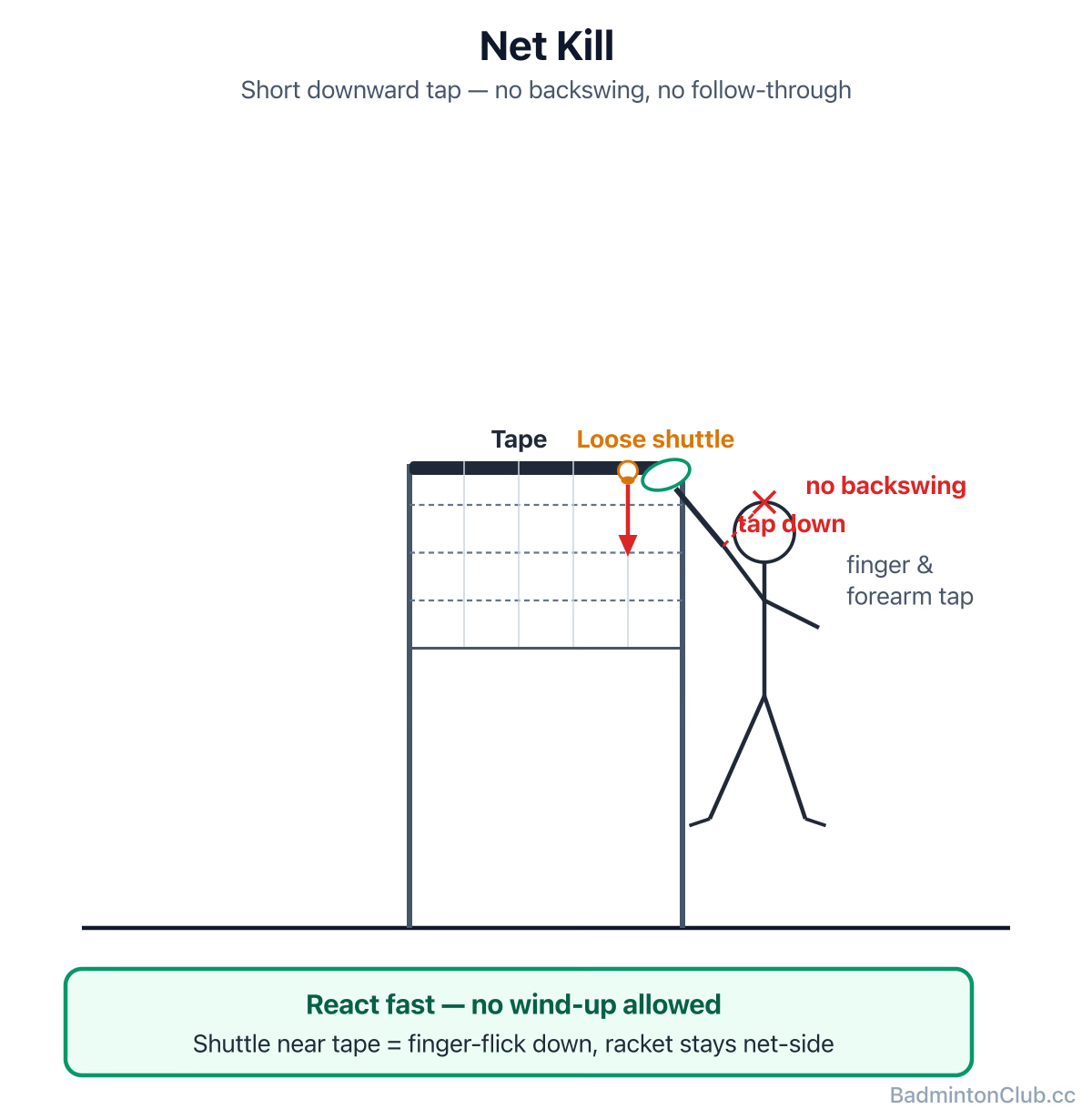
The kill: short, fast, controlled
When the opponent floats a net shot up off the tape, you finish it. The technique is the opposite of a smash: almost no backswing, racket already up, and a short, sharp finger-and-forearm snap straight down through the shuttle. The danger is the net — too big a swing and you hit it (a fault), or you overhit it long. So the motion is compact and controlled, more of a tap than a hit, with the pace coming from a quick squeeze of the fingers at contact. Take it as high as you legally can; the higher you meet it, the steeper and more final the kill.
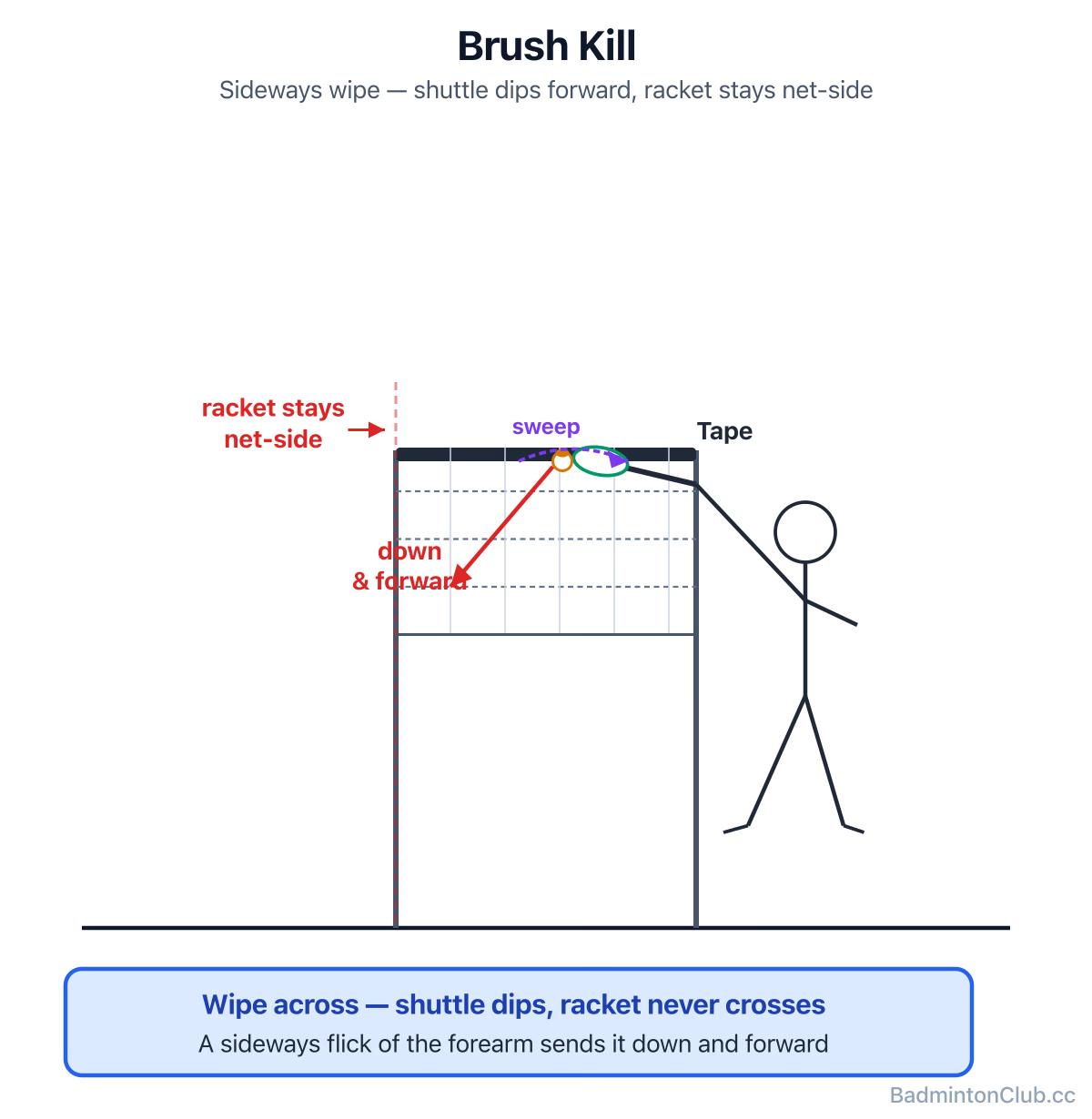
Brush kill — when it's too tight to hit down
Sometimes the loose shuttle is so close to the tape that a downward kill would clip the net. The fix is the brush kill: instead of hitting down, you sweep the racket face sideways across the shuttle — a wiping motion parallel to the net — so it shoots down and forward without your racket crossing into the net. It's the standard finish in doubles for those right-on-the-tape balls. The same brush action applies to a brush shot generally: a sliced, sideways contact that lets you attack steeply from an awkwardly tight position. Keep the wrist firm and the wipe short.
Net tap drill and net push
Speed at the net is trainable. The net tap drill: stand close to the net and tap the shuttle against it repeatedly — quick, light finger taps, racket up — building the fine finger power and fast reactions a kill needs. Wall taps and multi-shuttle "kill every feed" drills do the same. And when a shuttle isn't quite loose enough to kill outright, the net push is the safer sibling — a flat firm placement past the front player into the mid-court rather than a risky downward hit. Knowing when to kill versus push is the difference between finishing points and gifting them into the net — and pairing that decision with deceptive wrist and racket-face disguise makes the opponent guess wrong even when they read your approach correctly.
The mistake that gives it away
The classic club error is winding up to kill a net shot — a big swing that either nets the shuttle (instant fault) or sends it flying long. A net kill is a flick, not a swing; if your racket goes back past your head you're doing it wrong. The second error is hesitation: a loose shuttle punished half a second late drops below the tape and the kill is gone, so you have to decide early and pounce — and that starts with sharp net-zone footwork and a crisp split step that puts you on the ball before it drops. My rule of thumb: if it's above the tape and within reach, kill or brush it now; if it's dropping below, push it flat instead. Indecision at the net loses more points than poor technique.
The racket face must close
A surprisingly common cause of missed net kills: an open racket face at contact. The shuttle "skis" off an open face and floats long or wide; only a near-vertical (or just-past-vertical) face sends it down. The mistake is usually a leftover habit from gentle net shots, where a slightly open face is correct. The kill is a finishing stroke — close the face, snap through, and the same soft contact becomes a winner. Tiny detail, but it's what separates the kills that land in the gap from the ones that drift just long. As a quick self-check: after a kill, look at where the face pointed through contact. If it was aiming at the floor, you almost certainly hit a good one.
FAQ
- Q: What is a net kill in badminton? A fast, short downward tap on a loose shuttle near the tape, finished with a finger-and-forearm snap and almost no backswing.
- Q: What is a brush net kill? A sideways wiping contact across the shuttle that sends it down and forward without your racket touching the net — used when the shuttle is too tight to hit straight down.
- Q: How do I stop hitting the net when I kill? Use a compact tap, not a swing — if your racket goes back past your head it's too big. For very tight shuttles, brush sideways instead of hitting down.
- Q: What is a net tap drill? Repeatedly tapping the shuttle against the net with quick light finger taps to build the finger power and reaction speed a kill needs.
- Q: When should I push instead of kill at the net? When the shuttle is dropping below the tape or isn't loose enough to finish cleanly — push it flat into the mid-court gap instead of gambling on a downward hit.
- Q: Why do I miss easy net kills? Usually hesitation or over-swinging — decide early, keep the racket up, and finish with a short controlled tap.
Master the net kill and brush kill — the short, snapping strokes that turn loose shuttles near the tape into instant winners. Covers technique, the sideways brush for tight positions, net tap drills to build finger speed, and the two errors (over-swing and hesitation) that give easy points away. A must-read for doubles players.