Lifting Under Pressure in Badminton: The Backhand Lift & Deep-Corner Rescue
6 June 2026
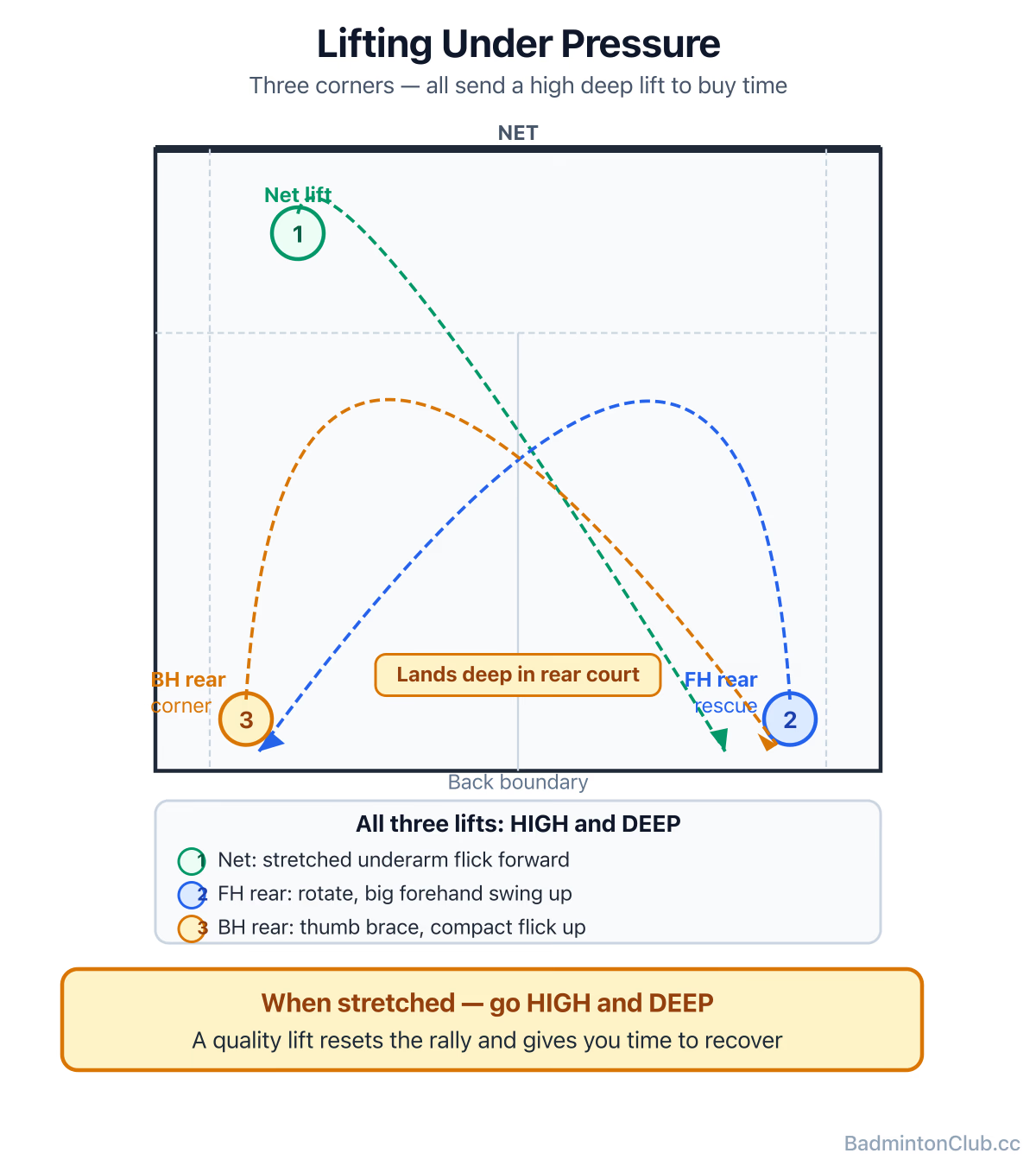
Lifting under pressure is the skill of sending the shuttle high and deep to the back court when you're stretched, late or off balance — from the net, the deep forehand corner or the awkward backhand side — to reset the rally and buy time to recover your base. Under real pressure the lift is your survival shot: get it high enough and deep enough and even a losing position becomes a fresh start.
Why "high and deep" is non-negotiable
When you're under pressure, the temptation is to rush the reply and it comes out flat and short — which is the worst possible outcome, because a flat short lift is a free smash. The single rule of the pressure lift is height plus depth: high enough that it can't be intercepted on the way up, deep enough that it lands near the back tramline and forces the opponent all the way back. That combination buys you the one thing you're missing — time — to push back to a central base before the next shot. A lower, riskier lift only makes sense as a deliberate flat-lift surprise, never as a panic reaction.
The under-pressure backhand lift
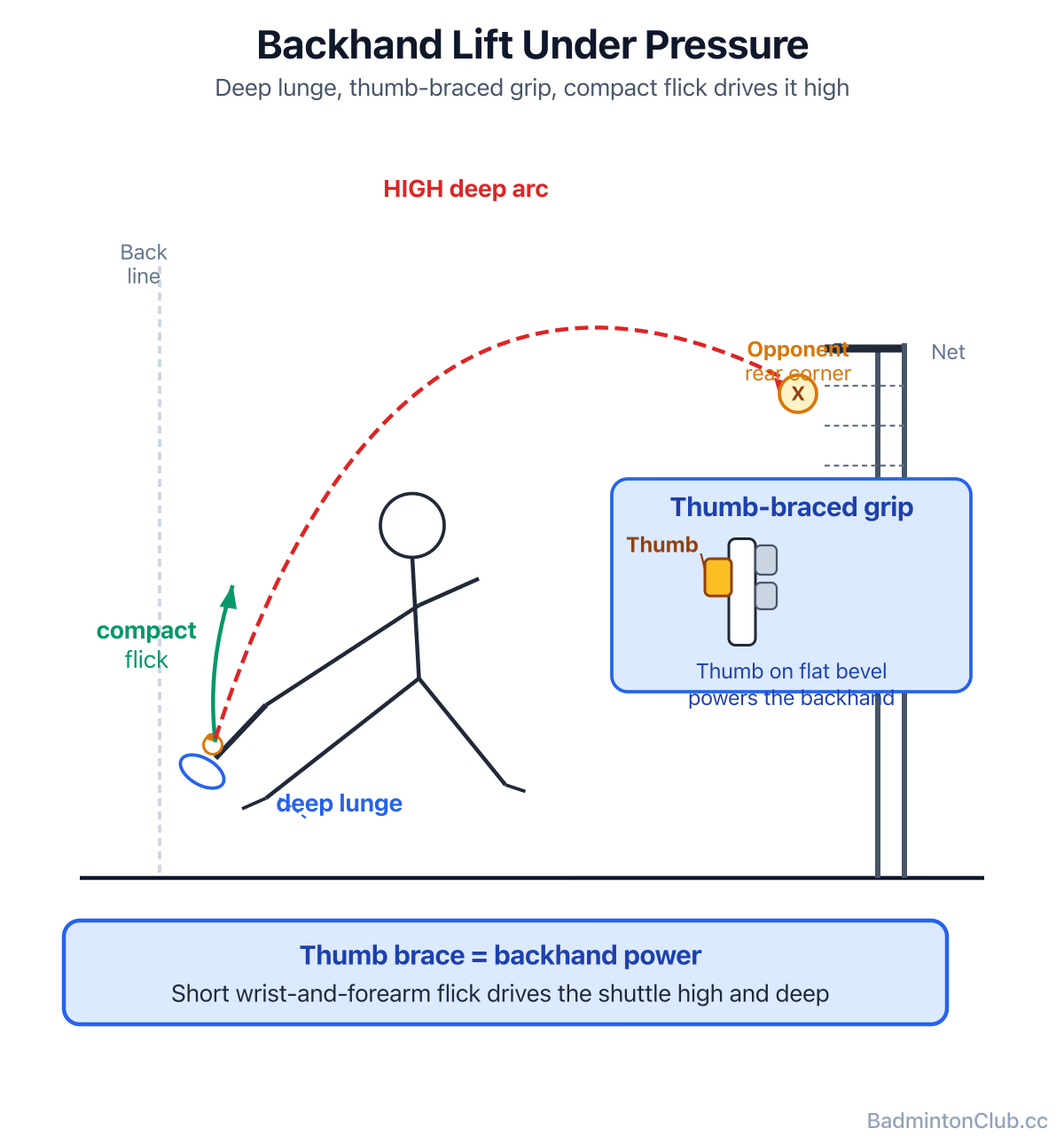
The backhand lift from a stretched, late position is the hardest of the family. You're reaching across or behind, often in a deep lunge, with a thumb-braced grip, and the power has to come from a compact forearm flick because there's no room for a backswing — the same wrist-and-forearm mechanics behind deceptive wrist snaps, just applied defensively rather than offensively. Get the racket face well under the shuttle, snap up firmly, and aim for depth before height. The most common failure is a tentative, wristy dab that drops the shuttle mid-court — commit to the flick. A solid backhand lift under pressure is what stops opponents from simply attacking your backhand corner relentlessly.
Deep-corner rescues
The forehand back-court rescue is the lift (or whippy clear) you play when you've been pushed behind a deep forehand shot and can't attack — an underarm or sidearm flick that throws the shuttle back to length so you can recover. From either deep corner, the priorities are identical: reset to length, recover your base, and live to play the next shot. Footwork is half the battle — the same split-step and lunge mechanics that cover the court fast also give you a stable platform to lift from; arriving off-balance forces the weak, short lift that gets punished. Recover out of the lunge immediately by pushing off the front leg.
What this looks like on a club night
Pressure lifting is the least glamorous skill in this whole series and quietly one of the most decisive. The players who climb out of plateaus aren't the ones with the biggest smash — they're the ones who, when scrambled and stretched, calmly send up a deep lift and reset instead of coughing up a weak short one. Watch a tight three-setter and count how many points end on a panicked short lift that got smashed; it's a lot. The honest, slightly boring advice: drill being stretched. Have a partner push you to all four corners and lift everything high and deep until it's automatic — BadmintonClub.cc makes it easy to organise rotation drills so every player gets reps in the difficult corners. Defence wins the rallies attack can't finish.
The "minimum lift"
If you're scrambling, the minimum-viable lift isn't "high and deep" in the abstract — it's "high enough that it can't be smashed from where they're standing". Work out, by trial in practice, the lift height and depth that turn their smash into a drop or block rather than an attack, and that's your floor. Everything above that is bonus. Pressure lifts fail not because players are weak but because they're aiming for a textbook lift when a lower, simpler one would have done the job. Aim to neutralise, not to look pretty. A boring, safe lift is a thousand times better than a heroic-but-short one that turns into a put-away for the opponent.
FAQ
- Q: How do you lift under pressure in badminton? Send the shuttle high and deep to the back court from a stable lunge, prioritising depth and height over anything fancy so you buy time to recover your base.
- Q: Why must a pressure lift be high and deep? A flat or short lift is a free smash for the opponent; height stops it being intercepted and depth forces them back, giving you time to reset.
- Q: How do you hit a backhand lift when stretched? Thumb-braced grip in a deep lunge, racket face well under the shuttle, and a compact firm forearm flick — there's no room for a backswing, so commit to the snap.
- Q: What is a forehand back-court rescue? An underarm or sidearm flick that throws a deep forehand shuttle back to length when you've been pushed behind it and can't attack.
- Q: Why do my pressure lifts land short? You're rushing a tentative, wristy dab — get under the shuttle, commit to the forearm flick, and aim for depth first.
- Q: How do I stop opponents attacking my backhand corner? Build a reliable deep backhand lift (and clear) so that corner stops being an easy target they can hammer all match.
Master the pressure lift — the survival shot that resets a losing rally. Learn the thumb-braced backhand lift, forehand deep-corner rescue, and the "minimum lift" principle that keeps you in the point when you're scrambled and stretched.