How to Defend a Smash in Badminton: Block, Soft Block & the Defensive Stance
6 June 2026
You defend a smash from a low, balanced ready stance — racket up in front, slightly to the backhand side — by using the incoming pace rather than fighting it: a short, firm block returns the shuttle to the net, a soft block cushions it to drop just over the tape, and the racket-face angle (not a swing) decides where it goes. Against a fast smash there's no time to wind up; defence is a reaction and a redirection.
The stance and grip
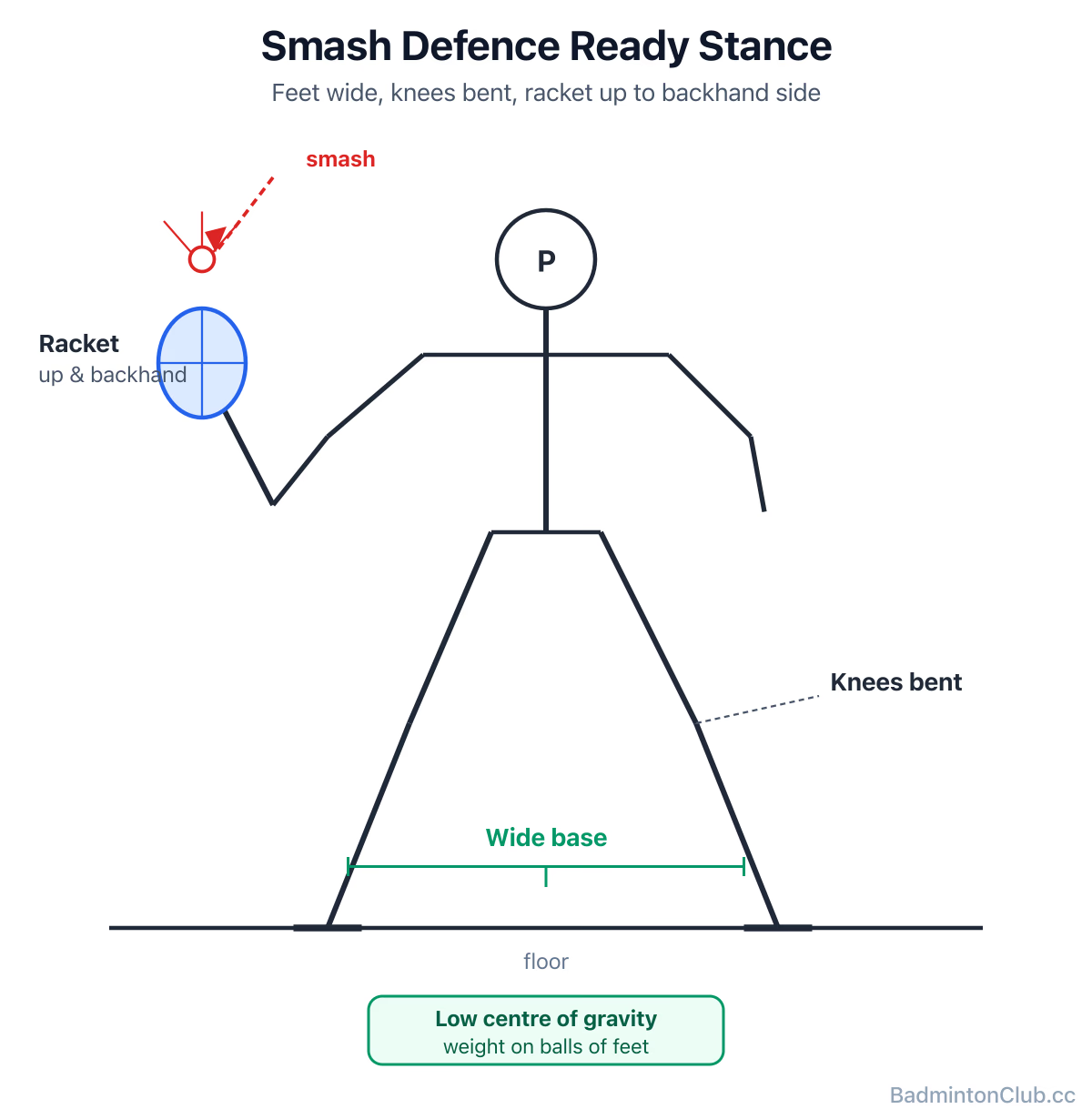
Everything starts from the low defensive stance: feet wider than shoulders, knees bent, weight forward on the balls of the feet, racket held up and out in front around waist height, biased slightly to the backhand because most fast shuttles arrive there. Use a relaxed, neutral grip you can rotate quickly between forehand and backhand — many players default to a thumb-braced backhand for central body smashes. The racket must be up before the smash is hit; if you're still lowering it as the shuttle arrives, you're already late. A good split step and ready position puts you in this stance automatically as the attacker loads up. Watch the hitter's racket, not the shuttle, to read the smash early.
Block, soft block and redirection
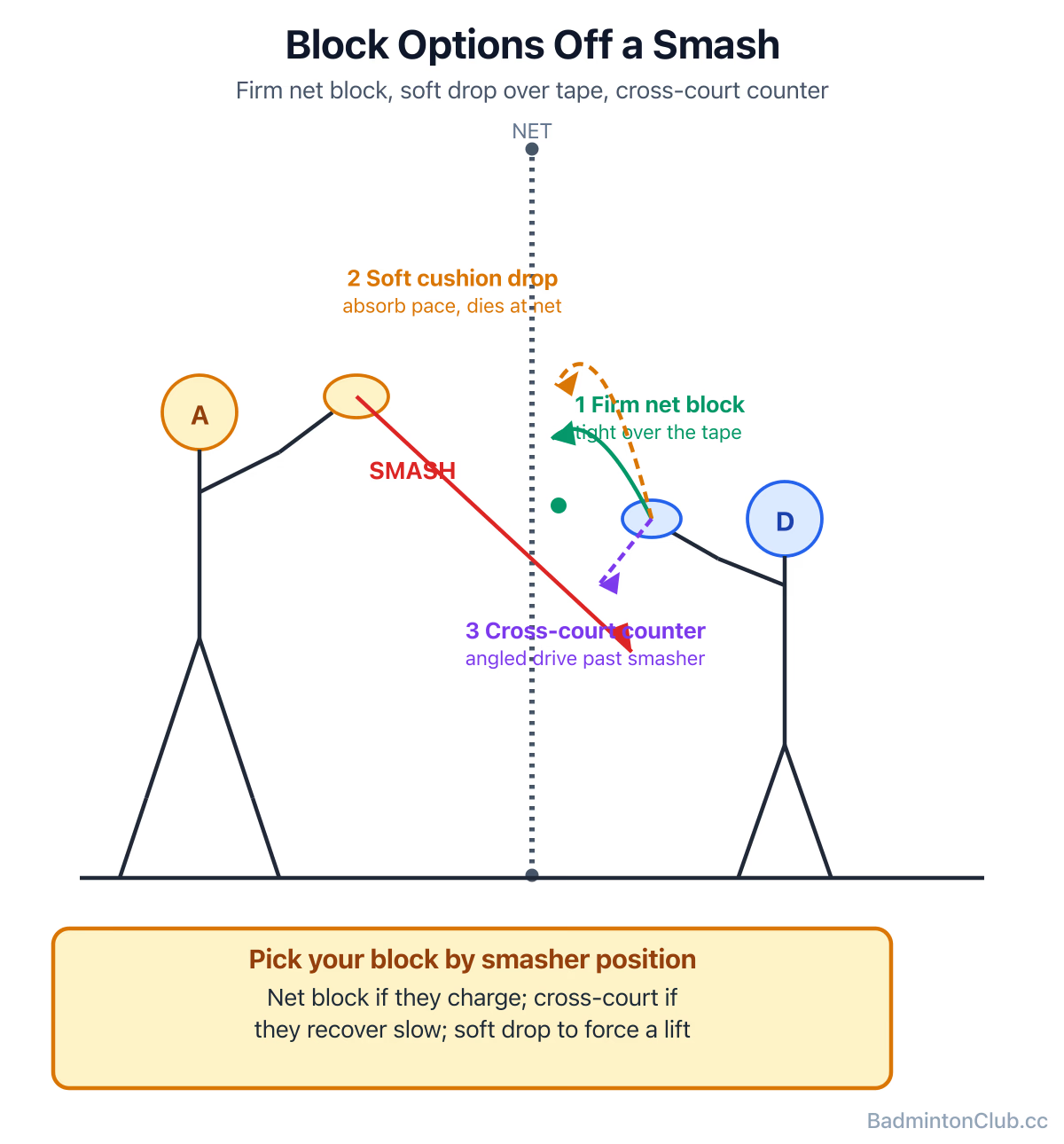
The default reply is a block: a short, firm contact with little or no swing that absorbs the smash and sends the shuttle back to the net, turning their attack into your net opportunity. A soft block goes further — you actively cushion, soft hands giving at contact, so the shuttle barely clears the tape and dies in the forecourt, dragging the attacker forward off balance. The whole skill is letting the smash's own pace do the work and using the racket-face angle to place it: open the face a touch and the block floats over; close it and angle it for a flat cross-court smash block that turns defence into a counter-attack. A cross-court block off a straight smash is one of the most satisfying ways to seize the initiative.
Choosing your return — smash return placement
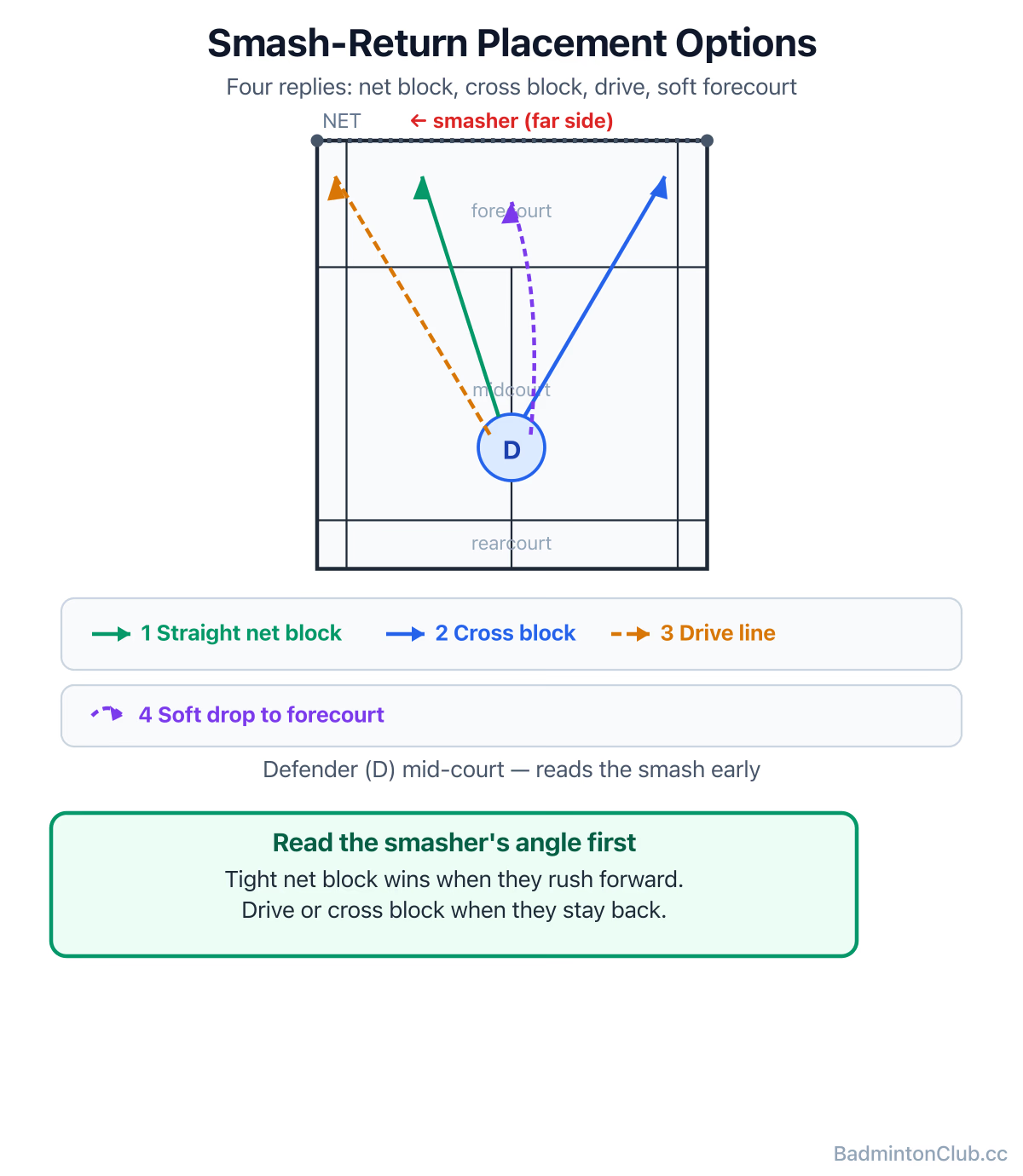
Don't just survive the smash — place the reply. A block to the straight net is safest and most common; a cross-court block wrong-foots an attacker recovering from a straight smash; a drive back down the line counters a smash that lacked steepness. In doubles, a soft block to the net forces the rear attacker to commit forward, breaking their attacking formation. Vary it: a defender who blocks to the same spot every time gets pre-empted. Be aware too of fake smash and check smash variations — attackers can hold the shuttle late to freeze your block response, so stay light on your feet rather than committing early. The best defenders aren't just hard to beat — they make their blocks cost the attacker, so smashing them becomes a losing trade.
What coaches actually shout from the side
"Racket UP!" — because nine bad defences out of ten are just a racket that started too low. Defence panics people; they crouch and freeze and swing late. But here's the mindset shift that changes everything: a smash is a gift of pace — you don't need to generate anything, only to angle a wall in front of it. The calmest defenders look almost lazy, soft hands barely moving, turning ferocious smashes into dribbling net shots, and after three of those the attacker starts overhitting and netting it themselves. Defend with soft hands and a high racket and you'll frustrate hitters far stronger than you.
The relaxed-hand reset
Between points, shake your hands out. A tight, gripping hand is a slow one. The changeover is a "reset" for the forearm as well as the mind, and it's also a small visual cue to the opponent that you're calm. Elite defenders have noticeably relaxed hands between rallies — watch any pro on the change of ends, and you'll see them flex and shake the wrist before stepping back on. The forearms rest, the grip loosens, and the next defensive stance starts from a calm baseline rather than a clenched one. Two seconds of hand-shaking is a small habit that quietly upgrades the whole defence, and it costs you nothing.
FAQ
- Q: How do you defend a smash in badminton? From a low, balanced stance with the racket up in front, block the shuttle using its own pace — a firm block to the net or a cushioned soft block — and angle the racket face to place it.
- Q: What is a soft block? A block where you cushion the smash with soft hands so the shuttle barely clears the net and dies in the forecourt, dragging the attacker forward.
- Q: Where should I hold my racket when defending? Up and out in front around waist height, biased slightly to the backhand side, ready before the smash is struck.
- Q: What is a cross-court smash block? An angled block that redirects a straight smash diagonally across court, wrong-footing the recovering attacker and turning defence into attack.
- Q: Should I watch the shuttle or the player when defending? Watch the hitter's racket and body to read the smash direction early — by the time you track the shuttle off a fast smash it's often too late.
- Q: Why do my blocks keep popping up for another smash? Your racket face is too open or you're swinging at it — use a firmer, flatter, shorter block, and vary placement so you're not predictable.
Learn how to defend a smash in badminton using the block and soft block. This guide covers the low defensive stance, racket position, where to place your return, and the mindset shift that turns a ferocious smash into your net opportunity — useful for singles and doubles players at any level.