Badminton Singles Tactics: Court Geometry, Pace Variation & Targeting Weaknesses
6 June 2026
Singles is a geometry game: you move your opponent corner to corner to open space, vary the pace so they can never settle into a rhythm, target their weaker side (usually the backhand rear corner), and exploit the mid-court gap when they get pinned deep — all while keeping your own recovery to base disciplined. It's chess at speed; the winner is usually the one who controls space and tempo, not the one who hits hardest.
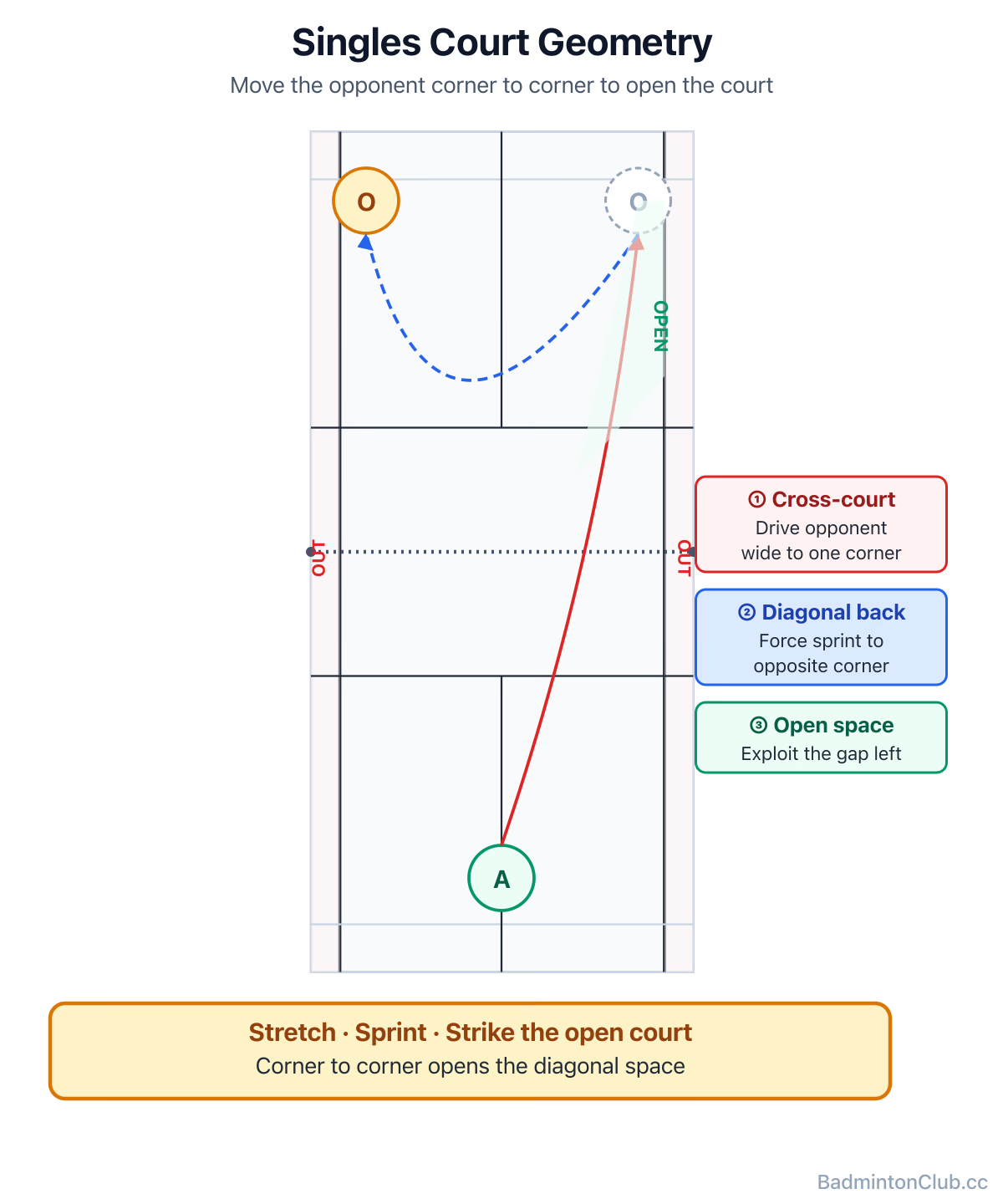
Move them corner to corner
The core of singles is making your opponent cover distance while you cover less. Corner-to-corner patterns — clear to a back corner, drop to the opposite front corner, repeat on the diagonal — stretch them the maximum distance each shot and eventually open a gap or force a weak reply. The "V" and "X" movement patterns coaches drill are exactly this: pull them wide and deep, then hit behind them or into the space they've just vacated. Your own job is the opposite — efficient footwork and prompt recovery to base so you're never the one out of position. Whoever runs less while making the other run more usually wins.
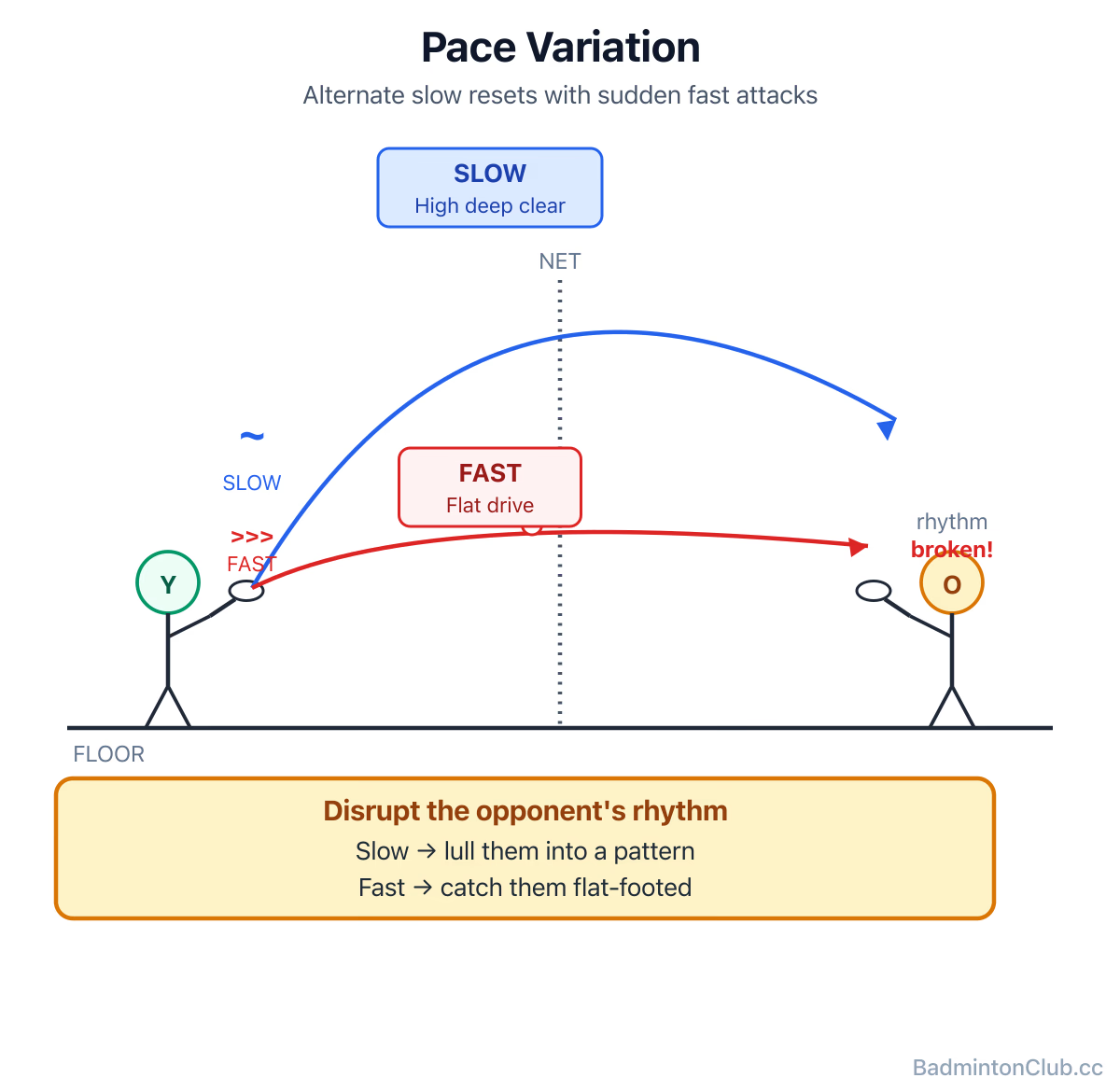
Vary the pace
Constant pace lets an opponent settle, so good singles players change tempo deliberately: a slow, high, deep clear to reset and buy time, then a sudden fast attack to catch them flat; a half-smash to drag them in, then a flat clear to push them back. Pace variation disrupts rhythm and breathing — an opponent who's just sprinted to retrieve a fast sequence is far more likely to err on the next slow, precise shot. Pairing pace changes with deception — the wrist snap or double-action late hit — multiplies the confusion enormously. Don't play at one speed. The best singles players are maddening to face precisely because you can never groove your timing against them.
Target weaknesses and exploit the mid-court
Most players have a weaker backhand rear corner, so a reliable singles tactic is to load that corner — repeatedly pressure it until it produces a short, weak reply you can attack. More generally, find the weakness (a slow recovery, a poor backhand clear, weak net defence) and make them play it again and again. Mid-court exploitation is the complement: when you've pinned someone deep in a corner, the open space is often the mid-court — a sharp drop or a push into that gap is harder to reach than another corner. Probe, don't just rally; every shot should ask a question.
What this looks like on a club night
Singles separates the patient from the impatient faster than any format. (If you run the club nights, BadmintonClub.cc makes scheduling singles rounds and court rotations much less painful.) The improvers I've watched climb levels did it by playing geometry, not power — long, disciplined rallies, moving the opponent, waiting for the short reply, recovering to base every time — while their peers tried to smash winners from the back court and ran out of energy by the second game. A strong opinion: in club singles, fitness plus patience plus a deep, accurate clear beats a big smash nine times out of ten. Make the other player run, keep your own shape, and let them make the mistake. The shuttle in is worth infinitely more than the highlight that's out.
The "first three shots" notebook
After a tough loss, replay the first three shots of the points you lost. You'll find patterns — which serve, which return, which third shot. Singles is won or lost in the first three shots of a rally, and almost no club player actually looks at them. A small notebook (or a phone note) kept for a tournament is worth more than any new stroke you could learn in the same period. Three shots is also a small enough number that you can actually remember and review them on the changeover. The patterns that emerge — "I keep losing on the third shot to the backhand", "my serve is landing too high on this end" — are concrete and fixable. A month of this and your service game quietly levels up.
FAQ
- Q: What is the main tactic in badminton singles? Move your opponent corner to corner to open space and force weak replies, while keeping your own footwork efficient and recovering to base every shot.
- Q: What is corner-to-corner drilling? Practising patterns that send the shuttle to opposite corners on the diagonal (the "V"/"X" patterns) to train stretching the opponent the maximum distance.
- Q: Why is pace variation important in singles? Constant pace lets an opponent settle; mixing slow resets with sudden fast attacks disrupts their rhythm and timing and forces errors.
- Q: Should I always attack the backhand in singles? Often, yes — most players are weakest at the backhand rear corner, so loading it pressures a short reply, but vary it so you stay unpredictable.
- Q: What is mid-court exploitation? Attacking the open mid-court space — usually with a sharp drop or push — when you've pinned an opponent deep in a corner, since it's harder to reach than another corner.
- Q: Is power or patience more important in singles? For most club players, patience, fitness and accurate length beat raw power — make the opponent run and recover your base, and let them make the mistake.
Badminton singles tactics explained: use corner-to-corner geometry to stretch your opponent, vary pace to break their rhythm, and systematically target the backhand rear corner. Covers mid-court exploitation, the first-three-shots review habit, and why patience plus fitness beats power for most club players.