Badminton Serve Height Rule: The 1.15-Metre Service Law Explained (With Examples)
6 June 2026
The whole shuttle must be below 1.15 metres from the court surface at the instant the server's racket strikes it. BWF introduced this fixed-height rule in March 2018, replacing the old "below the waist / lowest rib" judgement with a single, objective measurement.
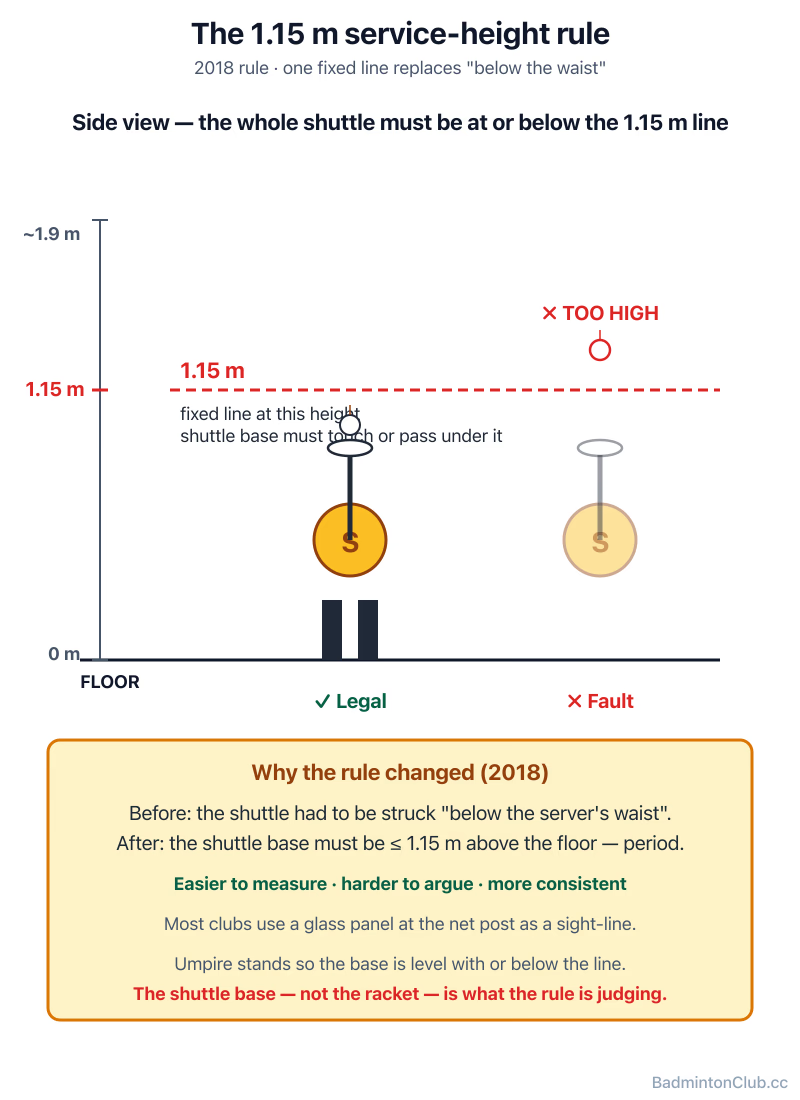
How the 1.15 m rule changed serving overnight
When BWF swapped the old "below the lowest rib" wording for a flat 1.15 m line in 2018, it quietly reshaped the serve. Tall players lost the extra height their ribs used to hand them, and almost everyone drifted to the backhand low serve — held out front, easy to keep level just under the line, easy for you to watch yourself. If you still serve forehand from the hip and get called a lot, this is why: that swing naturally rides up through the line as it travels. Switch to a backhand serve and the 1.15 m rule stops being your enemy and starts being a handrail. Hitting the serve too high isn't the only way to lose the rally, of course — for a full list of what ends a point see every fault that loses you the rally.
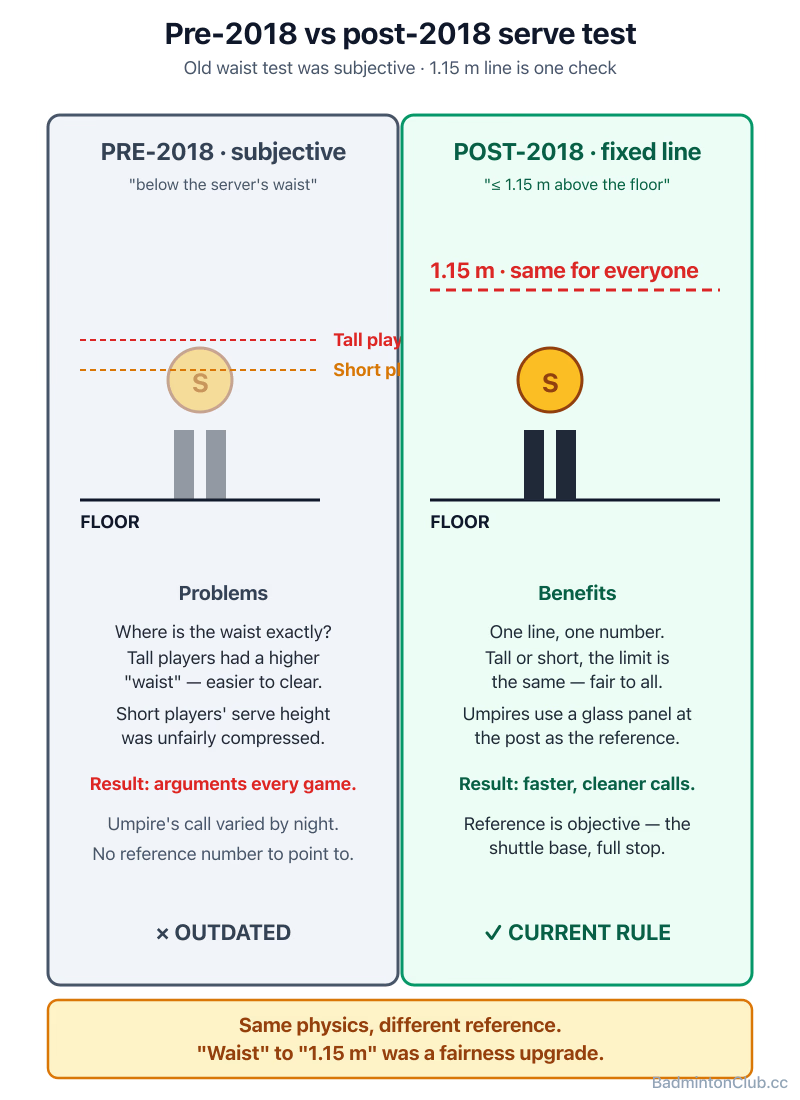
Why a fixed 1.15 m?
The old rule (shuttle below the waist, racket head below the hand) depended on each player's height and a judge's eye — taller players effectively got a higher legal contact point, and calls were subjective. A fixed 1.15 m line is the same for everyone. At top events a service judge watches the contact against a clear panel marked at 1.15 m: if the whole shuttle is above the line at impact, it's a fault. For the full picture of what makes a serve legal — court position, foot faults and contact rules — see the complete guide to a legal serve.
What it means in practice
- It's the whole shuttle (not the base alone) that must be below 1.15 m at contact — not before, not after.
- Roughly hip-to-lower-rib height for most adults, but the number is what counts.
- It applies to every serve — low serves and flick serves alike.
FAQ
- Q: What is the 1.15 m rule in badminton? The entire shuttle must be below 1.15 m from the floor when you hit the serve.
- Q: When did the 1.15 m service rule start? March 2018, as a BWF fixed-height law replacing the waist-height rule.
- Q: Is it measured at contact or release? At the instant of contact with the racket.
- Q: Why was the waist-height rule replaced? It was subjective and favoured taller players; a fixed line is objective.
- Q: Does it apply to flick serves too? Yes — any serve must be struck with the whole shuttle below 1.15 m.
The badminton serve height rule requires the whole shuttle to be below 1.15 metres at the moment of contact. Learn why BWF introduced this fixed line in 2018, how it replaced the old waist-height judgement, and what it means for your low serve and flick serve today.