Badminton Round Robin & Swiss System: Pre-Scheduled Doubles Rotation Where Everyone Plays Equally
6 June 2026
A badminton round robin (American tournament) pre-schedules every round so each player partners and opposes a planned set of others, with sit-outs shared evenly. It maximizes fairness and partner variety for mixers, but it's rigid against latecomers and odd numbers. (For a flexible, drop-in-friendly alternative that still evens out court time, BadmintonClub.cc's TimeSwap re-balances live each round.)
How it works
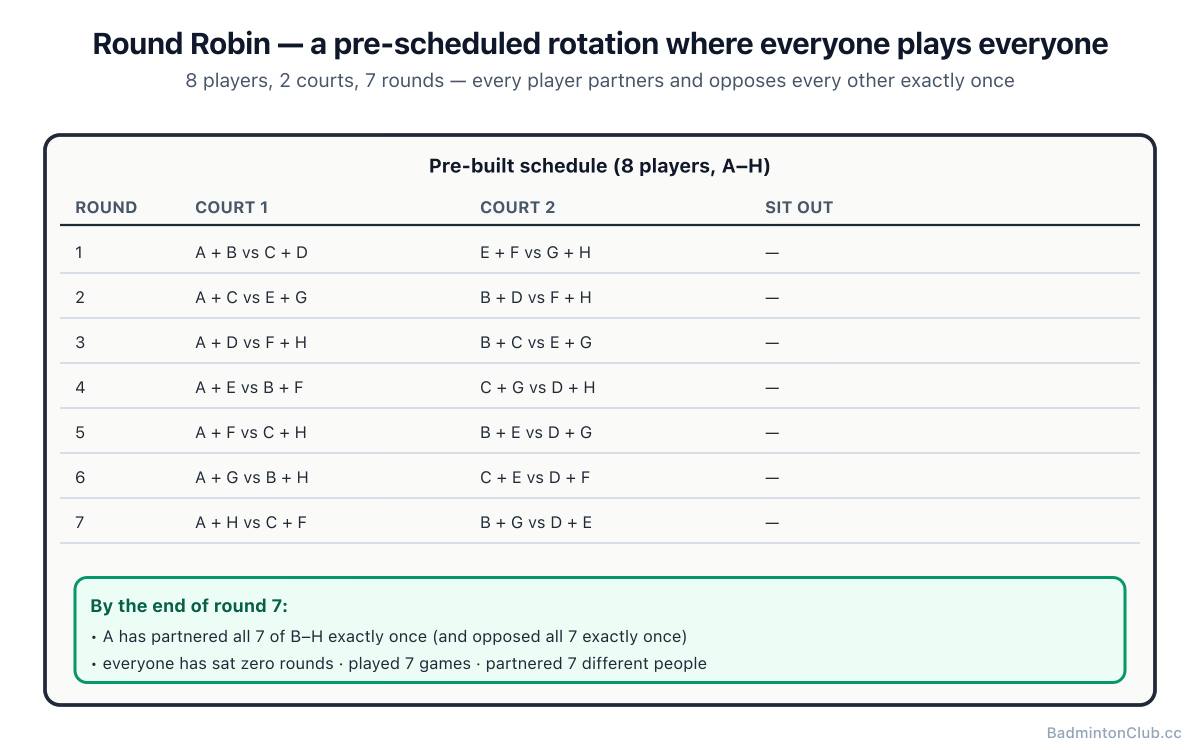
A fixed schedule is generated up front: everyone plays an equal number of games with planned partners/opponents and evenly spread sit-outs. Players just read the board.
Pros and cons
Pros: ✅ maximally fair game counts · ✅ great partner variety · ✅ no queue anxiety. Cons: ❌ rigid (latecomers/odd numbers break it) · ❌ doesn't adapt to results · ❌ gated by the slowest court each round.
Examples
- 8 players, 2 courts: everyone partners everyone once.
- 16 players, 4 courts: all play 6, sit 1 — a known card.
- Rolling-start round robin with flex seats for late arrivals.
The Swiss system: round robin's smarter cousin for one-off nights
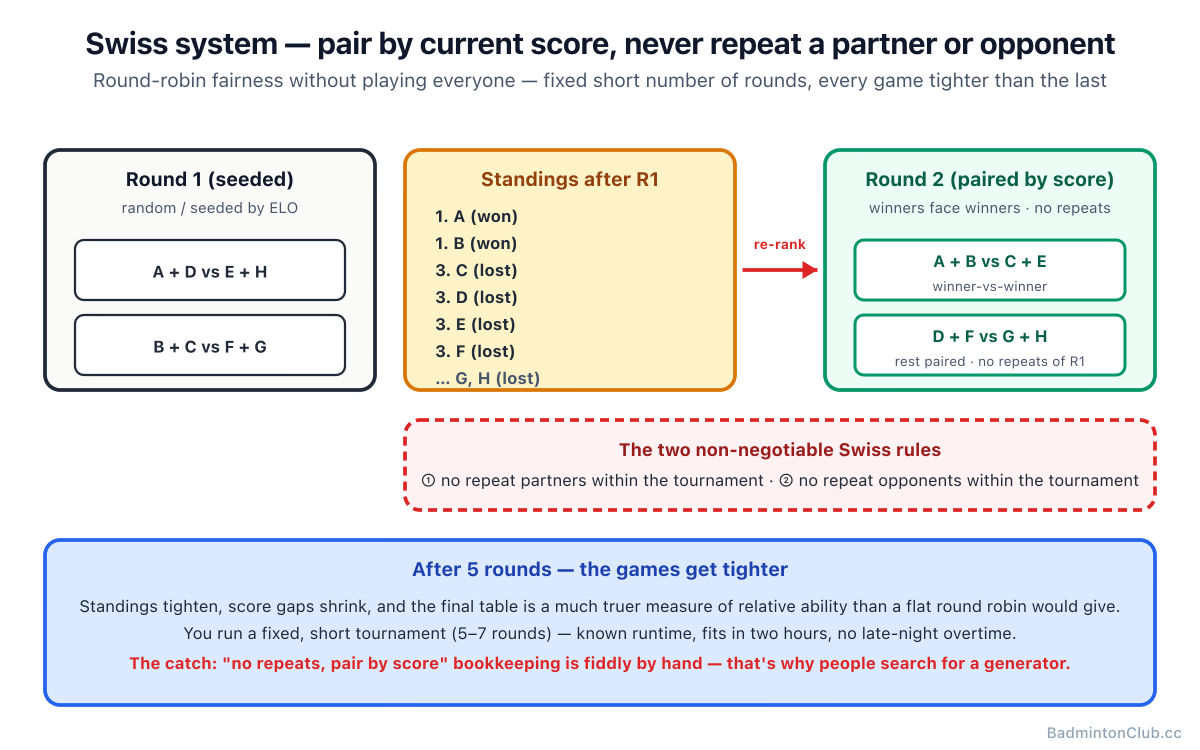
Here's the format almost nobody explains for badminton, so this section is worth keeping. A full round robin generator for doubles is lovely until you do the arithmetic: with 16 players "everyone partners everyone" is dozens of rounds — you'll run out of evening long before you run out of pairings. The Swiss system is the fix, borrowed from chess. You play a fixed, short number of rounds (say 5–7), and after each round you pair people by current standing — winners with winners, and crucially never repeating a partner or opponent you've already had. You don't play everyone; you play a curated handful, each game more level than the last because you're always matched against people on your score. It gives you most of round robin's fairness and most of Mexicano's self-balancing, in a known, fits-in-two-hours runtime — ideal for a one-off social tournament or a club championship night. The honest catch: the "no repeats, pair by score" bookkeeping is fiddly by hand, which is exactly why people search for a round robin / Swiss generator rather than running it off a paper grid.
One Swiss detail that catches clubs out: score entry has to be exact, not "won/lost." A 21–19 win tells the engine something different from a 21–4 win, and the next round's pairings depend on that. Most clubs under-report the score ("we just wrote 1–0") and then wonder why round 3 looks the same as round 2. The fix is two characters per game written on a clipboard: "21–18" takes five seconds and changes the quality of the whole tournament.
Round robin spreadsheet vs generator — which to use
A round robin spreadsheet is fine for a fixed, even, known group that turns up complete — set it once, print it, play it. The moment your numbers wobble (latecomers, a no-show, an odd player), a static sheet falls apart and you're rebuilding columns mid-session. A live generator (or an app) re-derives the schedule from who's actually present, which is why drop-in clubs drifted away from the printed grid. If your sessions more often have courts filling and emptying mid-night, a timed rotation like TimeSwap handles late arrivals far more gracefully than any pre-scheduled grid.
Where it's popular & estimated share
Used worldwide for organized mixers; ~5% as a primary system, almost always app/spreadsheet-scheduled. The Swiss variant is common in one-day club tournaments. Clubs that run mixed-format nights sometimes pair the round robin block with a winner-stays rotation on the remaining court so no one sits idle between scheduled rounds.
FAQ
- Q: What is an American tournament in badminton? A pre-scheduled round robin with planned partners and equal games.
- Q: What is the Swiss system in badminton? A short fixed number of rounds where each round pairs players by current score, with no repeat partners or opponents — round-robin fairness without playing everyone.
- Q: Round robin or Swiss for a club tournament? Round robin if you have time for everyone to play everyone; Swiss if you want balanced games in a fixed, shorter runtime.
- Q: Is there a round robin generator for doubles? Yes — generators (and apps) build the doubles schedule for you, which is far easier than maintaining a spreadsheet when numbers change.
- Q: Round robin vs Americano? Round robin = a fixed equal-games schedule; Americano specifically rotates you through every partner with an individual points leaderboard.
- Q: Best for what? Mixers and known, even groups.
- Q: Biggest drawback? Rigidity with churn/odd numbers.
- Q: Do I need software? Practically yes, to generate the schedule.
- Q: Does it adapt to scores? No — Mexicano does that.
- Q: How many rounds for a one-night Swiss tournament? 5 rounds at ~12 minutes each fits a 90-minute window comfortably. 7 rounds for a longer event.
- Q: Is Swiss better for fixed groups or for drop-in? Fixed groups — late arrivals break the no-repeats guarantee, which is the whole point.
- Q: Round robin vs round-robin generator? Generator = live recalculation when the room changes. Spreadsheet = static, breaks on no-shows. Pick the generator every time.
Round robin and Swiss system scheduling give every player an equal share of games, partners, and sit-outs — ideal for club mixers and one-night tournaments. This guide covers how each format works, the key differences between a static spreadsheet and a live generator, and when Swiss pairing beats a full round robin for a fixed group.