Badminton Mexicano Format: Score-Based Pairings That Make Every Game Close (Rules Explained)
6 June 2026
Mexicano is a dynamic badminton/padel format where, after each round, players are re-ranked by points scored and the next round pairs them so games get progressively closer (1st+4th vs 2nd+3rd). It self-balances as the session goes on, but requires score entry each round. (BadmintonClub.cc delivers self-balancing a different way — TimeSwap balances by skill rating every swap, no score entry needed.)
How it works
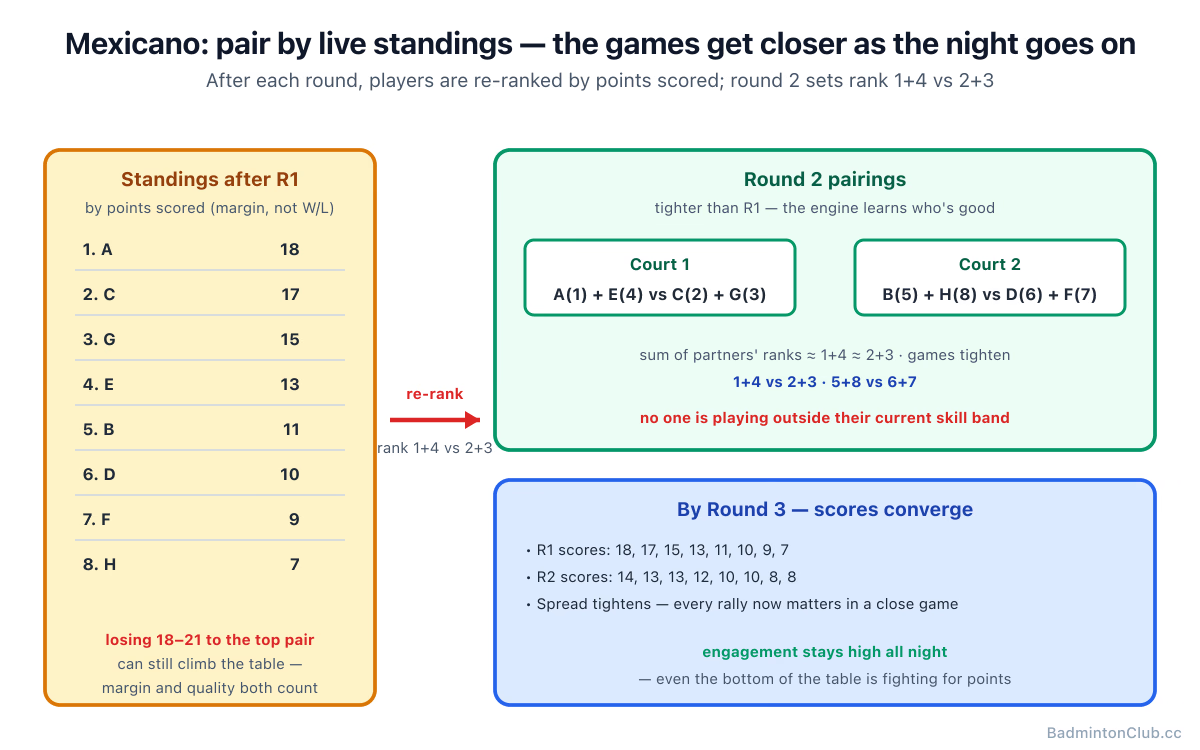
Round 1 is seeded/random; from round 2, players are re-ranked by cumulative points and re-paired by rank, so matches tighten. Games are to a fixed point total and margin matters, not just win/loss.
The scoring quirk that makes Mexicano feel different
The thing that surprises people their first Mexicano night is that you can lose a game and still climb the leaderboard. Because ranking is by total points scored across the night, not games won, losing 21–18 against the two strongest players in the room often earns you more than winning 21–6 against the two weakest — the margin and the quality of opposition both feed your number. That single design choice does two clever things: it keeps the bottom of the table fully engaged (every rally is worth chasing even in a game you can't win), and it lets the leaderboard quietly do all the seeding for you, with no organiser making judgement calls about who's "good enough" for the top court. The trade-off is real-time admin — someone has to enter every game's score before the next round can be generated — which is why Mexicano essentially didn't exist as a club format until apps made the recompute instant. If you love the self-balancing idea but hate the per-round data entry, that's the exact gap a rating-based auto-rotation (TimeSwap) fills: balance without anyone keying in scores.
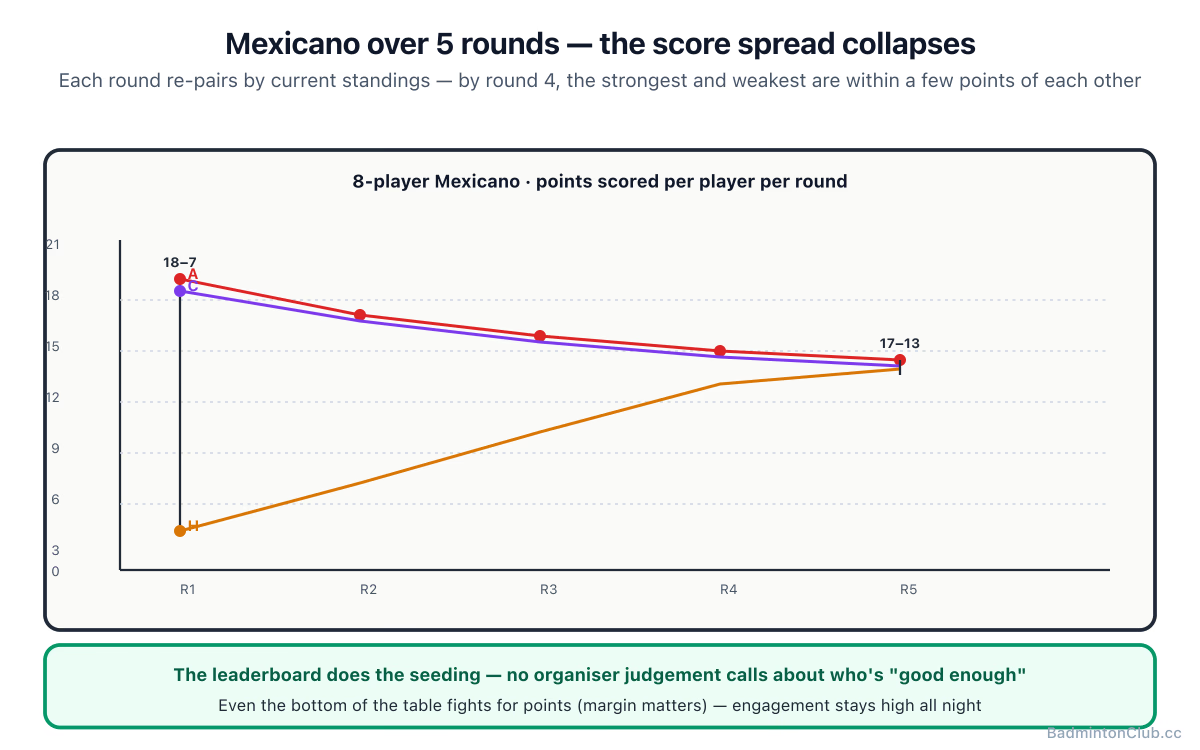
Another quirk worth knowing about: the first round is intentionally a bit chaotic. Mexicano's whole magic comes from round 2 onwards, but round 1 is just seeded or random — and that's a feature, not a bug. A predictable round 1 (where the strong players all play each other) would skew the leaderboard before anyone has actually played. Randomising round 1 means the real signal starts showing up by round 2, when the engine has data to work with. Players who arrive late and miss round 1 get folded in at the bottom of the leaderboard and play up from there — works surprisingly well, since Mexicano is more about the trajectory than the absolute standings.
Pros and cons
Pros: ✅ self-balancing — games tighten automatically · ✅ every point matters; high engagement · ✅ fair court time + competitive quality. Cons: ❌ requires score entry + recompute each round · ❌ practically needs an app · ❌ less familiar to traditional players.
Examples
- 8-player Mexicano: round 2 sets ranks 1&4 vs 2&3, 5&8 vs 6&7.
- Court-banded Mexicano for 16, re-sorted each round.
- App-run Mexicano with instant recompute on a tablet.
Where it's popular & estimated share
Europe-led via padel crossover (Nordics, Spain, UK), spreading globally; ~2–4% in badminton and rising quickly.
FAQ
- Q: Why do Mexicano games get closer? Pairings are recalculated from the live leaderboard, matching similar-scoring players.
- Q: Mexicano vs Americano? Mexicano pairs by live standings (tighter games); Americano fixes the rotation so you partner everyone.
- Q: How is it scored? Fixed-point games where your points margin feeds your ranking.
- Q: Do I need software? Effectively yes, to recompute pairings each round.
- Q: Best group size? 8–24 in bands.
- Q: Is there a no-score-entry alternative? Yes — TimeSwap balances by skill rating automatically.
- Q: How do you handle a late arrival in round 3? Fold them into the bottom of the leaderboard with a "0 points" score, then let them play up. Works better than trying to back-fill historical rounds.
- Q: Can I run Mexicano across multiple courts at once? Yes — the engine re-pairs all courts after each round, and standings are global across all of them.
- Q: What if two players end up on the same points total? The engine uses tie-breakers in this order: most points scored, fewest points conceded, head-to-head. Most apps let you set the order.
Mexicano pairs players by live score standings each round so games naturally get tighter as the night goes on — no organiser judgement needed. Learn the rules, scoring quirk, pros and cons, and how it compares to other club rotation formats. Great for groups of 8–24 who want every rally to count.