Badminton Agility, Speed & Reaction Time Training: Ladder Drills, Court Speed & Reflex Work
7 June 2026
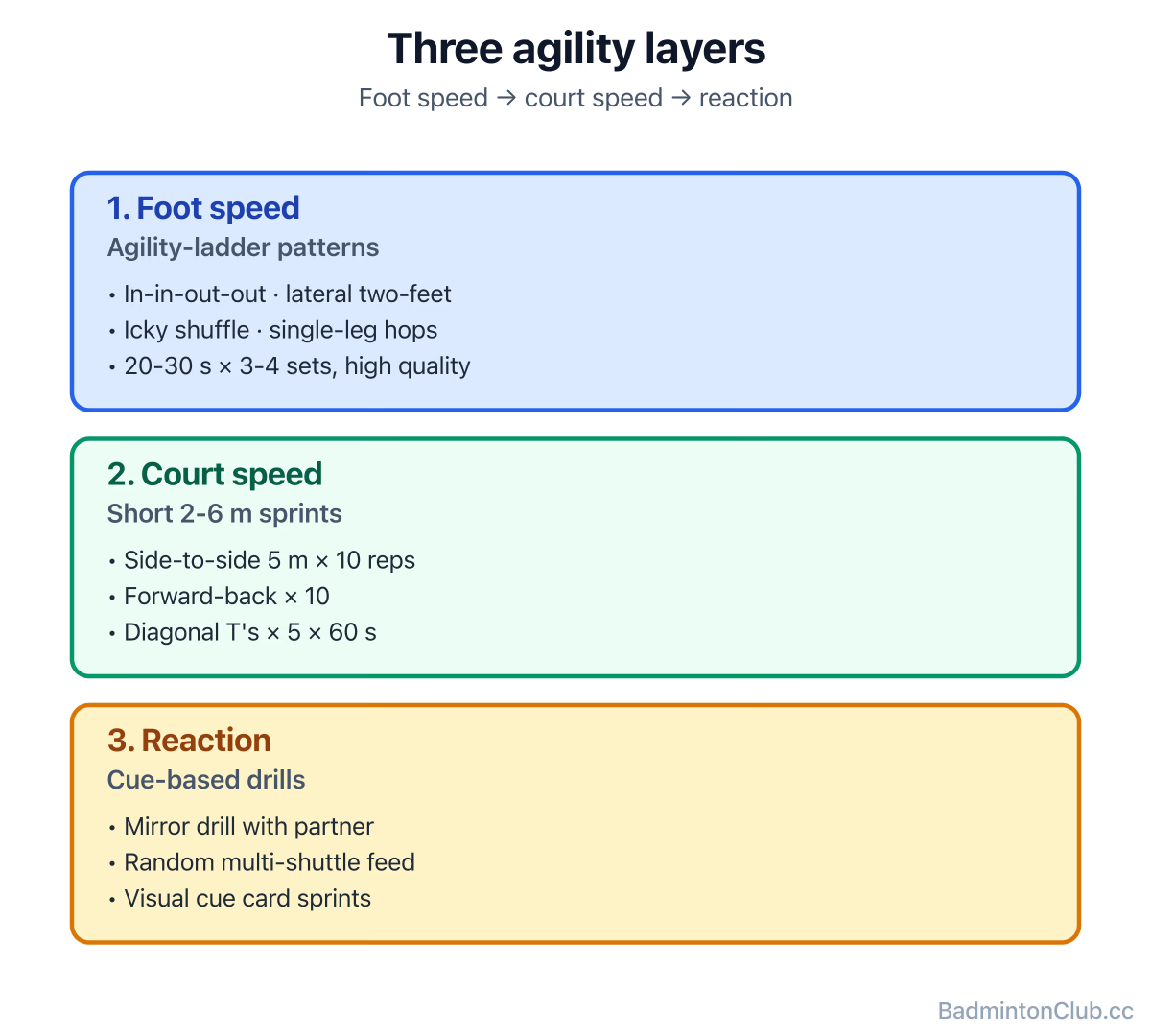
Agility on a badminton court is built with three layers: agility-ladder footwork patterns for foot speed, short straight and lateral sprints for raw movement speed, and reaction drills (visual or audio cues) that train you to start moving fractionally earlier. Pure speed matters less than how fast you start — and how cleanly you change direction.
Agility ladder drills that transfer
A ladder builds foot speed and coordination, not court speed directly — but the foot quickness carries over to split-step timing and tight footwork. The patterns that transfer best:
- In-in-out-out (both feet inside, then both feet outside, moving down the ladder)
- Lateral two-feet-in-each-square (sideways through the ladder)
- Icky shuffle (in-out diagonal pattern)
- Single-leg hops through each rung
Run each pattern for 20–30 seconds × 3–4 sets at high quality (sloppy = pointless). Ladder work is a neural drill: stop when form breaks down, not when you're winded.
Court speed — short bursts, both directions
Real badminton movement is 2–6 metres at a time, often diagonal, with hard changes of direction. Train it directly:
- Side-to-side sprints: 10 × 5 m lateral sprints between two cones, full effort, full recovery.
- Forward-back sprints: baseline to front service line and back × 10, full recovery.
- Diagonal Ts and stars: sprint from base to one of four random corners (called by a partner), back to base, next corner — 5 × 60 s.
Don't grind — recovery between reps is what lets each one be fast. Speed is a quality, and quality dies when you're tired.
Reaction time — where the real edge is
The fastest player isn't the one who runs hardest; it's the one who starts moving first. Reaction is trainable:
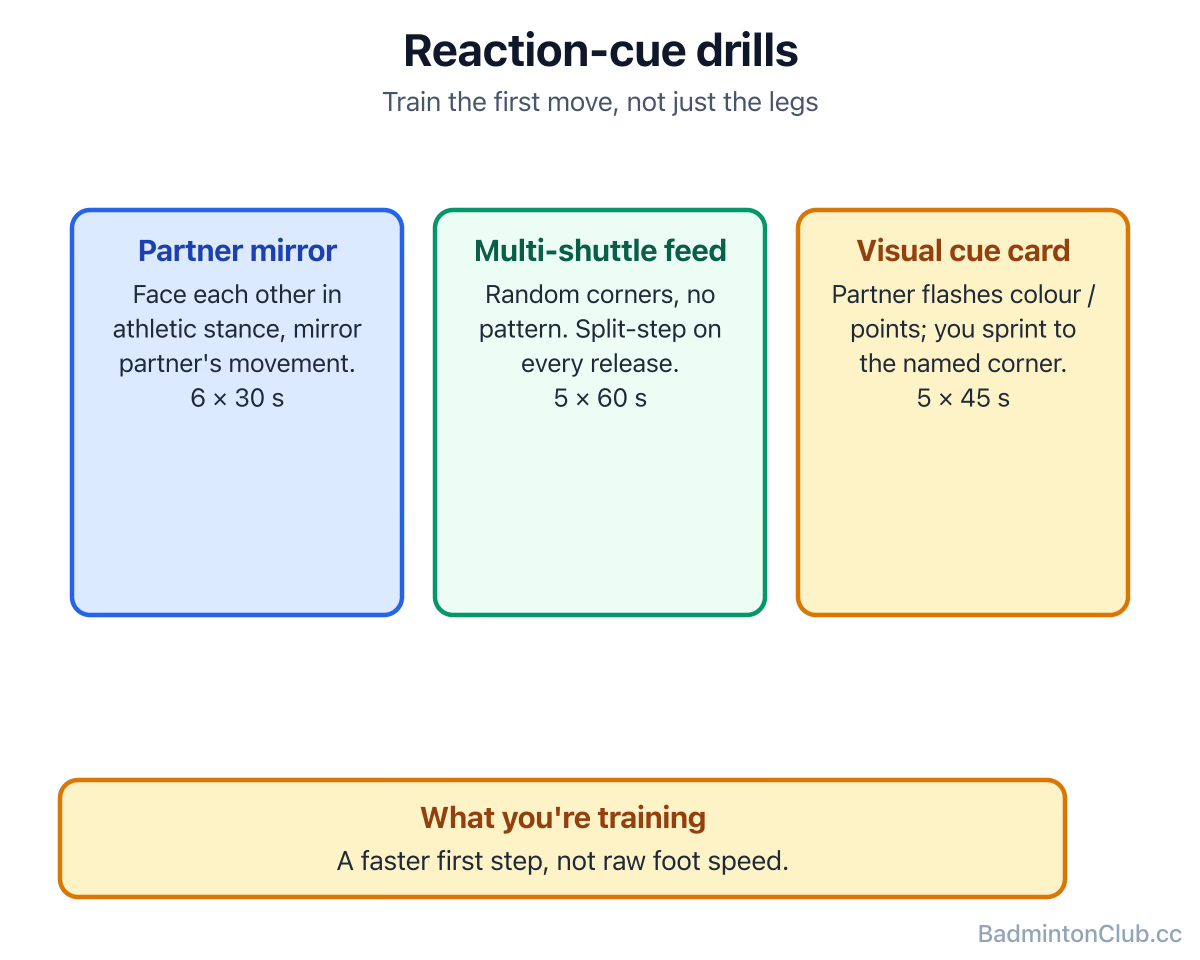
- Mirror drill with a partner: face each other in athletic stance, partner moves left/right/forward and you mirror. 6 × 30 s.
- Random multi-shuttle feed: a feeder throws shuttles to unpredictable corners (no pattern), you split-step on each release and chase. 5 × 60 s.
- Visual cue drills: partner points or flashes a card with a corner colour; you sprint to that corner. Looks silly, works well.
This is where the techniques-series Anticipation & court reading article lives in your brain — reading the opponent earlier is the cognitive twin of fast physical reaction.
What coaches actually shout from the side
"MOVE EARLIER!" — because raw foot speed at club level is rarely the bottleneck; the late split-step is. The player who looks lightning-fast is usually the one who started their first step 100 ms before everyone else, and that 100 ms is mostly anticipation, not muscle. A frank opinion: if you only have 30 minutes a week for "agility", spend it on reaction drills and split-step timing, not on grinding the ladder. Ladders are fun and they polish foot coordination, but reading the shuttle and the opponent — that's where club levels actually jump. If you're using BadmintonClub.cc for your club's rotation, spend two minutes watching the court ahead of yours while you wait — free reaction-cue practice against players you're about to face.
FAQ
- Q: What agility ladder drills are best for badminton? In-in-out-out, lateral two-feet-in-square, the Icky shuffle, and single-leg hops — short sets at high quality train foot speed and coordination.
- Q: How do I move faster on the badminton court? Combine short sprints (2–6 m, lateral and diagonal) for raw speed with reaction-cue drills so you start moving earlier — anticipation beats foot speed alone.
- Q: How do I improve reaction time for badminton? Mirror drills with a partner, random multi-shuttle feeds with no pattern, and visual-cue drills that force a fast start from an athletic stance.
- Q: How long should agility sessions be? Short — 15–25 minutes total, 3–4 sets of 20–60 seconds each with full recovery. Quality drops sharply when fatigued.
- Q: How often should I do agility training? 2–3 short sessions a week, ideally not back-to-back with leg-heavy strength days.
- Q: Does the agility ladder actually help my badminton? Indirectly — it polishes foot coordination and timing, which carry over to split-step quality. It's not a substitute for on-court reaction drills.
Badminton agility, speed and reaction training in three layers: agility-ladder patterns for foot speed, short court sprints (2–6 m) for raw movement, and partner-cued mirror and multi-shuttle drills that train you to start moving first. Includes 20–60 second drill sets with full recovery, the reason reaction beats raw speed at club level, and the honest reason ladder work doesn't transfer as directly as people think.