Why Is Badminton So Tiring? The Real Reasons It Wrecks You (and How to Last Longer)
8 June 2026 · Badminton Fans
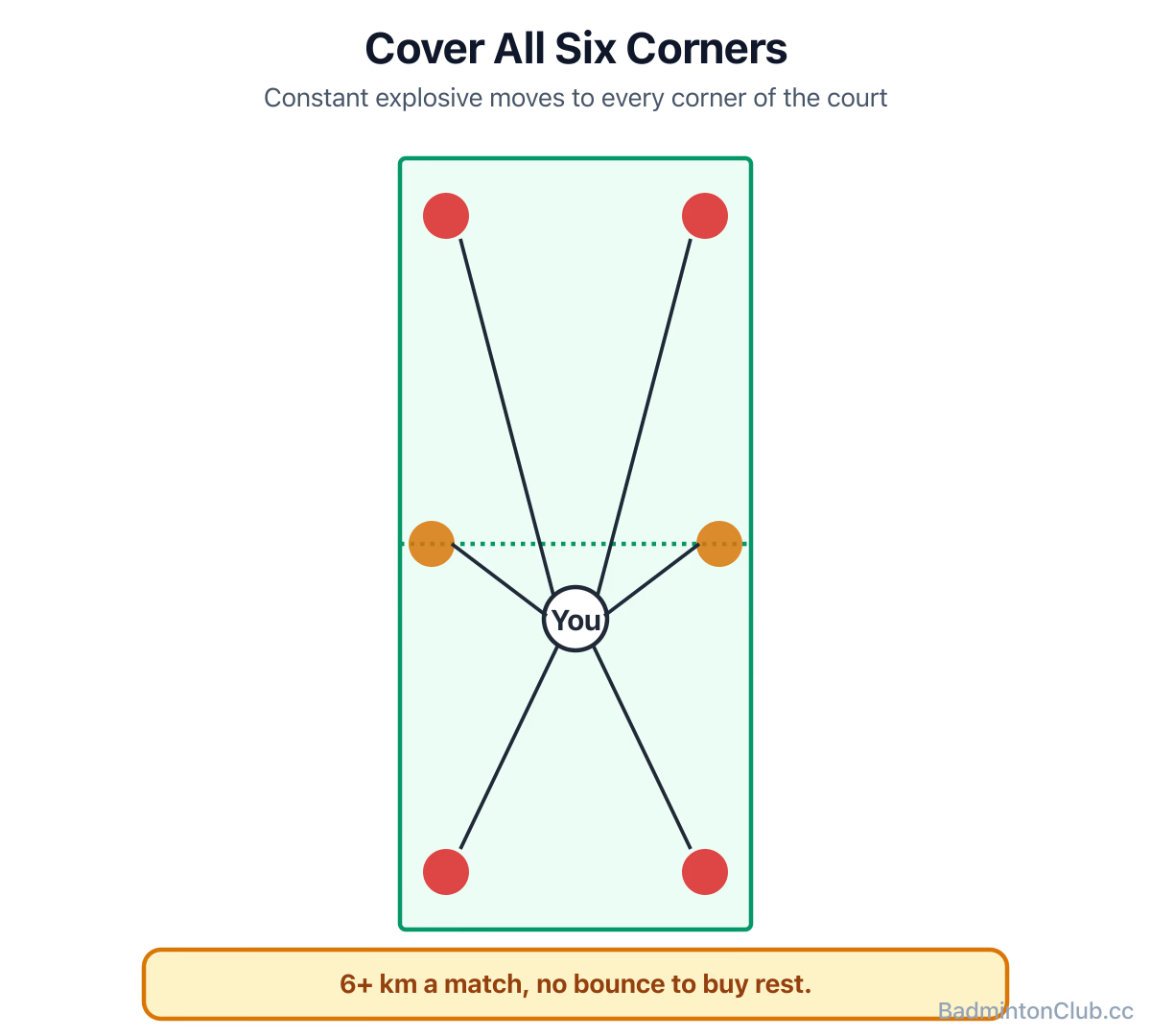
If you've ever taken a friend to badminton who insisted "it's just a gentle racket game, how hard can it be?" and watched them bent over, gasping, after fifteen minutes, you already know the answer. The single reason badminton is so uniquely exhausting is this: the shuttle never bounces. Every shot is taken in the air, on the full, which means every shot requires an explosive movement to get there before it drops. No bounce means no micro-rest within the rally. A singles player covers six-plus kilometres in a hard match, changing direction every second or two, in repeated all-out anaerobic bursts. But here's the thing — it's not the distance that destroys you. It's that you never get to coast. Every step is a lunge, a sprint, or a jump. Casual players are genuinely shocked at how a game they expected to be "badminton, easy" leaves them wrecked.
The no-bounce trap
This is the root cause. In tennis or pickleball the ball bounces, giving you a beat to set up. In badminton the shuttle is dead the instant it touches the floor, so you must reach every shot in the air — which means exploding to it now, not after a convenient bounce. Take away the bounce and you take away every micro-rest within a rally. You're either moving explosively or the rally is over. That's the whole reason badminton's intensity outpaces sports that look more athletic.
Anaerobic bursts, not steady jogging
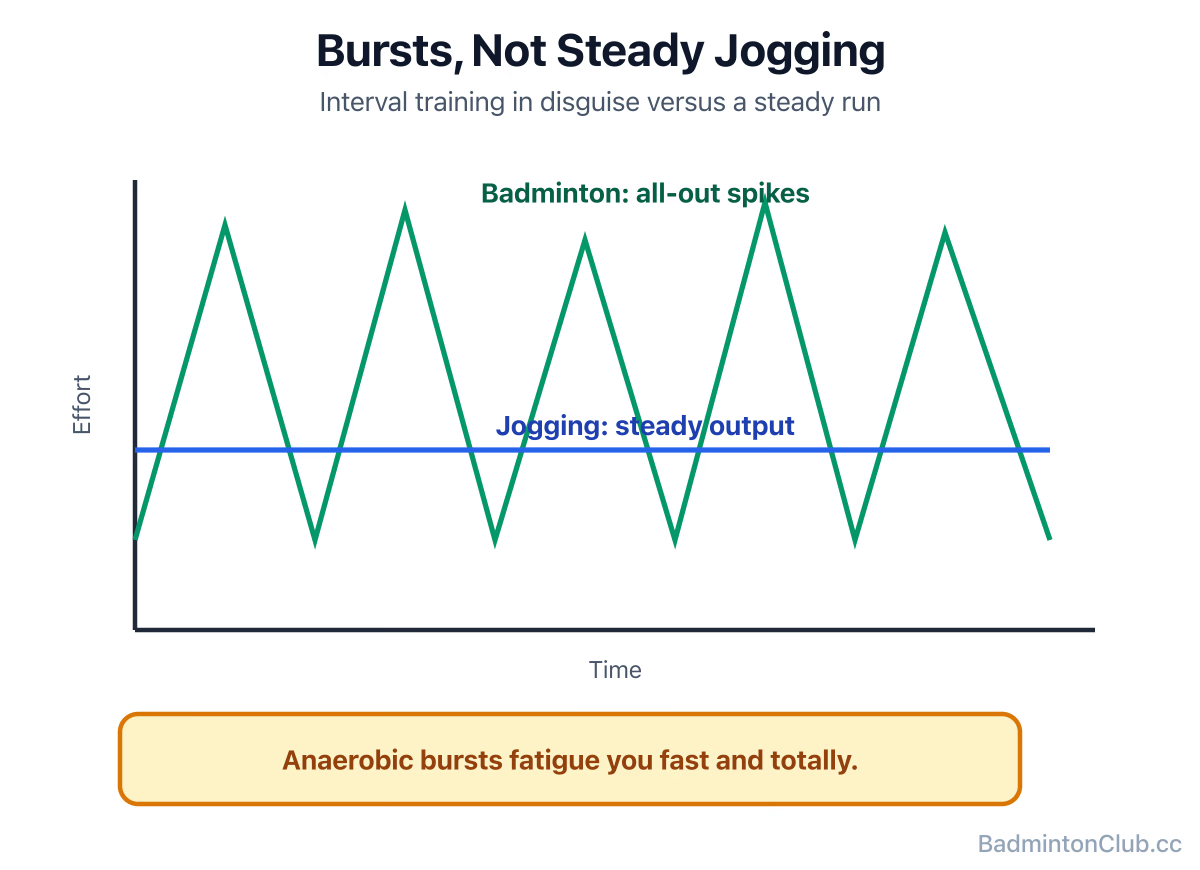
Badminton isn't a steady-state cardio activity like jogging; it's interval training in disguise. A rally is a burst of all-out effort — a jump smash, a deep lunge, a scramble to the net — lasting a few seconds, then a short gap, then another burst. Your body runs on its anaerobic systems, which fatigue fast and produce that heavy-legged, lung-burning feeling. Stack dozens of these bursts into a game and you get the distinctive badminton exhaustion: not gradual, but sudden and total.
The overhead and lunge load
It's not just the legs. Every clear and smash is an overhead action loading the shoulder, and every net retrieval is a deep lunge loading the quads and glutes. You're doing the gym's worst leg-day move — repeated deep lunges — hundreds of times, interspersed with overhead throws. That combination of lower-body lunging and upper-body overhead work, with no rest, is why you ache in places a casual jog never touches.
The beginner energy-leak nobody warns you about (original block)
Here's the part that surprised me most when I started coaching, and it explains why beginners tire roughly twice as fast as their fitness alone would predict: most of a beginner's exhaustion is wasted energy, not necessary effort. Three specific leaks do it.
First, the death grip — new players squeeze the handle white-knuckle tight through the whole rally. That keeps the forearm permanently contracted, and a permanently contracted muscle burns energy and fatigues fast even when you're standing still. Loosen the grip and your forearm stops dying in the first game.
Second, late movement. Beginners react late, so they're forever doing a desperate, full-effort scramble to a shuttle a better player would have strolled to. Moving early turns a frantic sprint into a controlled step — same shuttle, a third of the energy.
Third, not resting during the rests. Badminton hands you recovery windows — between points, at the change of ends at 11 — and beginners spend them tense and bouncing instead of breathing deep and dropping their shoulders. Good players are almost lazy between points on purpose. The honest truth: a fit beginner who grips tight, moves late and never relaxes will fade faster than an unfit veteran who's efficient. Stamina in badminton is at least as much about efficiency as fitness — fix the three leaks before you blame your cardio.
How to last longer
In order of impact: relax your grip (instant win), move earlier off a split-step so you scramble less, and use the gaps to recover. Then build the actual engine — interval-style fitness (sprints, shuttle runs, court-corner drills) matches the sport far better than long slow jogging. Specific endurance for a stop-start sport comes from stop-start training.
FAQ
- Q: Why is badminton so tiring? Because the shuttle never bounces, every shot is taken on the full with explosive lunges and jumps and no recovery inside a rally. It's repeated all-out anaerobic bursts, not steady cardio, so it drains you far faster than it looks like it should.
- Q: How far does a badminton player run in a match? A singles player can cover 6+ kilometres in a hard match, in short explosive bursts with a change of direction every second or two — it's the constant acceleration and stopping, not the raw distance, that exhausts you.
- Q: Is badminton harder than running for fitness? Differently hard. Running is steady aerobic effort; badminton is interval-style anaerobic bursts that spike your heart rate sharply. Many runners are shocked how quickly a badminton match tires them.
- Q: Why do I get tired so fast as a beginner? Usually three energy leaks: gripping too tight (a permanently tensed forearm), moving late (frantic scrambles instead of early steps), and not relaxing between points. Fix those and you'll last far longer without getting any fitter.
- Q: Does badminton burn a lot of calories? Yes — roughly 450 to 750+ calories an hour depending on intensity and bodyweight, putting competitive singles among the more demanding racket sports for calorie burn.
- Q: How do I build stamina for badminton? Train the way the sport moves: interval sprints, shuttle runs and court-corner footwork drills rather than long slow jogs. Specific stop-start fitness transfers to a stop-start sport far better than steady-state cardio.
Why is badminton so tiring? Because the shuttle never bounces, so every shot is taken on the full with explosive lunges, jumps and constant direction changes — a singles player can cover 6+ km in a match. This guide explains exactly why badminton drains you so fast: the stop-start anaerobic bursts, the overhead and lunge load, and the grip-too-tight beginner trap. Then it covers how to build the stamina to stop fading in the third game.