Reading Your Opponent in Badminton: Anticipation, Tells and Staying One Shot Ahead
8 June 2026 · Badminton Fans
Have you ever watched a really good player and thought "how did they get there so fast?" The answer isn't that they're quicker than you. It's that they started moving before the shuttle was even struck. Reading your opponent — anticipating their shot from their body position, their racket preparation, the situation on court, and the patterns they keep repeating — is a trainable skill that makes you look faster without getting any fitter. The good news is that it's learnable. The bad news is that it takes deliberate practice. And once you start getting it right, you'll also start noticing that you give away just as many tells — which is where the other half of the skill comes in: learning to disguise your own shots so you can't be read in return.
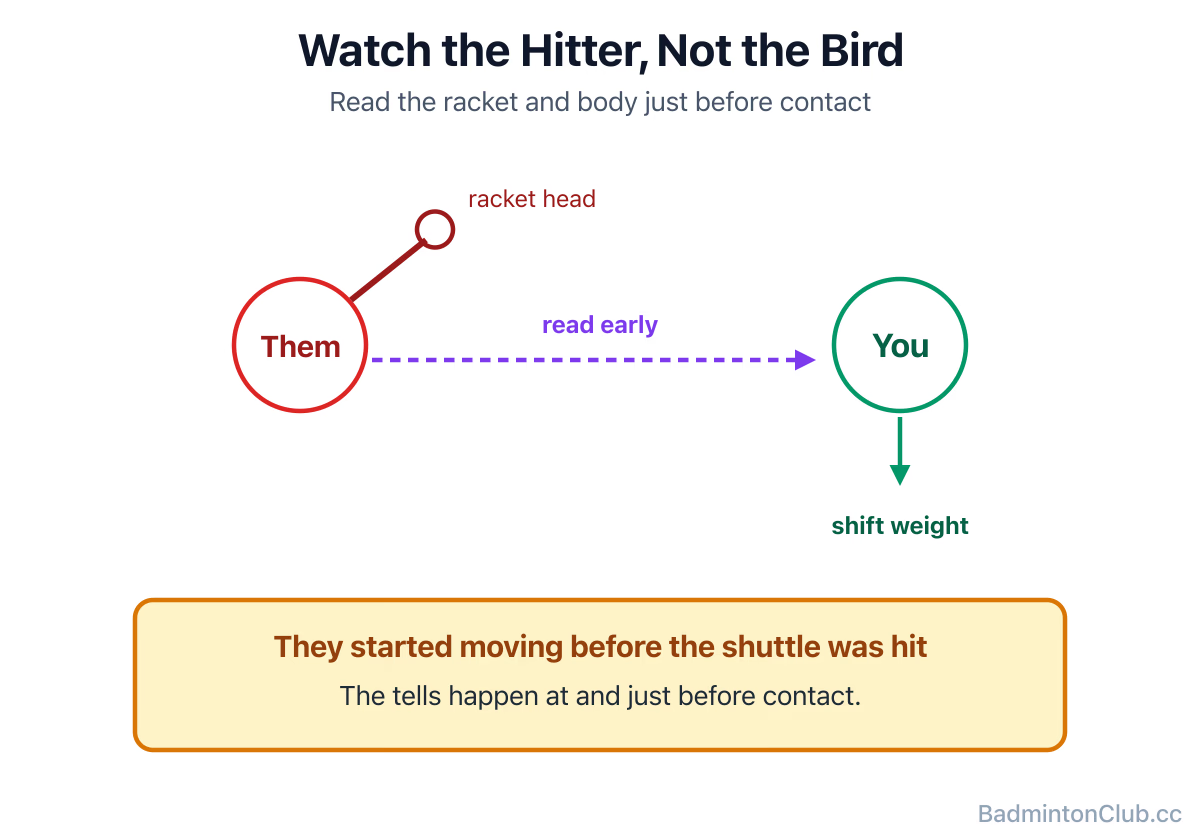
Watch the racket and body, not the shuttle
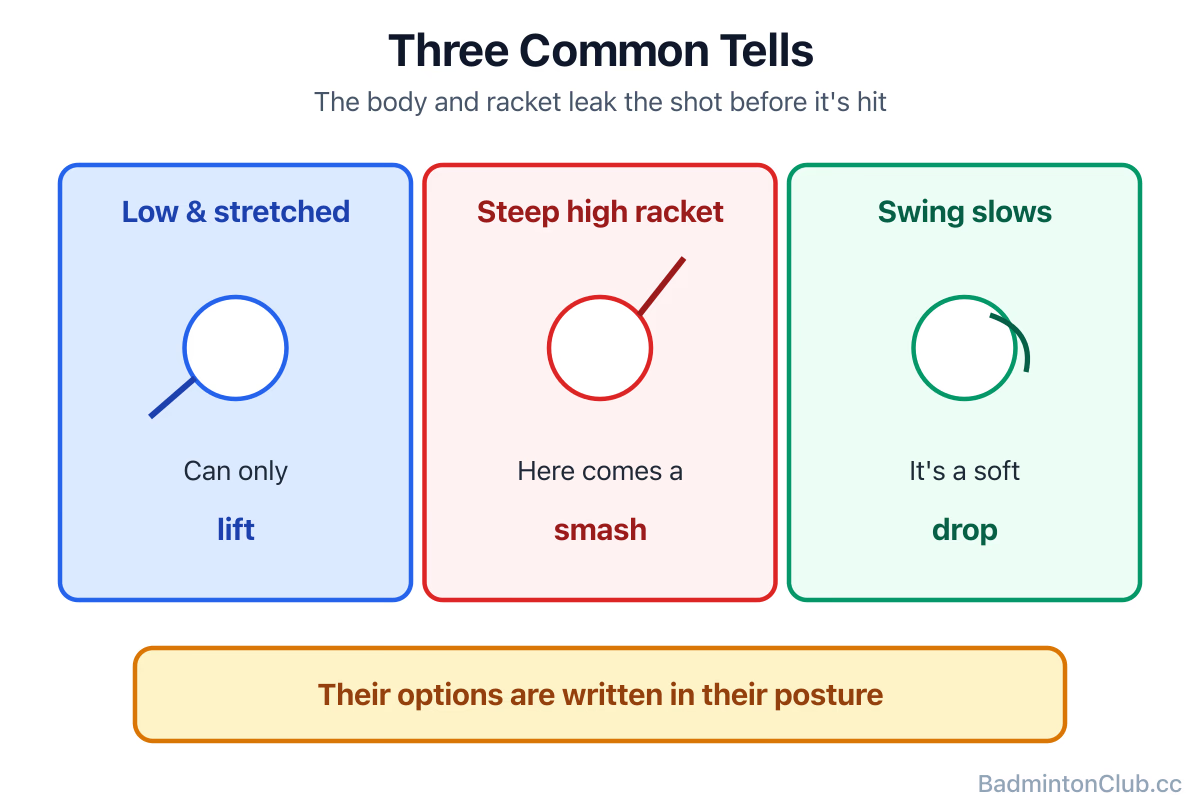
The first shift is where you look. Beginners stare at the shuttle; good players watch the opponent's racket head and body in the instant before contact, because that's where the information is. A steep racket angle and a high contact point mean a smash is coming. A decelerating swing means a drop. An open racket face means cross-court; a square one, straight. The body leaks clues too — a player reaching low and behind themselves cannot attack, so you can step in expecting a lift. By the time you see the shuttle, it's too late to read anything; the tells happen at and just before contact. Train yourself to watch the hitter, not the bird.
The tells that give shots away
Most club players telegraph constantly. The common tells:
- The big windup for a clear, the gentle one for a drop — beginners change their swing size by shot, so you can read the shot from the backswing alone.
- Body position — stretched and low means they can only lift; balanced and behind the shuttle means they can attack. Their options are written in their posture.
- The eyes and shoulders — some players look or turn toward their target before they hit.
- Pattern habits — under pressure, almost everyone has a default (always lifts straight, always blocks cross). Spot it and you can anticipate it.
Anticipate from situation and pattern, not just tells
Reading isn't only about physical tells — it's about probability. Where is your opponent on court, and what are their realistic options? A player deep in their backhand corner, off-balance, has maybe one shot they can play well: a straight clear or a weak lift. So you can edge toward that reply before they've even hit. Likewise, players are creatures of habit, especially under pressure: track what they did the last three times this situation came up, and the fourth is rarely a surprise. Good anticipation blends the physical tell with "what can they even do from there?" and "what do they always do here?" You're playing the percentages, and over a match the percentages reward you handsomely.
The reading lesson nobody teaches (original)
Here's the most counterintuitive thing I've learned about reading opponents, and it took me far too long: the goal of anticipation isn't to guess right — it's to stop guessing wrong. Let me explain the difference, because it's everything. Beginners who hear "anticipate!" start gambling — committing fully to one corner before the opponent hits, getting it right gloriously sometimes and getting destroyed the other half. That's not reading; that's a coin flip with extra steps. True reading is subtler and far more reliable: you don't commit to a guess, you narrow the possibilities and load your weight to cover the likeliest one without abandoning the others. From a split-step, you lean a fraction toward the probable reply while staying balanced enough to still reach the surprise. You're not betting the house on a smash; you're shading your weight 60/40 toward it. Watch a really good player defend and you'll see they're rarely wrong-footed badly — not because they read every shot perfectly, but because they never fully commit until the shuttle's struck. The art is the partial commitment: enough lean to be early on the likely shot, enough balance to recover for the unlikely one. So when you train anticipation, don't practise gambling. Practise the split-step and the small early lean, and let your reading shade your movement rather than dictate it. The players who get wrong-footed constantly are usually the ones anticipating too hard, not too little.
Disguise: making yourself unreadable
The flip side of reading is not being read. If your opponent can anticipate you, all your shots are half a step slower. The cure is disguise: make your shots look the same until the last instant. The overhead clear, drop and smash all share a swing — so prepare identically for all three and only reveal the shot at contact, and your opponent can't read you early. Same at the net: hold the shuttle, look like you'll play a tight net shot, then flick it to the back. The best deceivers aren't doing anything magic; they've just stripped the tells out of their preparation. As you learn to read others, ruthlessly audit your own game for the tells you're giving away.
A reading drill
Play a game where, on each rally, you call out loud what shot you think is coming before your opponent hits it — "drop!", "clear!", "smash!". You'll be wrong a lot at first, and that's the point: it forces you to watch the racket and body instead of the shuttle, and trains the early read. Over a few sessions your guesses sharpen, and you'll notice you're moving earlier without consciously trying. Pair it with the disguise work and you become hard to read and good at reading.
FAQ
- Q: How do I read my opponent in badminton? Watch their racket head and body in the instant before contact, not the shuttle — racket angle, swing size and posture give the shot away. Combine that with their court position and habitual patterns to anticipate the reply.
- Q: What should I look at, the shuttle or the opponent? The opponent's racket and body just before contact — that's where the information is. By the time you see the shuttle's flight, it's too late to read anything. Train yourself to watch the hitter.
- Q: What are the common tells in badminton? A big backswing for a clear versus a gentle one for a drop, a steep high racket for a smash, a low stretched body that can only lift, and players who look or turn toward their target before hitting.
- Q: How do I anticipate without getting wrong-footed? Don't gamble on a full commitment. Split-step, then shade your weight slightly toward the likeliest reply while staying balanced enough to reach the others. Reading should shade your movement, not dictate it.
- Q: How do I stop my opponent reading me? Disguise your shots — prepare identically for clear, drop and smash, and reveal the shot only at contact. Strip the tells out of your preparation so your shots look the same until it's too late to react.
- Q: Is anticipation natural or can I learn it? It's learnable. Watching the racket instead of the shuttle, calling shots before they're hit in practice, and studying opponents' patterns all train it. Good readers aren't faster — they just decided earlier. See shot selection.
The best badminton players seem to reach everything — not because they're faster, but because they read the shot before it's hit. This guide explains how to read your opponent in badminton: the body and racket tells that give away a smash or a drop, how to anticipate from court position and patterns, why you watch the racket head not the shuttle, and how to disguise your own shots so you can't be read. Anticipation is a trainable skill that makes a slow player quick.