How to Stay Focused and Build Confidence in Badminton (Even When You're Losing)
8 June 2026 · Badminton Fans
Focus and confidence get talked about like they're personality traits — you either have them or you don't. That's wrong. They're skills, and they can be trained like any other part of your game. Staying focused means narrowing your attention to one thing at a time: the shuttle, your intention for this point, nothing else. Not the scoreboard, not the bad line call three rallies ago, not whether your friends are watching. Confidence is simply the quiet belief that you can execute, and it's built from small, controllable wins — hitting your serve target, recovering to base after every shot — not from hoping you'll magically play well. Both are trainable. Neither requires you to be a different person.
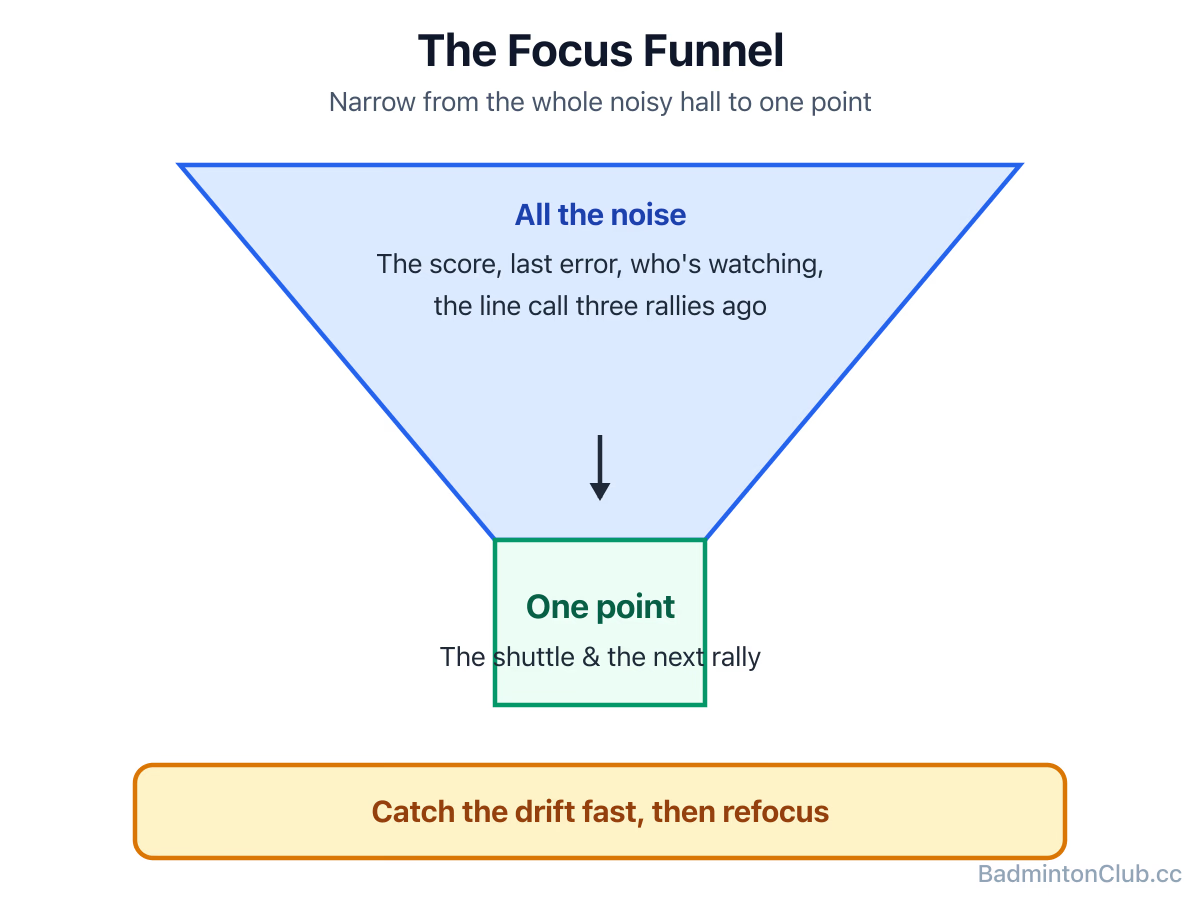
Focus on the right thing (the next point only)
Most lapses in concentration aren't a lack of effort — they're focus pointed at the wrong thing. The score. A bad line call. The mishit two rallies ago. What your club mates on the next court might think. All of it is noise, and none of it helps you win the rally in front of you. The skill is to keep returning your attention to a single, controllable focus: the shuttle and your one intention for this point. When your mind drifts to "I can't lose from here" or "I always choke," that's your cue to reset — a breath, a refocus, back to the present. Elite players aren't permanently focused; they're just faster at noticing the drift and pulling back.
Kill the scoreboard in your head
The scoreboard is the single biggest focus-thief in badminton. At 19-18 up, beginners start defending the lead — playing safe, tightening up, thinking about winning instead of playing. At 18-19 down, they start grieving the loss before it's happened. Both are focus pointed at the outcome instead of the process. The fix is a deliberate habit: play the score blind. Don't calculate "I need two more"; just play the next point as well as you can, then the next. The score takes care of itself when you stop feeding it. Easier said than done — but naming the habit is half the battle.
Build confidence from process, not hope
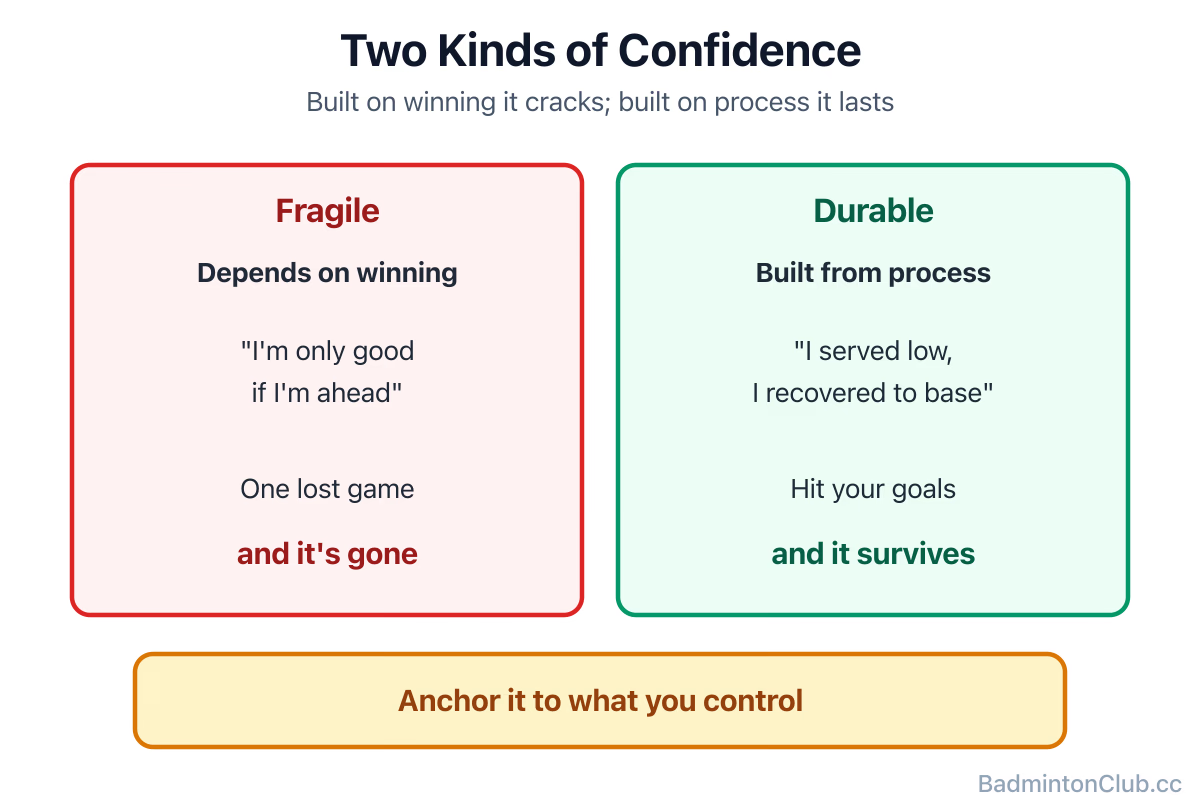
Here's where most "be confident!" advice fails: it treats confidence as a feeling you summon. It isn't. Confidence is the residue of preparation and small completed goals. If your confidence depends on winning, it's fragile — one lost game and it's gone. Instead, anchor it to things you control: "I served low and tight," "I recovered to base after every shot," "I committed to my smash when it was on." Hit those process goals and you've succeeded regardless of the score, which builds a confidence that survives losing.
The confidence trick I wish I'd known earlier (original)
Let me give you the single most useful confidence hack I've found, and it's almost embarrassingly simple: act confident with your body even when you feel like a wreck, because your brain reads your posture before it reads your thoughts. Stand tall between points. Walk to the back of the court with your head up, not hunched. Take your time on the serve like you own the court. Bounce on your toes. Here's why it works — your emotional state is partly inferred from your physiology, so a confident posture feeds a confident feeling, not the other way round. I tested this on myself over a full league season: in games where I caught myself slumping after errors, I lost the next point far more often than in games where I forced an upright, unbothered posture through the rough patches. Same skill, same opponent — the only variable was how I carried myself. And there's a bonus: your opponent reads your body too. A player who stays tall and unhurried after losing four points in a row is genuinely unsettling to play against, because they look like they haven't noticed they're losing. Fake the posture and, often enough, the feeling follows. It's not woo — it's the cheapest edge in the sport.
A focus-and-confidence routine
Pick one process goal before each game (not "win" — something like "low serves only" or "recover to base every time"). During the game, when you notice your mind on the score or a past error, take a breath and return to that one intention. After the game, score yourself on the process goal, not the result. Do this for a month and you'll find your focus drifts less and your confidence stops depending on whether you won.
FAQ
- Q: How do I stay focused during a badminton match? Narrow your attention to the present rally — the shuttle and your one intention — and reset (a breath, a refocus) whenever you notice it drifting to the score or a past mistake. Focus is about catching the drift fast, not never drifting.
- Q: How do I stop thinking about the score? Play "score blind": don't calculate what you need, just play the next point as well as you can. The scoreboard is the biggest focus-thief — defending a lead or grieving a deficit both pull you out of the present.
- Q: How do I build confidence in badminton? Anchor it to controllable process goals (a low serve, recovering to base) rather than to winning. Confidence built on results is fragile; confidence built on preparation and process survives a loss.
- Q: How do I stop dwelling on my mistakes? Use a between-point reset — turn away, breathe out, refocus on the next point. One error only becomes a streak if you carry it forward. The mishit is gone; the next rally is the only one you can affect.
- Q: Does acting confident actually help? Yes. Your brain partly infers your emotional state from your posture, so standing tall and moving unhurried genuinely feeds a more confident feeling — and it unsettles your opponent too.
- Q: How do I keep concentrating when I'm losing? Switch from the outcome to the process: one point, one intention, played as well as you can. Falling behind tempts you to grieve early; the players who come back are the ones still playing the next rally rather than the scoreboard. See the mental game overview.
Focus and confidence are the two mental skills that hold up under pressure — and both can be trained. This guide shows how to stay focused in badminton on the only thing that matters (the next point), how to stop dwelling on errors and the scoreboard, and how to build real badminton confidence from small process goals rather than fragile hope. Practical, on-court methods for club players whose concentration drifts and whose belief evaporates the moment they fall behind.