Badminton Match Nerves: How to Calm Down and Play Your Best Under Pressure
8 June 2026 · Badminton Fans
Match nerves hit everyone — heart hammering, hands clammy, breath short — and in most sports you can just power through. Badminton is crueller than that. The sport runs on loose hands and soft touch, and those are exactly the first things adrenaline destroys. A tense forearm can't snap; a clenched grip turns your net shot into a lob. The only good news is that the problem is physiological, not some fixed character flaw. Because the cause is physical, the solutions are physical too: breathing, routine, and the way you frame what's happening. You won't make nerves disappear, but you can stop them wrecking your game. And honestly, a little bit of nerves means you care, which is already half the battle.
Why nerves wreck badminton specifically
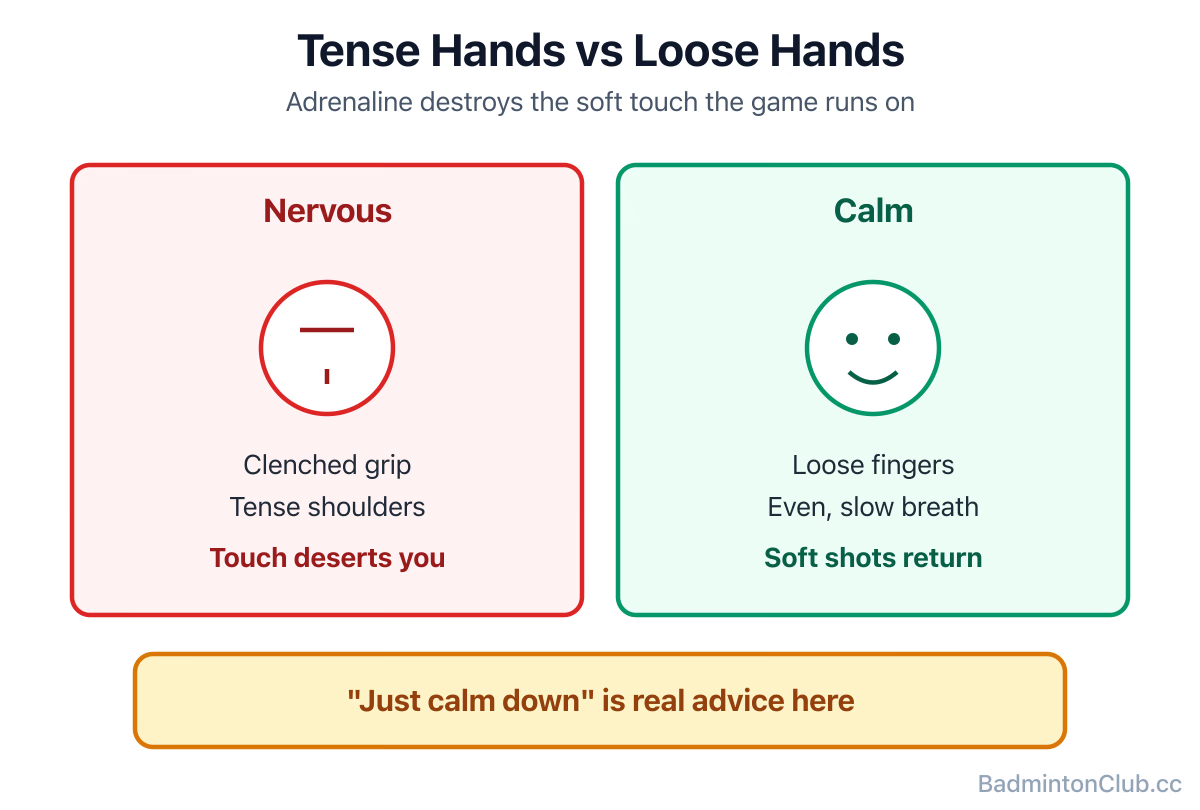
Some sports tolerate adrenaline fine — sprinting, weightlifting, even a tennis serve can absorb a bit of aggressive tension. Badminton can't. A tight grip can't snap, so your clears die mid-court and your smash slows down. Shallow breathing starves you of the calm needed for touch, so net shots either flop into the tape or float up to be killed. Tunnel vision stops you reading the court. The nervous badminton player isn't unlucky — they've lost access to the relaxed mechanics their good shots are built on. That's why "just calm down" is real advice here, not a cliché.
Box breathing: the one tool to learn first
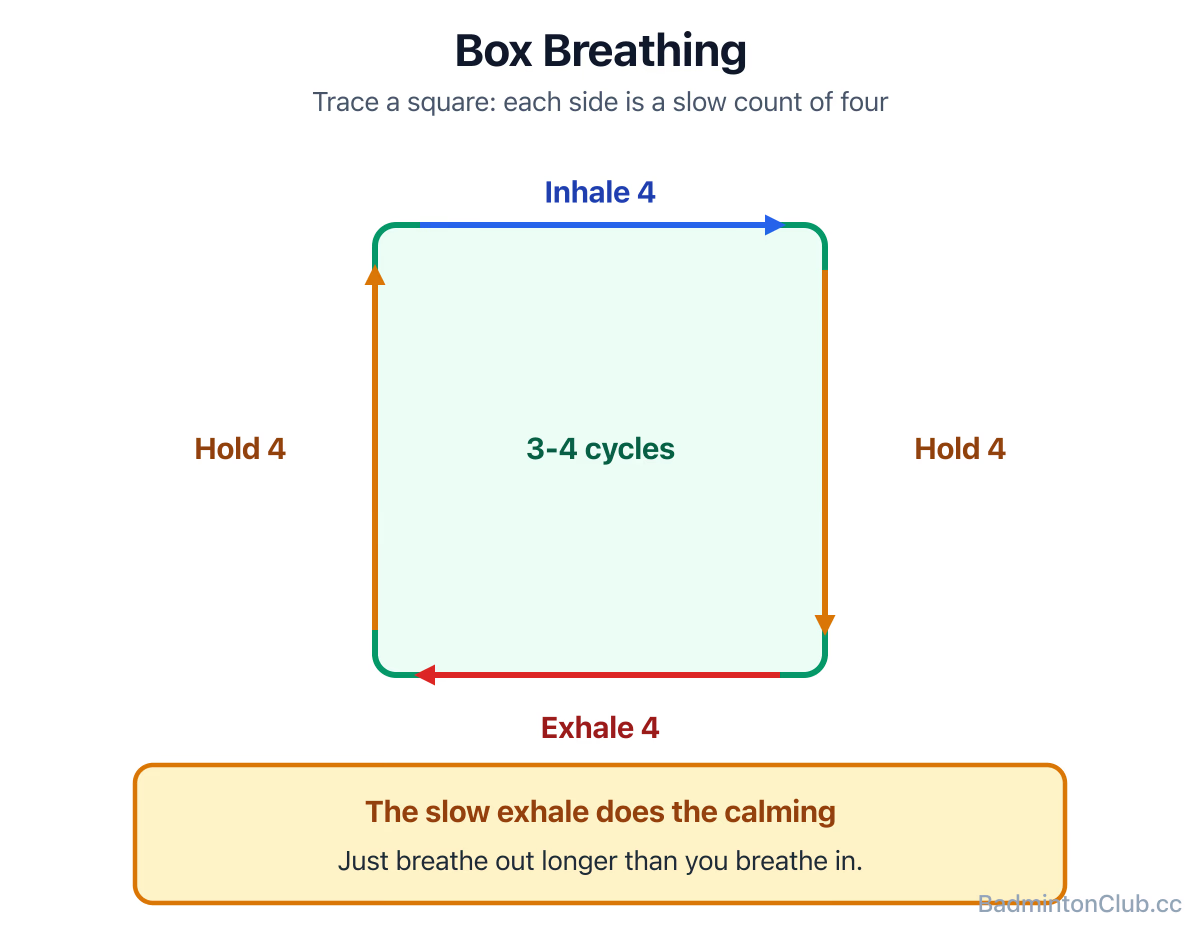
A widely used calming technique is box breathing: inhale for a count of four, hold for four, exhale for four, hold for four. Repeat three or four cycles. The mechanism is real, not magic — a slow, controlled exhale stimulates the vagus nerve and engages your parasympathetic nervous system, the "brake" on the adrenaline response, which nudges your heart rate down and clears the jittery edge. Do it while you walk to pick up the shuttle, or in the 11-point break. If the rigid four-count feels forced mid-match, just do the part that matters: breathe out slowly and a little longer than you breathe in. That single thing — a long, unhurried exhale — is what does the calming.
A pre-serve routine that anchors you
The serve is the calmest moment in badminton — nothing's moving, it's entirely yours — so it's the perfect anchor for a routine. Build a tiny ritual you do every serve: bounce the shuttle once, breathe out, look at your target, then serve. Same sequence, every time. A consistent pre-serve routine signals your brain that it's time to focus and crowds out the anxious chatter. The point isn't the bounce or the breath specifically; it's the sameness. Under pressure, the familiar routine gives your nervous system something to hold onto.
Reframe the nerves (the bit that changed my game)
Here's the mental shift that did more for me than any breathing drill, and sports psychologists back it up: stop trying to make the nerves go away, and relabel them as readiness. That racing heart, the buzzing in your chest — it's identical whether you call it "I'm terrified" or "I'm fired up." The physiology is the same; only the story differs. When I stopped fighting the feeling and started telling myself "good, I'm switched on, this matters," two things happened. The nerves stopped spiralling (because I wasn't adding panic about being panicked), and the energy actually started helping — sharper reactions, more intent. The players who crumble are usually the ones at war with their own nerves. The ones who thrive have made peace: a little fear means you care, and caring sharpens you. Try it next time your hands shake at 18-all — don't fight it, claim it.
A practical pressure drill
You can't learn to handle nerves in calm practice, so manufacture pressure. Play games starting at 18-all, or "sudden death" single points where the loser does ten press-ups. Play for something small with a club mate. The point is to feel a racing heart while you practise your reset, so that in a real match the routine is grooved. Composure under pressure is a rehearsed skill, not a gift.
FAQ
- Q: Why do I get so nervous before badminton matches? It's a normal adrenaline response to something you care about. The problem is badminton needs loose, relaxed hands, and adrenaline tightens everything. The nerves aren't a flaw — they just need managing.
- Q: How do I calm down during a badminton match? Box breathing (inhale 4, hold 4, exhale 4, hold 4) for a few cycles, a consistent pre-serve routine, and a slow walk between points. A long exhale physically lowers your heart rate.
- Q: How do I stop my hands shaking when I play? Slow your breathing to calm the adrenaline, and consciously loosen your grip between points — hold the racket like it might fly away. Reframing the nerves as readiness also reduces the shake over time.
- Q: What is box breathing and does it really work? Inhale, hold, exhale and hold, each for four counts. The active ingredient is the slow exhale, which engages the parasympathetic nervous system and nudges your heart rate down. It's a staple calming tool; if the rigid four-count feels awkward mid-rally, just exhale slower than you inhale — that alone does most of the work.
- Q: Should I try to get rid of nerves completely? No — relabel them as readiness instead. The energy of nerves is identical to excitement; fighting it just adds panic. A little fear means you care, and managed well it sharpens your reactions.
- Q: Why do I play great in knockabouts but freeze in matches? Because matches add pressure, and pressure tightens your grip and breathing. Your skills are intact; they're being choked by tension. Practising under manufactured pressure bridges the gap. See the broader mental game.
Match nerves make your grip tighten, your breathing go shallow and your soft shots fall apart — exactly when you need them most. This guide explains why badminton match nerves hit so hard, the box-breathing and pre-serve routines that genuinely calm you down, how to reframe nerves as readiness, and the practical between-point habits that keep one anxious moment from sinking a whole game. Written for club players who freeze up the moment a match means something.