How to Hold a Badminton Racket: Forehand, Backhand, Panhandle & Bevel Grips Explained
7 June 2026
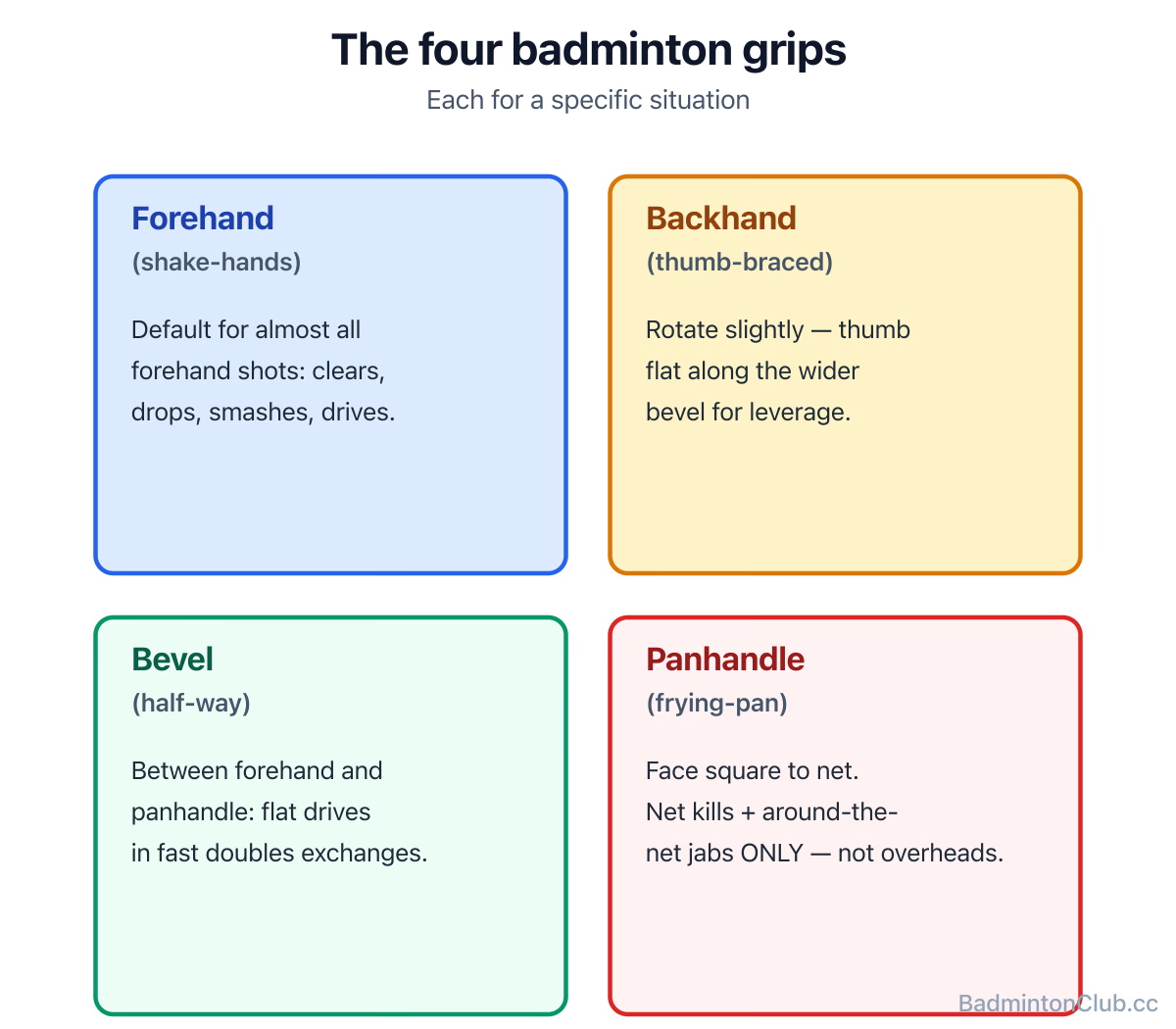
The two everyday badminton grips are the forehand grip (a relaxed "shake-hands" hold where your knuckles align with the racket face's edge, used for almost all forehand shots) and the backhand grip (a thumb-braced hold where you rotate the racket slightly and press your thumb flat along the wider bevel for leverage on backhand shots) — supplemented by the panhandle grip (frying-pan style, face square to the net, used situationally for net kills and around-the-net jabs) and the bevel grip (a halfway hold useful for some flat drives). You don't squeeze any of them tight; you hold loose and squeeze at impact.
The forehand grip (shake hands)
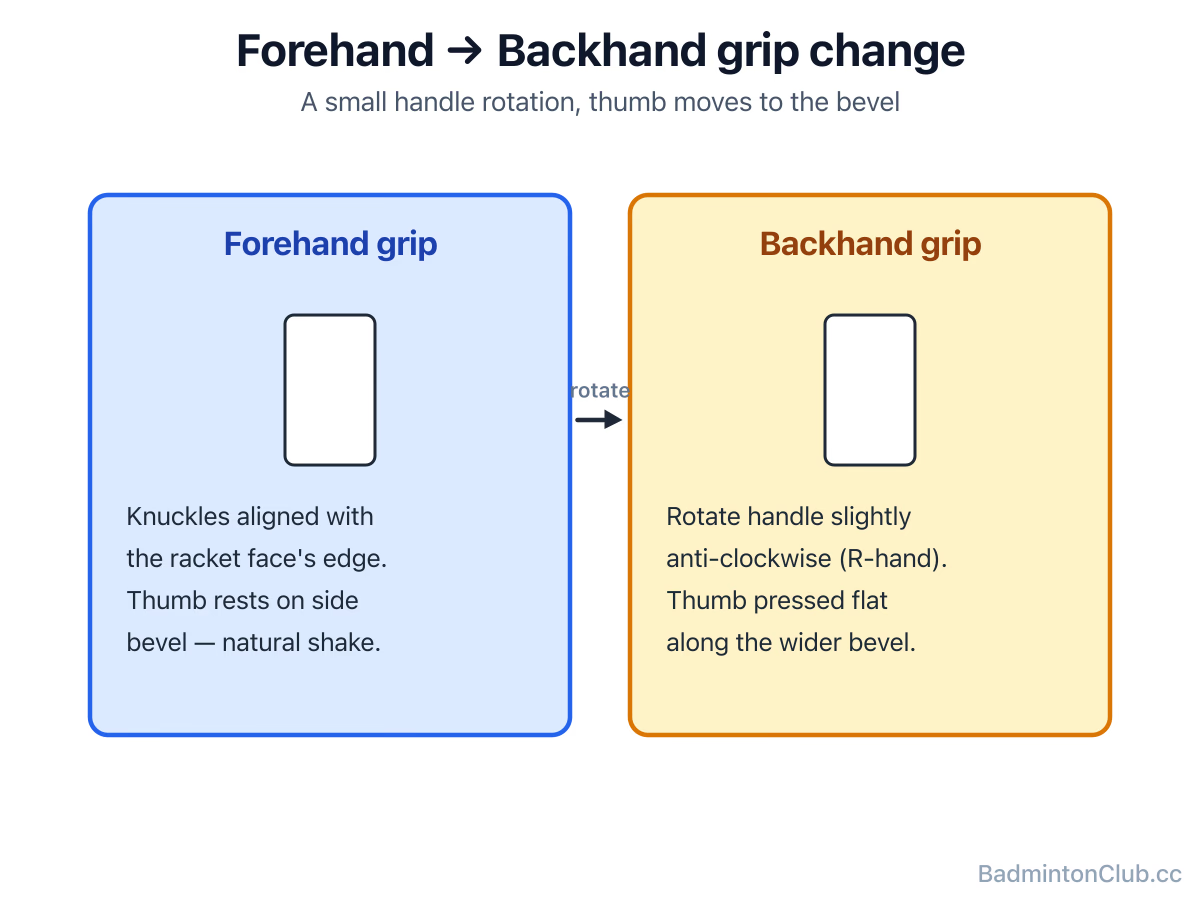
The default grip for everything forehand: clears, drops, smashes, net shots, drives. Hold the racket out flat in front of you, face perpendicular to the floor, then shake hands with the handle — fingers around, thumb resting comfortably on the side bevel, knuckles aligned with the racket face's edge. The result: a relaxed, slightly diagonal grip that lets the forearm pronate (rotate inward) freely through impact. The racket face naturally squares with your forehand swing.
Common errors:
- Hammer grip — fingers and palm all gripping equally tight, no relaxed feel — kills pronation.
- Face too closed or too open — usually because the grip rotated and you didn't adjust.
The backhand grip (thumb-braced)
The grip for backhand shots — net shots, lifts, clears, drives, the elusive backhand smash. From the forehand grip, rotate the racket slightly anti-clockwise (for a right-hander) so the thumb falls flat along the wider bevel of the handle. The thumb braced like that gives you leverage to push the racket head out and snap the forearm in supination through the shuttle. Without it, backhand shots have no power.
The grip change between forehand and backhand should be automatic and fast — fumbling it ruins the shot. Practise it without a shuttle for a few minutes until your fingers handle the rotation without thinking.
The panhandle grip
The panhandle (or "frying pan") grip turns the racket face square to the net — palm behind the handle, racket face flat as if you were holding a pan. It's wrong for normal overheads (you lose all forearm rotation), but it's useful for:
- Net kills right at the tape where you need the face square and a tiny tap.
- Around-the-net jabs where there's no time for any other grip.
- Certain serves and receives where a square face is the cleanest option.
The classic beginner mistake is using panhandle for everything — forehand smashes, clears, the lot — because it feels intuitive. It produces a weak push every time. Learn the panhandle as a situational grip, not a default.
The bevel grip
A halfway position between forehand and panhandle: the knuckles sit on a 45° bevel of the handle, racket face partway between perpendicular and square. Useful for:
- Flat drives in fast doubles exchanges.
- Receiving serves when you want a quick punch return.
Most players never name it explicitly; it just happens between forehand and panhandle as they react. Knowing it exists helps you understand why your hand sometimes ends up "between" two grips.
Loose-to-tight — the universal principle
Every grip — forehand, backhand, panhandle, bevel — is held loosely between shots and squeezed firmly only at impact. This "loose-to-tight" sequence is what allows the forearm to accelerate the racket head fast through the shuttle. A constantly tight grip blocks the rotation and produces a dead-armed swing. If you're feeling forearm fatigue after a session, you're probably gripping too hard, not playing too long.
What this looks like on a club night
Grip technique is one of the easiest things to fix and one of the most under-taught. The single most common error in any club hall is the player who never changes grip — forehand grip for everything, including backhand clears that then dribble back into their own court. The second most common is panhandle creep on overheads. Five minutes of shadowing the grip change between forehand and backhand will make more difference to your backhand shots than any clever technique tip — see Backhand Clear and The Low Serve & Backhand Serve for where this matters most. A frank opinion: if your backhand is weak, check your grip first; the chances are very high that you're trying to do a backhand stroke with a forehand grip. Use the five minutes you're queueing for a court on BadmintonClub.cc to shadow grip changes — it costs you nothing and grooves the rotation in a fortnight.
FAQ
- Q: How should I hold a badminton racket? For most forehand shots, use a relaxed "shake-hands" forehand grip with knuckles aligned to the racket face's edge; for backhand shots, rotate slightly so your thumb sits flat on the wider bevel for leverage.
- Q: What is the backhand grip in badminton? A thumb-braced grip — rotate the handle slightly and press your thumb flat along the wider bevel — that gives leverage to snap the forearm through backhand shots.
- Q: What is the panhandle grip and when do I use it? A "frying-pan" grip where the racket face is square to the net — useful situationally for net kills and around-the-net jabs, but wrong as a default for overheads.
- Q: Should the grip be tight or loose? Loose between shots, squeezed firm only at impact — the "loose-to-tight" sequence is what lets the forearm accelerate the racket head fast.
- Q: How do I change grips quickly between shots? Practise the rotation without a shuttle for a few minutes per session — small thumb and finger movements, not a regrip. With repetition it becomes automatic.
- Q: What's the most common badminton grip mistake? Using the same forehand grip for backhand shots — backhand clears, lifts and smashes all need the thumb-braced backhand grip to produce real power.
How to hold a badminton racket properly — the four grips every club player should know and when to switch between them. Default forehand (shake-hands) for forehand shots, thumb-braced backhand for backhand clear/serve/smash, panhandle (frying-pan) only situationally for net kills, and the in-between bevel grip for flat drives. The single most common error in any club hall is the player who never changes grip — five minutes of shadow grip-changes a session fixes most backhands.