How to Build Stamina for Badminton: HIIT, Court Endurance Drills & Match Fitness
7 June 2026
Badminton stamina is built with high-intensity interval training (HIIT) that mirrors the sport's real work-to-rest pattern — 5–15 second bursts at near-maximum effort separated by 15–60 seconds of light recovery — combined with on-court endurance drills (multi-shuttle feeds, long-rally games) and a foundation of moderate aerobic work. Long slow jogging alone won't get you fit for badminton; you need the intervals.
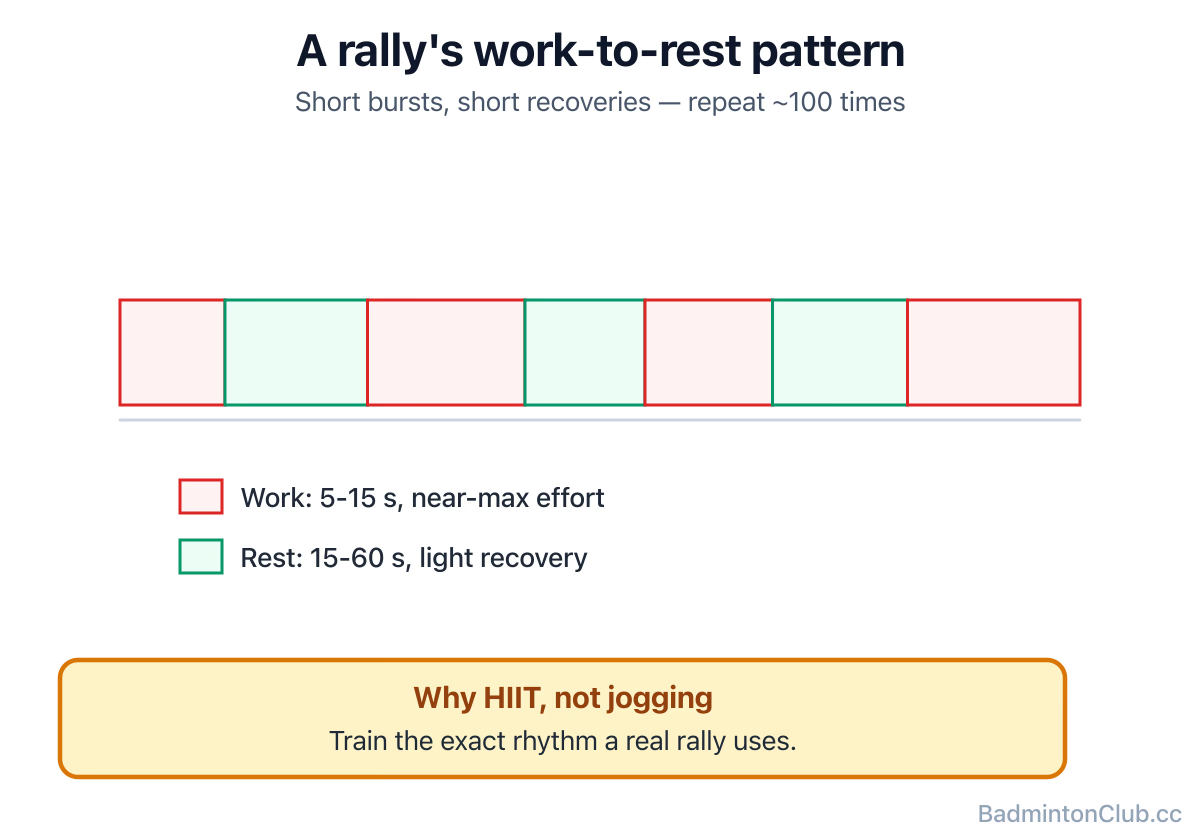
Why HIIT, not jogging
Rally-scoring badminton is an interval sport: a rally lasts roughly 5–15 seconds at very high intensity, then there's a 10–25 second pause before the next one. Across a long match you might play 100+ rallies, each demanding a short, near-maximal effort. Steady-state running trains the wrong system — you become aerobically fit but still gasp on the third long rally. HIIT trains the exact engine badminton uses: repeated near-max bursts with incomplete recovery. That's why the fittest singles players in any club often aren't long-distance runners; they're the ones who do hard intervals.
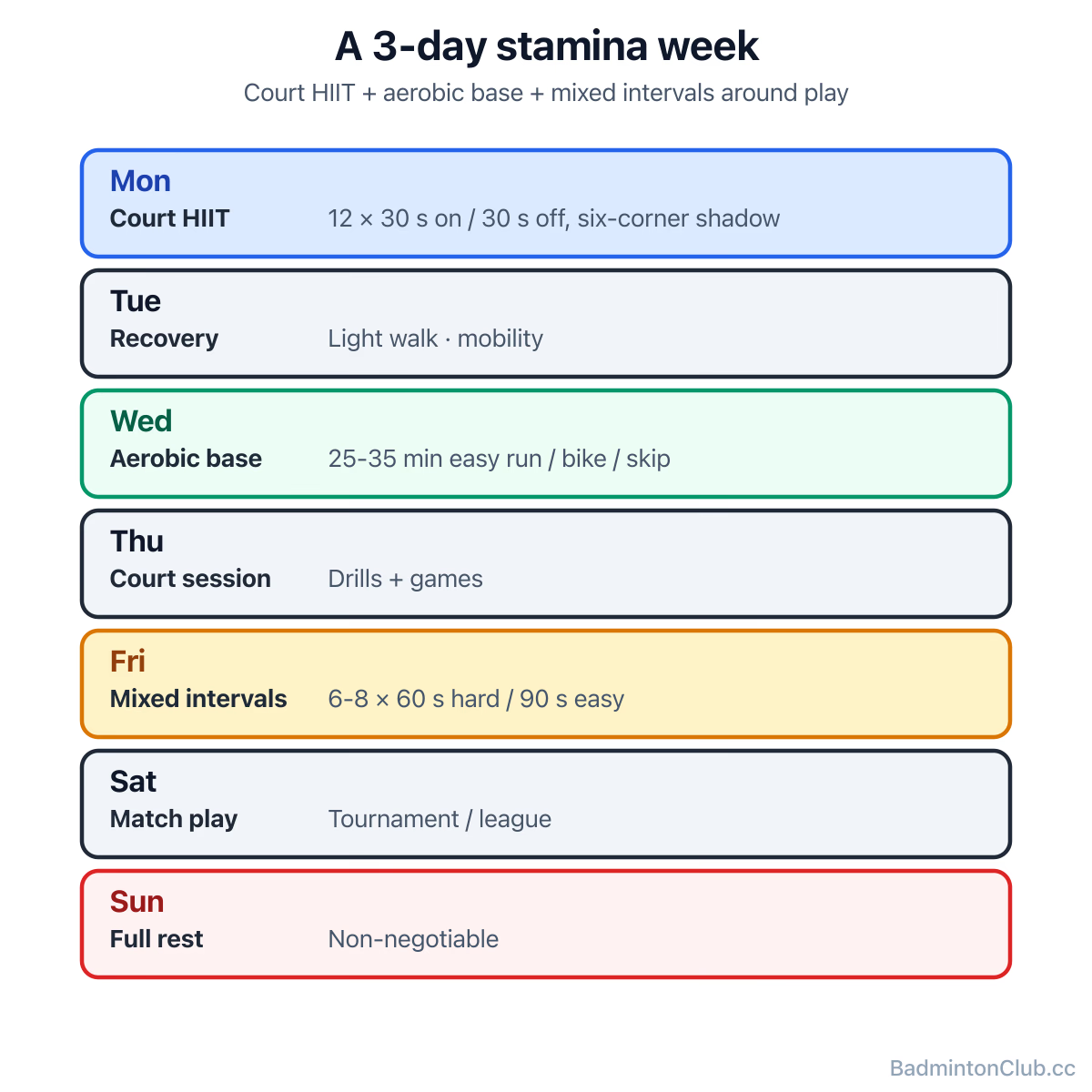
A 3-day weekly stamina plan
- Day 1 — Court HIIT: 30 seconds shadow footwork at max intensity, 30 seconds slow recovery × 12 rounds. Work to a six-corner pattern. Builds anaerobic capacity and rally fitness directly.
- Day 2 — Aerobic base: 25–35 minutes of moderate running, cycling or skipping at conversational pace. This is the engine underneath the intervals.
- Day 3 — Mixed intervals: 6–8 × 60-second hard / 90-second easy (running, bike or assault-bike). Develops the ability to recover between hard points.
Three sessions a week, with at least one rest day between hard ones, is enough for most club players to feel a real difference within 4–6 weeks. Add a fourth only when the three feel comfortable.
On-court endurance drills
- Multi-shuttle feed: a partner feeds 20 shuttles continuously to all four corners; you cover them all without rest, then 60–90 s recovery. 5 sets. Brutal and specific.
- King of the court / long rallies: play games where the rally length is deliberately extended (no smash, or "first to 30") so you train sustained intensity rather than a quick winner.
- 3-on-1 doubles: three players hit, one defender retrieves everything. Two minutes on, two minutes off, three rounds. Demands court coverage under fatigue.
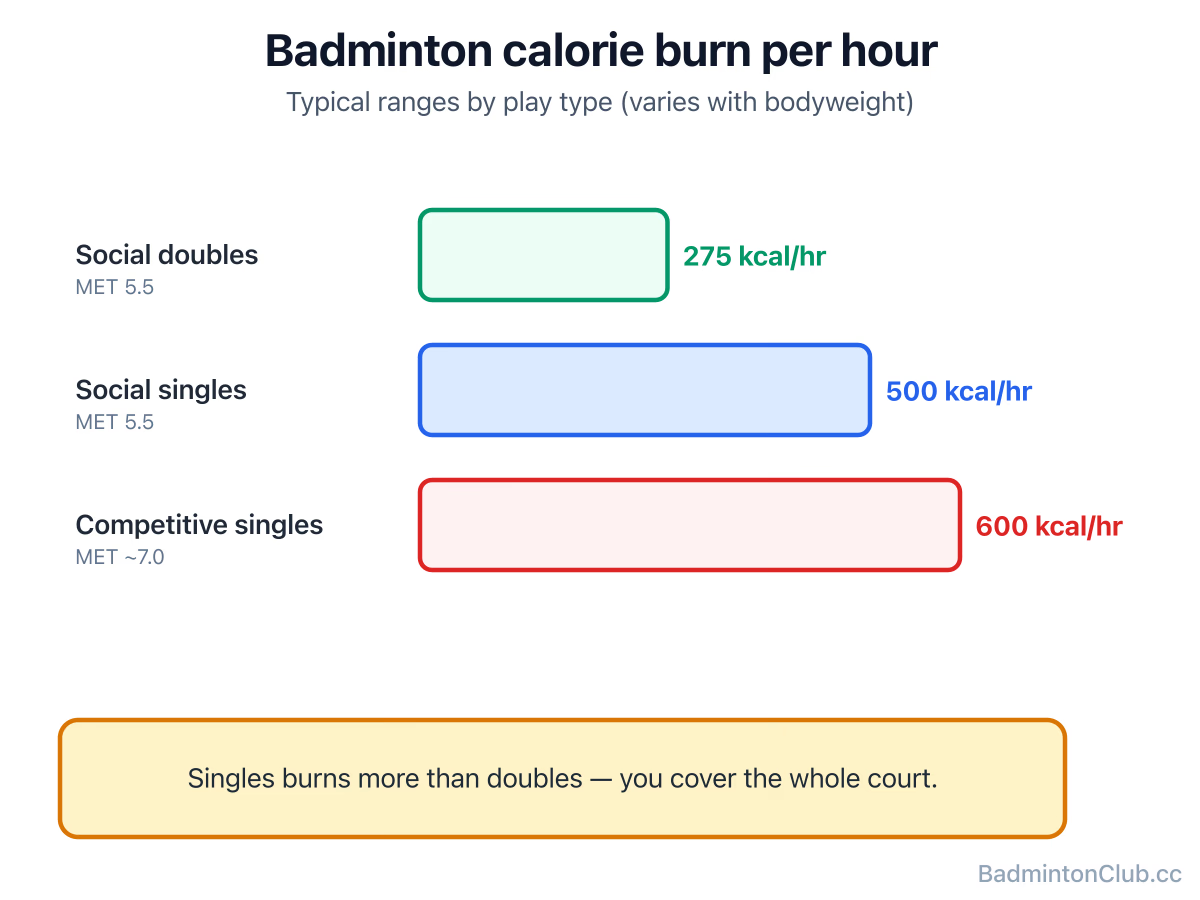
How many calories does an hour of badminton burn?
Roughly 475–525 kcal per hour social play and 500–675 kcal per hour competitive, scaling with bodyweight and intensity. Singles burns more than doubles because you cover the whole court; competitive matches with longer rallies and more sprints push the upper end. (Useful for planning eating around training — see Badminton Nutrition — not for tracking down to the calorie; individual variation is large.)
What this looks like on a club night
Most "fitness" problems at club level aren't fitness at all; they're inefficient footwork and panicked decision-making that feel like being unfit. The player who's gassed after one game is often the one chasing every shuttle from the wrong base position. Still, real stamina matters in third games — and the people who do two short HIIT sessions a week noticeably out-last those who do none. My honest take: 2–3 short interval sessions plus your regular play beats one big "fitness session" you dread and skip. Build a habit you'll actually keep, and the third game looks after itself. Most of the players I know who climbed a tier in a year did it without changing their game — they just logged sessions consistently on BadmintonClub.cc and quietly stopped skipping the boring ones.
FAQ
- Q: How do I build stamina for badminton singles? With short, sharp HIIT intervals (5–15 second bursts at near-max effort with incomplete recovery) that mirror real rally physiology, plus a moderate aerobic base — not long slow jogging alone.
- Q: Is HIIT or long-distance running better for badminton? HIIT, because badminton is an interval sport. Long-distance running has a role as a base but won't prepare you for the repeated high-intensity bursts of rallies.
- Q: How many calories does an hour of badminton burn? About 475–525 kcal/hr for social play and 500–675 kcal/hr for competitive singles, scaling with bodyweight and intensity.
- Q: How often should I train stamina for badminton? Two to three short conditioning sessions a week — one court-specific HIIT, one aerobic base, one mixed-interval — with rest days between hard sessions.
- Q: How long until I notice better stamina? Most club players feel a real difference in 4–6 weeks of consistent training (3 sessions/week), with bigger gains over 2–3 months.
- Q: Why am I tired in the third game? Often a mix of pacing, inefficient footwork and inadequate interval fitness — fix the footwork patterns (see Footwork drills) and add 2 short HIIT sessions a week.
Build badminton stamina with HIIT intervals that mirror rally physiology — 5–15 second bursts, incomplete recovery — not the long jogging that wastes most club players' time. The article lays out a 3-day weekly plan (court HIIT plus aerobic base plus mixed intervals), three on-court endurance drills (multi-shuttle feed, long rallies, 3-on-1), and the verified per-hour calorie ranges. Built for adults who want third-game stamina without the gym hours.