Challenge Court Badminton (Champion Court): The Asian Club Format Where Winners Hold Court
6 June 2026
Challenge Court is a badminton rotation where one court is the "champion court": the winning pair stays and challenger pairs queue to take them on. Common across Asian drop-in play, it keeps top players continuously tested and creates a spectator-friendly "main event," at the cost of uneven court time for everyone else. (For a structured, app-run take on "winners keep playing," see BadmintonClub.cc's Winners Stay mode.)
How it works
One court is the Champion Court; the winners stay, challenger pairs queue to play them. Beat the champions and you become the new champions.
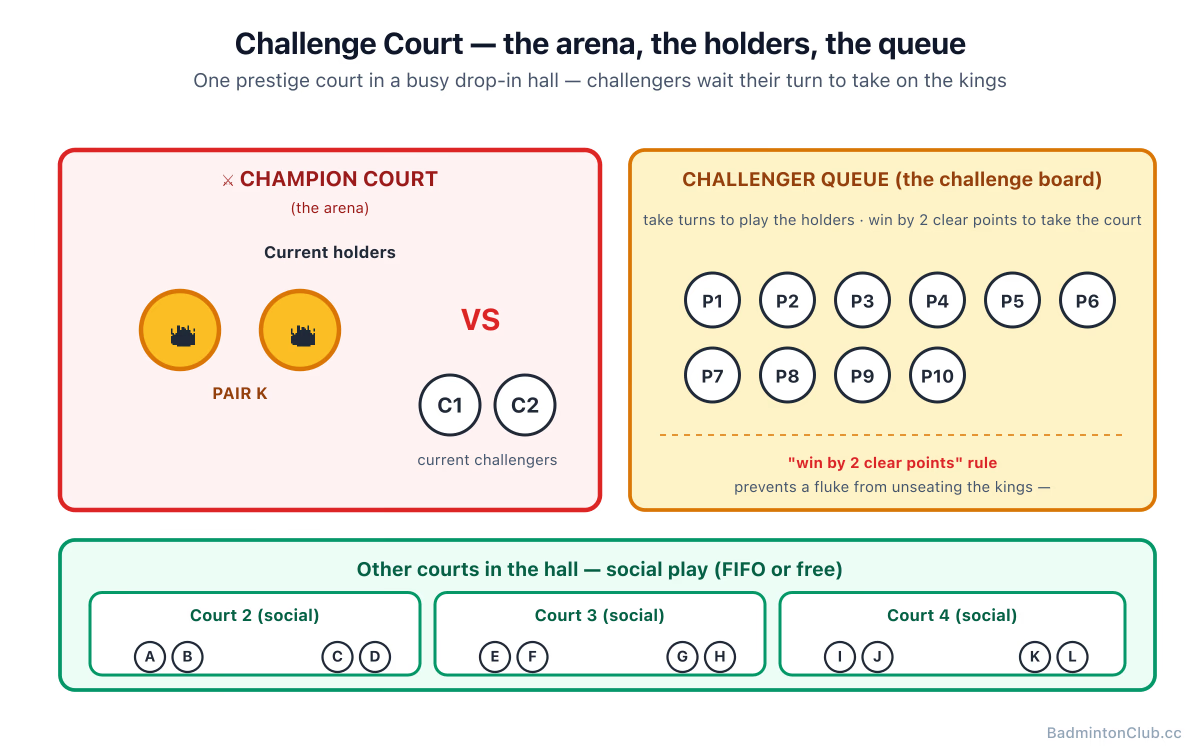
Why the "challenge board" culture is an Asian-hall thing
If you've played at a busy commercial drop-in hall in Kuala Lumpur, Guangzhou or Jakarta, you've seen challenge court even if nobody wrote the rules down. One court becomes the arena — the best games happen there, a knot of people watches, and a small challenge board (or these days a name list on someone's phone) holds the queue of pairs waiting to take on the holders. The unwritten law is the part outsiders miss: in many halls you have to win by two clear points to take the king's court, so a one-rally fluke doesn't unseat the holders — it keeps the standard on that court genuinely high. It fits the economics of pay-by-the-hour halls, where strong players want maximum competitive minutes and are happy to watch between bouts. The flip side, and the reason it never became the Western club default, is that it openly trades court-time fairness for spectacle: beginners can spend an evening never setting foot on the arena court. Great as one feature court alongside social courts; rough as a whole-session system.
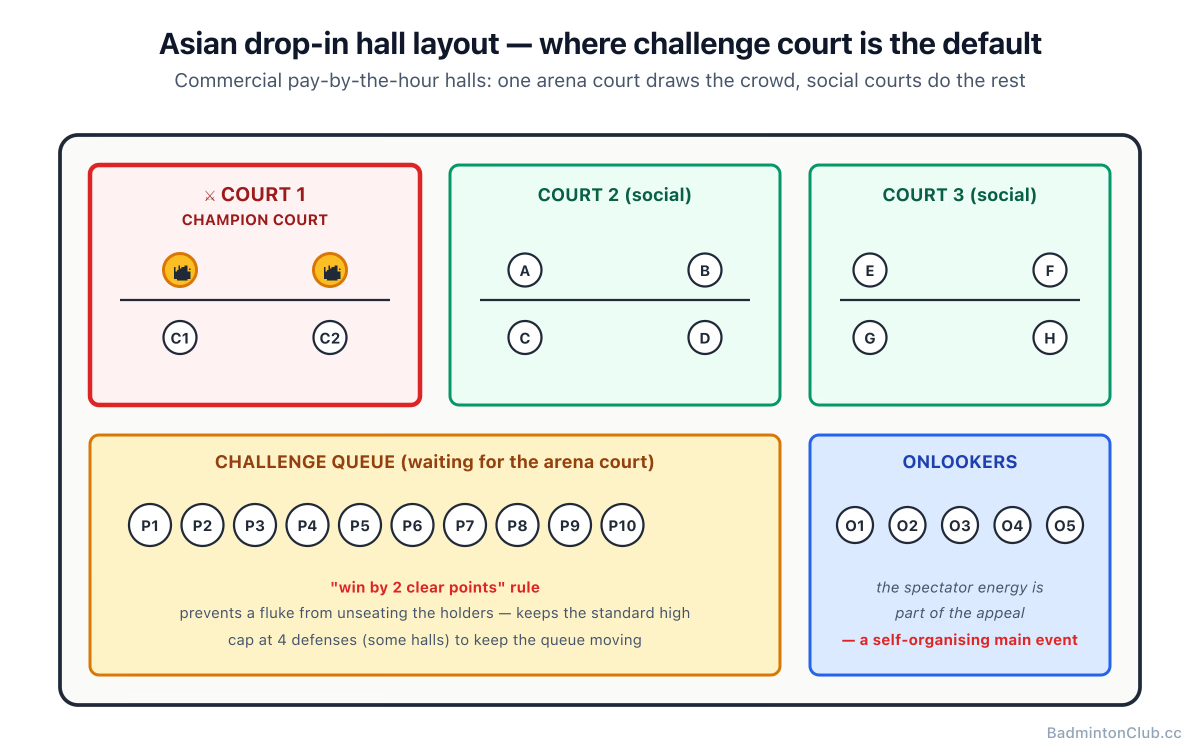
Two more unwritten things the Asian halls do that nobody writes down. The 2-clear-points rule is the first; the second is the cap on defenses — most halls let the holders keep the court for 3 or 4 wins, then politely rotate them out, because an undefeated pair for two hours straight kills the queue. The third, less obvious, is the etiquette of calling the next challenger: a nod, a "ready?" from the front of the queue, then they walk on. The current winners don't get to choose their challenger — first in line, first on. It's a tiny rule, but it stops the holders from cherry-picking easy marks.
Pros and cons
Pros: ✅ fun, high-energy, spectator interest · ✅ strong players continuously challenged · ✅ self-organizing prestige. Cons: ❌ poor court-time fairness (clubs that prioritize fairness often prefer Winner Splits rotation) · ❌ beginners rarely get on · ❌ can feel exclusionary.
Examples
- 1 champion court + 3 social courts in a drop-in hall.
- Used for the final hour as an organic mini-tournament.
- Capped: champions retire after 4 defenses to keep the queue moving.
Where it's popular & estimated share
A cultural staple of China, Malaysia, Indonesia, Vietnam, the Philippines and wider Asia; ~10% globally but disproportionately concentrated in Asian drop-in halls.
FAQ
- Q: What is challenge court badminton? Winners hold a "champion court"; challengers queue to beat them.
- Q: Is it fair on court time? No — it favors the strongest. Cap defenses to help.
- Q: How is it different from winner stays on? Same "winners stay" idea, but built around one prestige court with a challenger queue — see Winner Stays On (King of the Court) for a full comparison of that broader format.
- Q: Good for beginners? Not really — they rarely reach the champion court.
- Q: Why is it popular in Asia? It suits high-volume commercial drop-in halls and competitive culture.
- Q: Can an app run it? Use Winners Stay for a structured, score-tracked version.
- Q: Why "win by 2" instead of first to 21? It prevents a single lucky rally from dethroning the holders; the standard stays genuinely high.
- Q: What happens to the queue during a long game? Most halls let people re-shuffle partners while they wait — a pair can split and re-form with another waiting player.
- Q: Is this a good format for a 1-court club? Yes — that's the classic case, in fact. With 1 court it becomes "winners stay" by definition.
Challenge Court (Champion Court) is the Asian drop-in hall format where winning pairs hold one prestige court and challengers queue to unseat them. Learn how the 2-clear-points rule, defense caps, and challenger etiquette make it work — plus when it shines as a feature court alongside social courts and when it falls flat for beginners.