Best Badminton Footwork Drills (At Home & On Court): Shadow Training, Split Step & Six-Corner Routines
7 June 2026
The most effective badminton footwork drills are shadow routines that move you through the six court corners from a central base position — split-stepping at each shot, lunging into the front corners, scissor-kicking from the rear, and recovering to base every rep — done with or without a shuttle for 3–5 sets of 60–90 seconds. Footwork is a movement pattern you groove until it's automatic; you can build the foundation entirely at home in a hallway-sized space.
Why shadow drills work
Footwork breaks down in matches not because players are slow but because the pattern isn't grooved. Shadow footwork (movement without a shuttle) lets you focus on the mechanics — split step, first step, travel pattern, lunge or scissor at the corner, push back to base — without the cognitive load of reading and hitting. Once the pattern is automatic, your feet go where they need to in a rally without conscious thought, and you arrive at the shuttle balanced enough to play a clean stroke. The technique side (what a split step is, how to chassé) is covered in the techniques series (Badminton Footwork — split step, chassé & shadow drills); this article is about how to drill it until it sticks.
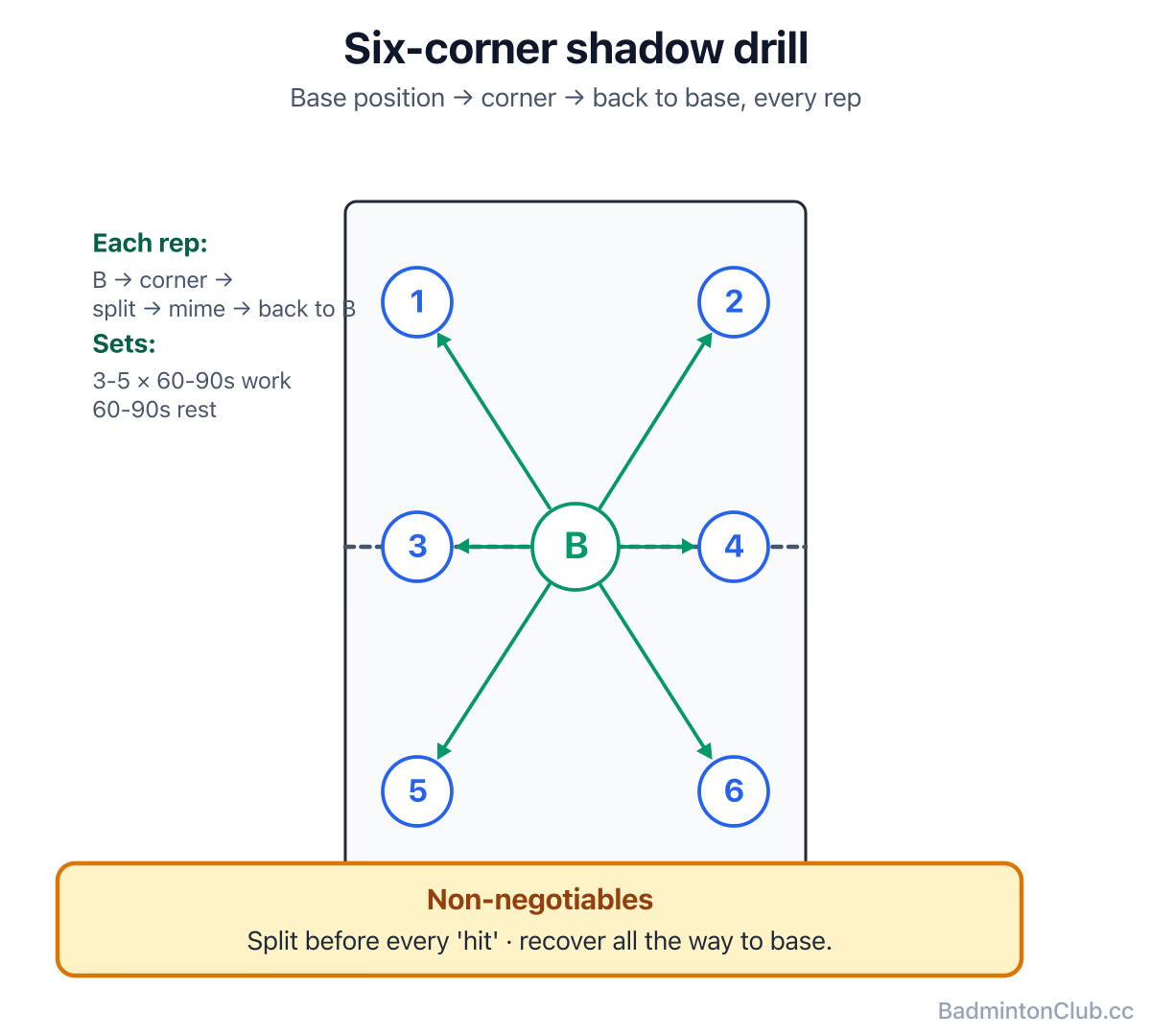
The six-corner shadow routine (the bread-and-butter)
Mark or imagine the six court spots: front-left and front-right (net corners), mid-left and mid-right (mid-court sides), rear-left and rear-right (back corners). From a central base, move to one corner, mime a shot, recover to base, then the next corner — in a fixed pattern (e.g. front-left → rear-right → front-right → rear-left → mid-left → mid-right) or called out by a partner for randomness.
- Beginner load: 3 sets × 60 seconds work, 90 seconds rest.
- Intermediate: 4 × 90 s work, 60 s rest.
- Advanced: 5 × 90–120 s work, 60 s rest, with random-call routine.
Every rep must include the split step before "the shot" and the return to base after. Cutting either corner is the most common way the drill stops paying off.
Drills you can do at home
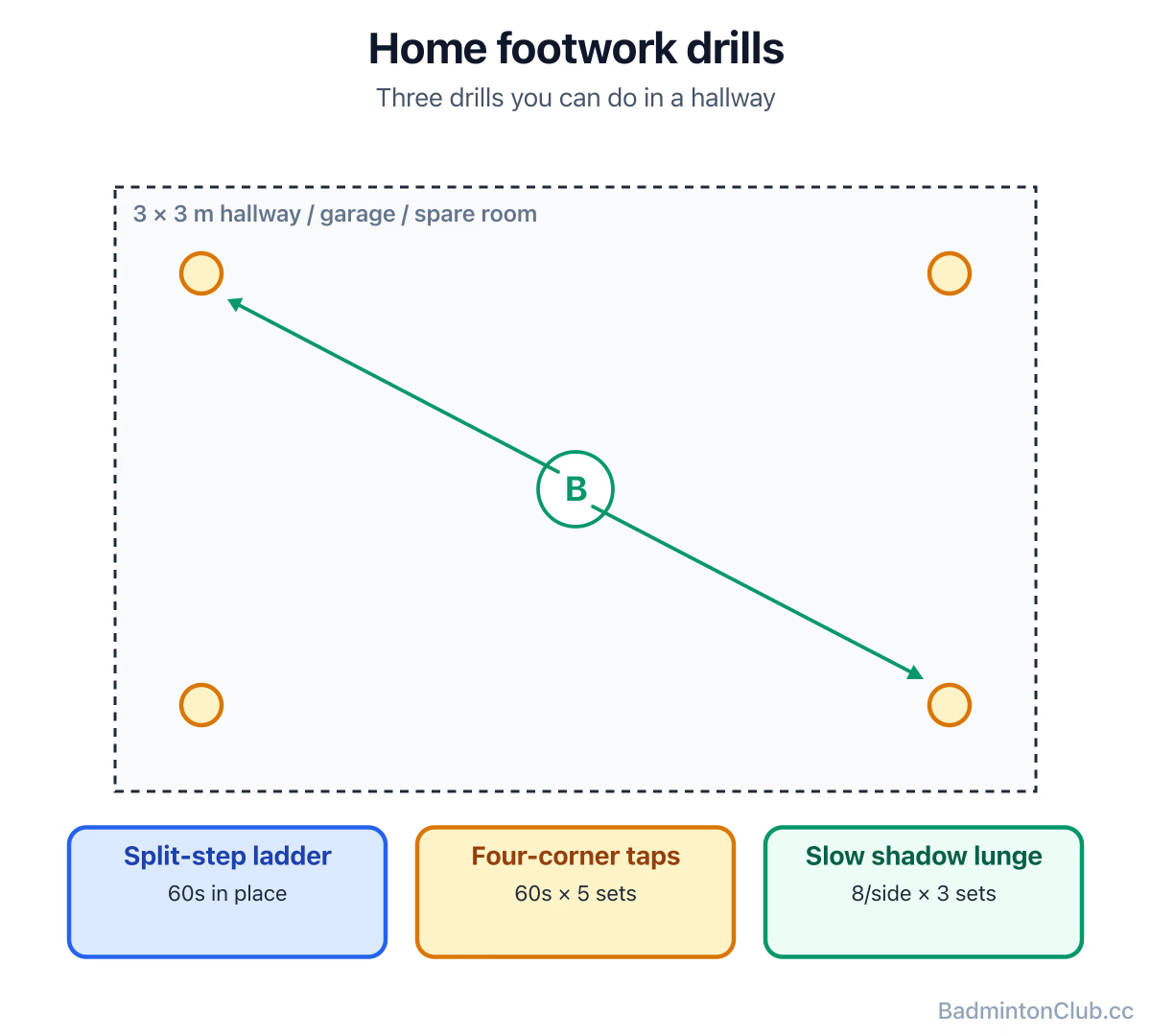
You don't need a court. Three drills work in a hallway, garage or any 3 × 3 m space:
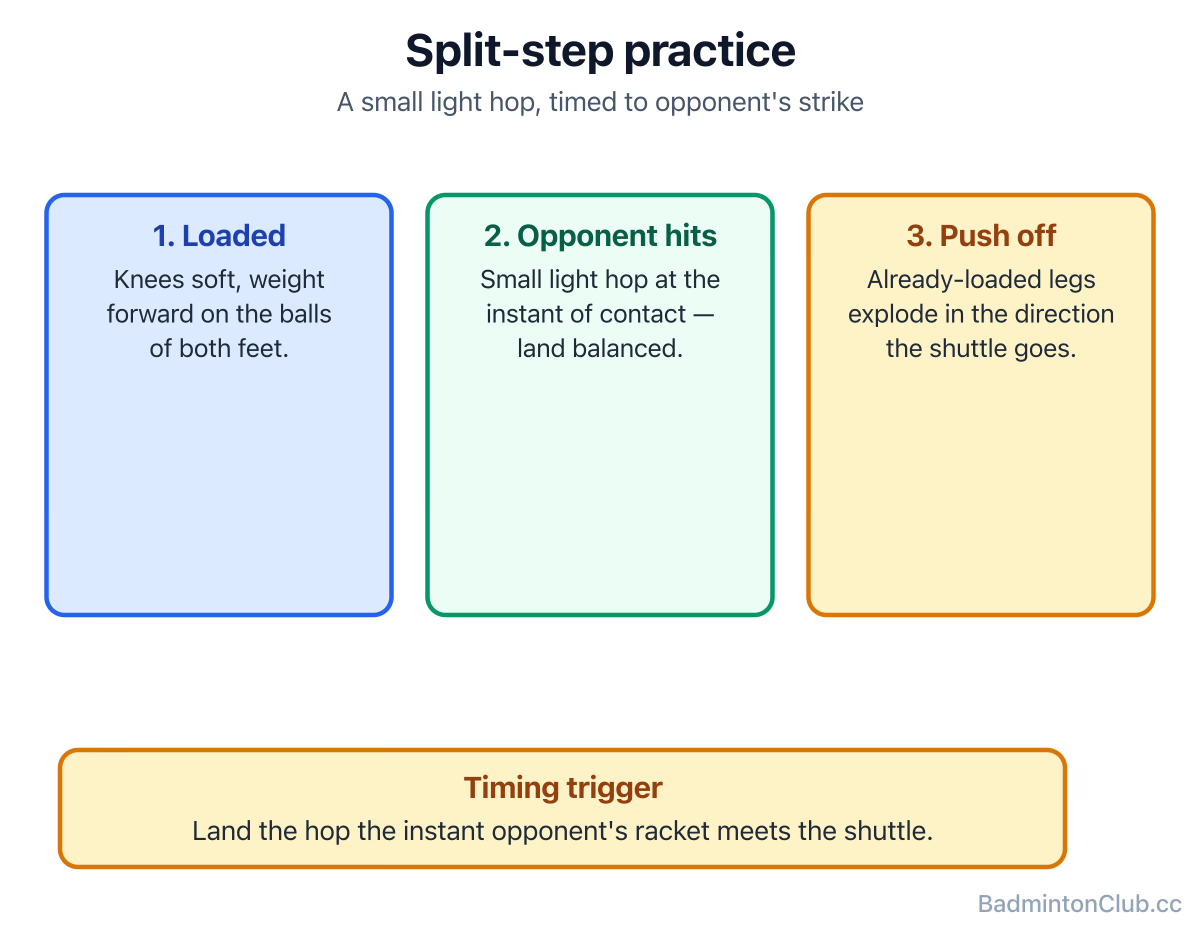
- Split-step ladder — light split-step hops in place every 2 seconds for 60 seconds, focusing on landing balanced on the balls of both feet, knees soft. Trains the timing trigger.
- Four-corner taps — mark four spots in a square ~1.5 m apart, tap each in a random sequence called by a partner (or a phone app), recovering to centre after every tap. 5 × 60 s.
- Slow shadow lunge-and-recover — slow front lunges, holding the lunge briefly to feel the knee tracking over the toes, then pushing back to start. 3 sets × 8/side. Builds the lunge mechanics the on-court drill needs.
The mistake that gives it away
The shadow drill done lazily is worse than no drill — players go through the motions without a real split, without a real recovery, and groove a sloppy pattern they then take onto the court. Two non-negotiables: (1) split before every "hit", no exceptions; (2) recover all the way back to base, even when you're tired. If you can't do five clean sets, do three with intent; quality wins. I'd rather see a club player spend ten focused minutes on six-corner shadow each session than an hour of half-hearted match play — the difference shows up in three or four weeks. If your club runs its session bookings through BadmintonClub.cc, block out a recurring "shadow ten minutes" slot before each peg-board night and it stops being the thing you mean to do and forget.
FAQ
- Q: What are the best badminton footwork drills for beginners? Six-corner shadow drills (front, mid and rear corners from a central base) and split-step practice in place — both can be done at home without a court.
- Q: Can I practise badminton footwork at home without a shuttle? Yes — shadow footwork (movement without a shuttle) is one of the most effective ways to groove the patterns, and you need only a small space.
- Q: How long should a footwork drill last? Sets of 60–90 seconds with 60–90 seconds rest, 3–5 sets, mimicking the work-to-rest pattern of real badminton rallies.
- Q: How do I practise the split step? Small light hops in place every 1–2 seconds, landing on the balls of both feet with bent knees, timed as if your opponent is striking. Build to 60 seconds × 3 sets.
- Q: How often should I do shadow footwork? Two to four short sessions a week (10–20 minutes each) shows clear improvement within a month; daily is fine if you don't grind to fatigue.
- Q: Is footwork or stroke practice more important? Both matter, but footwork tends to be the bigger lever for most club players — reaching the shuttle early and balanced makes every stroke easier.
Badminton footwork drills you can groove anywhere — from a six-corner shadow routine on court to split-step ladders and corner taps in a 3×3 m hallway, written for club players whose movement is the weakest part of their game. The piece walks through three home drills, an on-court routine with work/rest reps per level, the split-step timing trigger, and what the lazy version costs you. Cross-linked to the techniques footwork article so mechanics and drilling sit side by side.