Badminton Ladder System Explained: Courts Ranked by Skill, Winners Move Up
6 June 2026
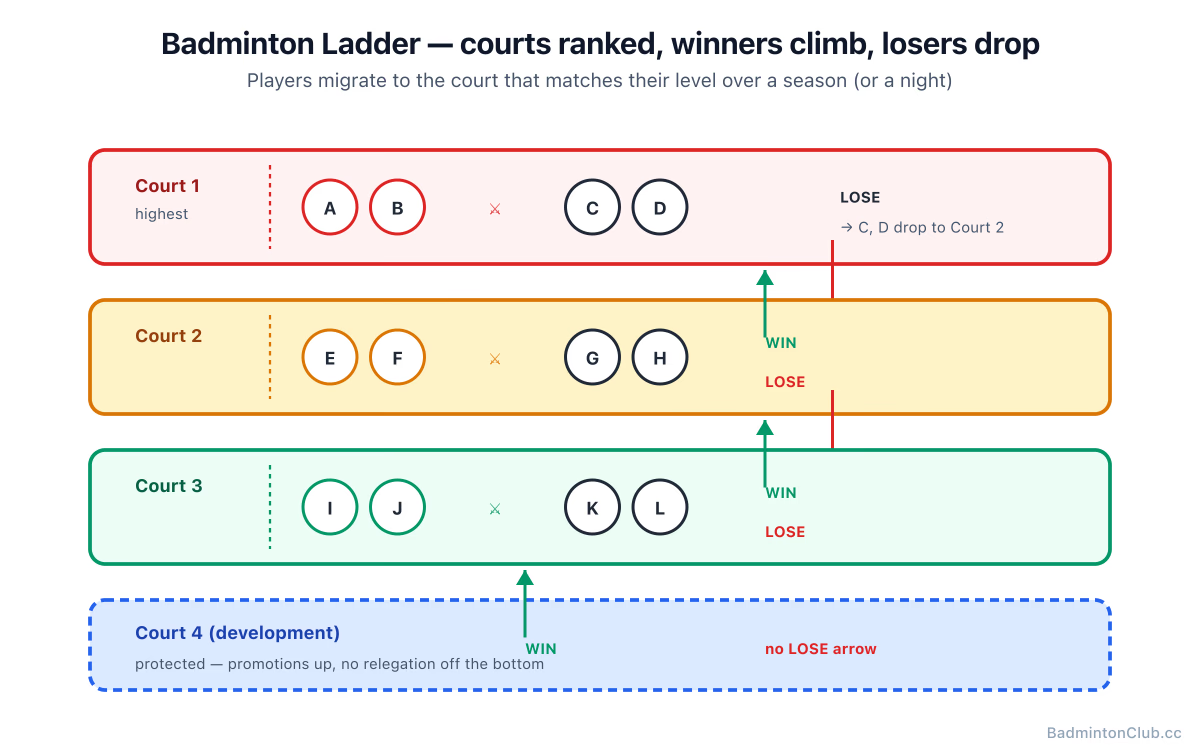
In a badminton ladder system, courts are ranked by skill level; winners move up a court and losers move down. Players quickly settle onto the court that matches their ability, producing close, competitive games — popular in league and competitive clubs, less welcoming to absolute beginners. (For automatic skill-matching without manual court ranking, BadmintonClub.cc's TimeSwap rotation balances every game by rating.)
How it works
Courts ranked Court 1 (highest) → Court N (entry). After each game, winners move up one court, losers down one; players migrate to their level.
The yo-yo problem (and the fix that makes a ladder league stick)
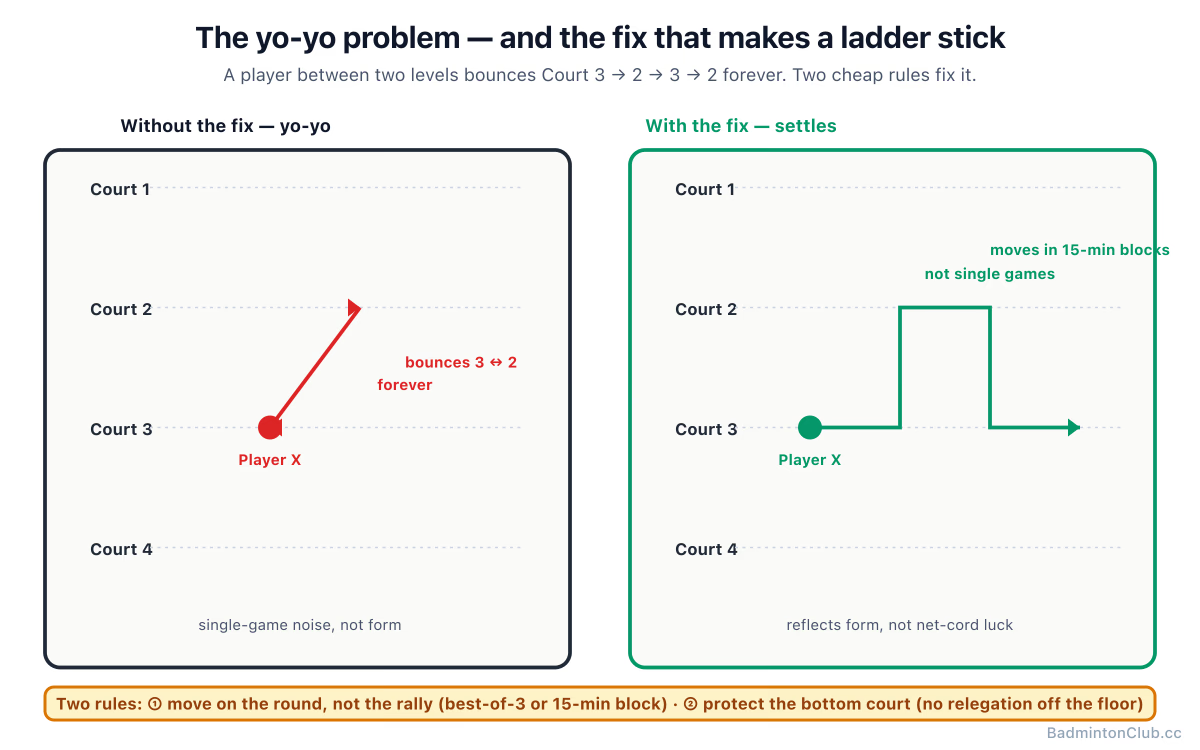
Run a promotion-relegation ladder for more than a couple of weeks and you'll meet the yo-yo: a player who's genuinely between two levels bounces Court 3 → Court 2 → Court 3 → Court 2 every single game, never settling, and it starts to feel like noise rather than ranking. Two fixes, both cheap. First, move on the round, not the rally — promote/relegate based on best-of-three or a 15-minute block, not a single fluky game, so the ladder reflects form rather than one lucky net-cord. Second — and this is the rule that quietly keeps a badminton ladder league healthy long-term — protect the bottom court. Make Court 4 a coached "development" court that takes promotions upward but doesn't relegate anyone off the bottom into oblivion; nobody quits the club from there, and your beginners always have a home. A ladder without a protected floor is brilliant for your top six and silently corrosive for everyone else.
The other sneaky ladder issue is the promotion at the top: once a player reaches Court 1, where do they go? Most clubs answer this with a "wall" — Court 1 is the ceiling, and being there is its own reward. But that means the strongest player in the club is also the least active on the ladder. A nicer pattern is a "Council of Court 1" — the top four play each other in a round robin to keep their own games close, while still occasionally dropping down to mentor Court 2 promotions. That keeps your top players active and gives new Court 2 arrivals a real chance to learn from the best.
Pros and cons
Pros: ✅ close games by skill · ✅ highly competitive and motivating · ✅ clear progression. Cons: ❌ beginners can feel stuck/excluded · ❌ needs clear court ranking & management · ❌ not a single-night court-time-fairness fix.
Examples
- 4-court league club: Court 2 winners → Court 1; Court 1 losers → Court 2.
- Season-long persistent ladder with weekly standings.
- Ladder + protected bottom "development" court for newcomers.
Where it's popular & estimated share
Used by competitive/league clubs worldwide; ~5% as a primary nightly system, more often a season structure on top of another system. Larger clubs sometimes layer a ladder on top of a box league or tiered rotation so skill groups are preserved even on busy nights. If your club is still choosing a format, the hybrid rotation setup guide walks through which combination suits different player counts.
FAQ
- Q: How does a badminton ladder work? Winners go up a court, losers down, so players reach their level.
- Q: Is it good for beginners? Less so — they tend to stay at the bottom unless protected.
- Q: Nightly or seasonal? Both — as a live court ladder or a standings ladder over weeks.
- Q: Does it auto-balance teams? No — balance emerges from movement; for true auto-balance use TimeSwap.
- Q: How many courts needed? At least 3–4 for meaningful movement.
- Q: Why use a ladder? Strong competitive motivation and close matches.
- Q: Can I run a ladder across two clubs? Yes — publish the standings sheet and let players track their own ranking, regardless of which night they play.
- Q: What if I win 4 in a row on Court 1? Most clubs cap at "stay on Court 1 for one full session, then drop a court to give others a chance" — caps prevent stasis at the top.
- Q: Is this good for a school club? Less so — kids are still calibrating their skill and the yo-yo effect dominates. TimeSwap or a box system is more forgiving.
A badminton ladder system ranks courts by ability — winners move up, losers drop down, and players naturally settle where they belong. This guide covers how ladder leagues work, the yo-yo problem and its fixes, protecting beginners with a development court, and when a ladder fits your club better than other rotation systems.