Badminton Box League & Tiered Rotation: Skill-Grouped Play for Big Clubs (A/B/C/D)
6 June 2026
The box (tiered) system divides players into skill bands — A (advanced) to D (beginner) — who rotate mainly within their band. It produces balanced, enjoyable matches in large clubs, at the cost of grading players up front. (BadmintonClub.cc's TimeSwap achieves similar balance automatically via skill grouping — no manual boxes to maintain.)
How it works
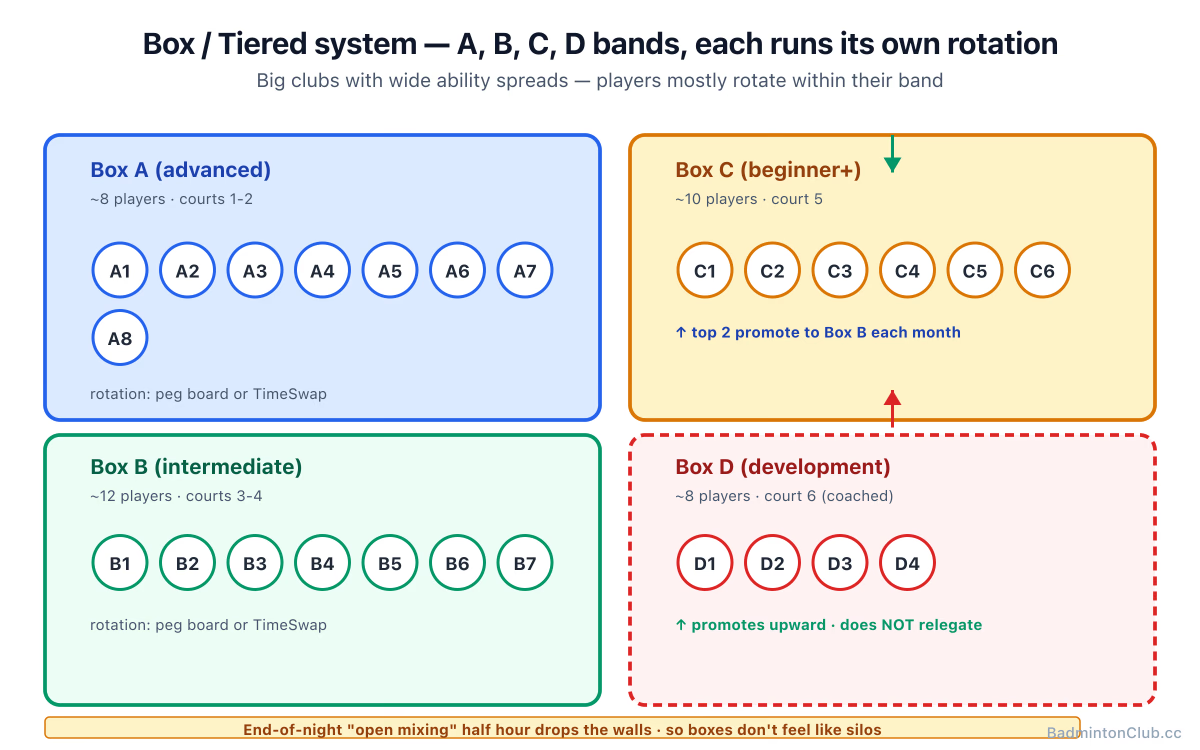
Players are graded into boxes (A/B/C/D), each running its own rotation on assigned courts; promotion/relegation happens periodically.
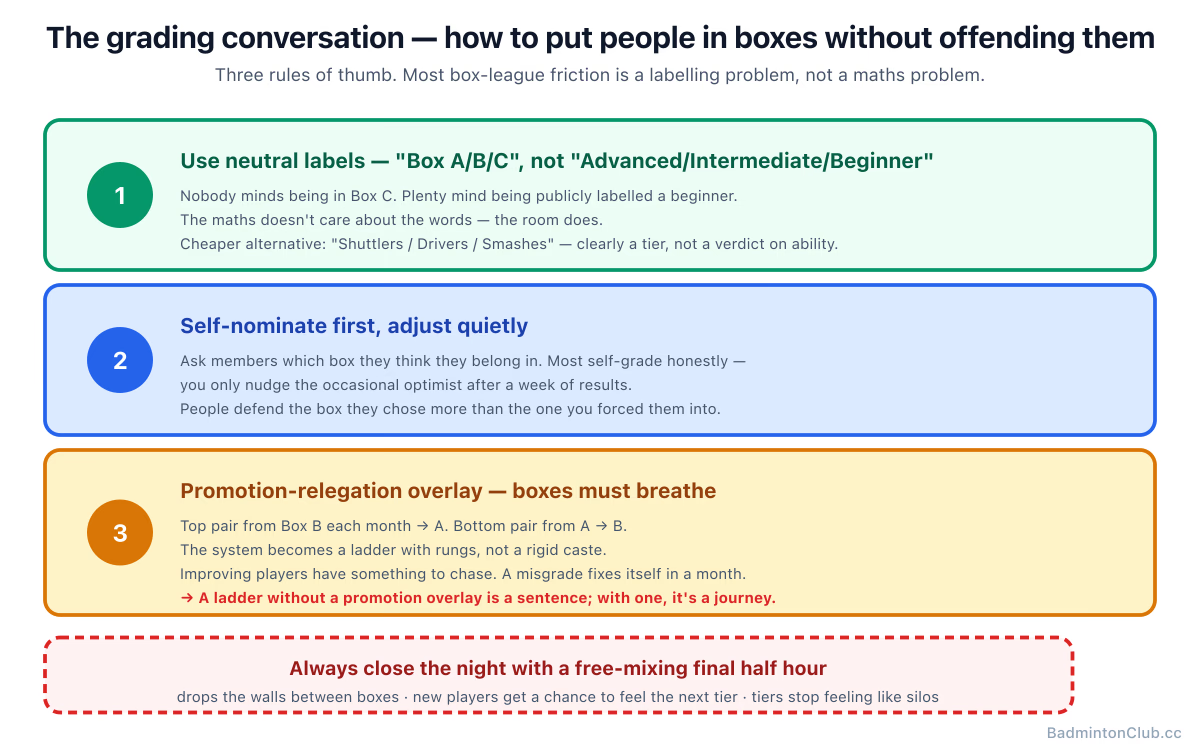
How to grade players into boxes without offending anyone
The box league lives or dies on the grading conversation, and it's more delicate than the maths. Three things that keep it civil. Use neutral labels — "Box A / B / C," not "Advanced / Intermediate / Beginner." Nobody minds being in Box C; plenty mind being publicly labelled a beginner. Let people self-nominate first, then adjust quietly. Ask members which box they think they belong in; most self-grade honestly, and you only have to gently move the occasional optimist after a week of results — far less friction than assigning everyone top-down. Bolt a promotion-relegation overlay on top so the boxes breathe: the top pair from Box B each month goes up to A, the bottom of A comes down. That turns the system from a rigid caste into a ladder with rungs, gives improving players something to chase, and means a misgrade fixes itself in a month instead of festering. Run boxes most of the night, then drop the walls for a free-mixing final half hour so the tiers don't feel like silos.
The other thing experienced box-league organisers learn the hard way: don't over-grade at the start of a season. It's tempting to sort everyone meticulously in week one, but you'll get it wrong for at least 20% of the room, and the people you got wrong will notice. Run week one as a "let's see" — capture scores, let the data drive the regrade in week three or four. By week five the boxes are stable, and by then the people who are slightly over- or under-graded have self-corrected by their own effort. Less drama, better outcome.
Pros and cons
Pros: ✅ balanced matches · ✅ better learning · ✅ scales to very large clubs. Cons: ❌ requires (subjective, ongoing) grading · ❌ can feel rigid/cliquey · ❌ needs enough players per tier.
Examples
- 40 players, 6 courts: A/B on 1–2, C on 3–4, D on 5–6.
- Monthly re-grading by coaches.
- Box most of the night + a cross-box "open" final 30 minutes.
Where it's popular & estimated share
Popular in larger UK and European clubs; ~5–8% as a primary system, often combined with a peg board within each box. For clubs that want to blend tiered and open play in the same session, the hybrid club rotation setup shows how to do that cleanly.
FAQ
- Q: What is a badminton box system? Players are split into skill tiers who mostly play within their tier.
- Q: How are players graded? By coach assessment or recent results, with periodic promotion/relegation.
- Q: Best club size? 40+ players with a wide skill spread.
- Q: Downside? Grading effort and possible rigidity.
- Q: Can software do this automatically? Yes — TimeSwap groups by skill score without manual boxes.
- Q: Box vs ladder? Boxes are fixed bands; a badminton ladder system moves players court-to-court by results.
- Q: How many players per box do I need? At least 6 (to fill a court + rest) and ideally 8–12 to make the rotation interesting. Below 6, fold into the adjacent box.
- Q: Can I run a 3-box night (A/B/C) instead of 4? Yes — most clubs with 20–40 players run 3 boxes; 4 boxes only earns its keep past ~50 players.
- Q: Do I need a coach to manage the D box? Not formally — but having a sympathetic experienced player in the D box who gently gives tips turns it into a real on-ramp for new members.
A box (tiered) league divides club members into skill bands — A through D — so every player gets balanced, competitive matches. This guide covers grading players without friction, running promotion-relegation overlays that keep the system fair, and combining box tiers with a free-mixing finale. Ideal for clubs of 40-plus players with a wide spread of abilities.