Badminton vs Table Tennis: Reflexes, Speed and How the Two Differ
8 June 2026 · Badminton Fans
They're both racket sports, they both demand fast hands, and they both look deceptively easy when someone good is doing it. But stand a metre from a badminton court and then stand a metre from a ping-pong table and you'll realise the scale difference is the whole story. Badminton is a full-court running sport with a 5-gram shuttle sent over a 1.55-metre-high net. Table tennis is played across a 2.74-metre-long table over a net only 15.25 centimetres high, the entire game generated from the wrists and forearm. Badminton demands legs and lungs; table tennis demands mastery of spin and a kind of reaction time most people can't develop without years of practice. Both are Olympic, both are enormous in East and Southeast Asia, and both are far harder than they look when you're watching from a barstool.
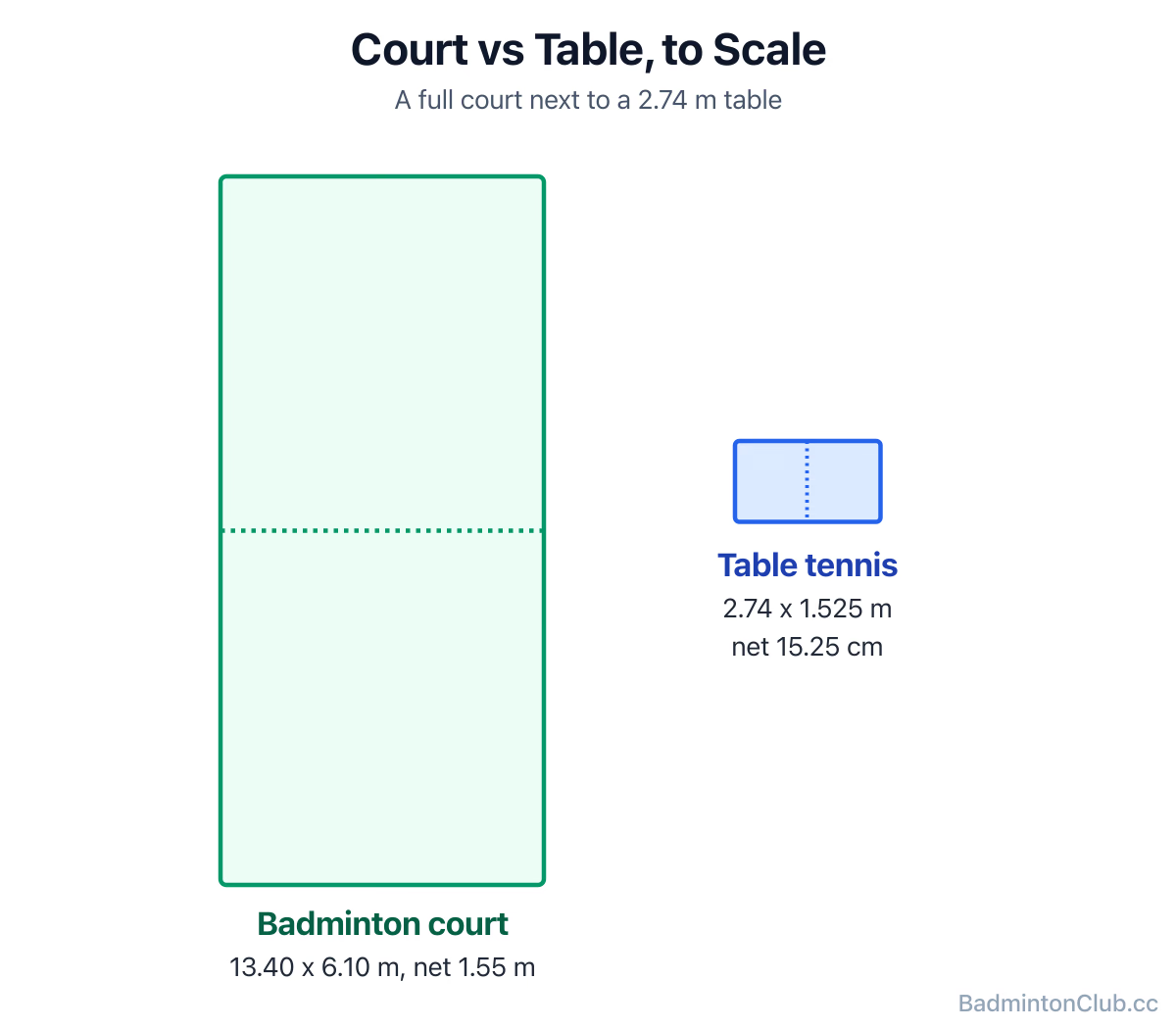
The playing area: court vs table
Badminton is played on a 13.40 m × 6.10 m court — you cover real ground. Table tennis happens on a 2.74 m long × 1.525 m wide table with a tiny 15.25 cm net. The difference in scale means badminton is a whole-body locomotion sport (jumping, lunging, sprinting corner to corner) while table tennis keeps you within a step or two of the table, generating everything from torso rotation, forearm and wrist. One is athletics with a racket; the other is reflex chess at a desk.
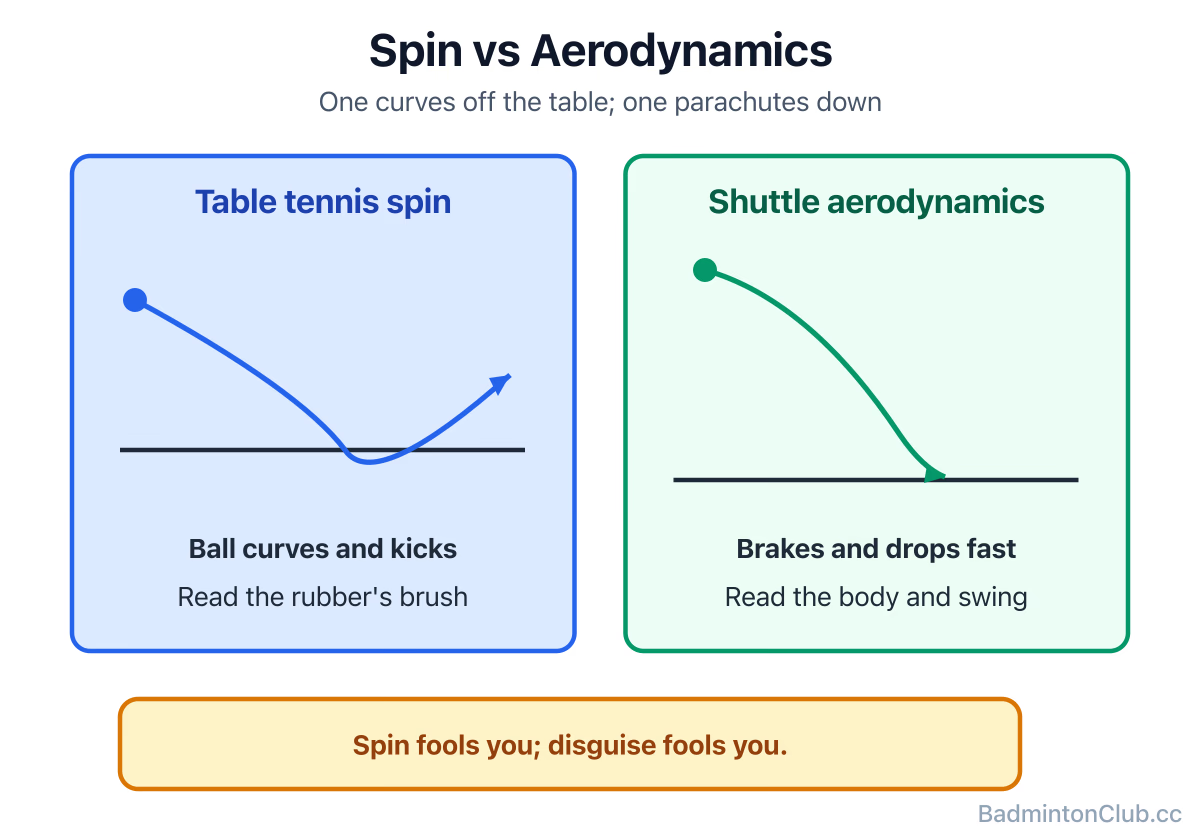
Spin vs aerodynamics
This is the technical heart of the comparison. Table tennis is a game of spin — topspin, backspin, sidespin imparted by a rubber-coated paddle, so the ball curves and kicks off the table in ways that fool you. Badminton is a game of aerodynamics — the shuttle's feathered skirt makes it decelerate and drop unlike any ball, and deception comes from disguising the swing (a drop that looks like a smash), not from spin. A table tennis player reads the racket's brush; a badminton player reads the body and the swing.
Scoring and format
Modern table tennis games go to 11, win by 2, usually best of five or seven — short, sharp games. Badminton goes to 21, win by 2 (cap 30), best of three. Both use rally scoring now (table tennis switched from 21 to 11 in 2001; badminton went to 21-point rally scoring in 2006). Table tennis matches have more, shorter games; badminton has fewer, longer ones.
The reflex comparison nobody gets right (original block)
People love to ask "which has faster reflexes?" and the answer is more interesting than a single number. **Table tennis has the shortest distance, so you get the least time — the ball can cross the table in a heartbeat and at the top level players react to spin and placement in well under 0.25 seconds, almost on instinct, eyes reading the opponent's rubber. Badminton has the fastest projectile** — a smash leaves the racket at up to 565 km/h — but it's travelling much further and decelerating, so you get a hair more time to move to it, often under 0.4 seconds to start your defence.
So table tennis wins on reaction time at the table; badminton wins on raw object speed and adds the entire dimension of having to run to the shuttle first. Here's the bit I'd stress: table tennis reflexes are almost purely hand-and-eye, performed from a near-stationary base. Badminton reflexes are coupled to locomotion — you have to read the smash, explode into position, and then react with your hands, all in under half a second. That combination of sprinting and reacting is, to me, the more complete athletic challenge, even though the bare reaction window at a ping-pong table is shorter. Different kinds of fast.
Fitness demands
Not close on cardio. Badminton is a genuine endurance and power sport — you'll be drenched and breathing hard. Table tennis is more skill and reaction than aerobic load at the recreational level, though elite table tennis is more physical than spectators realise (the footwork is tiny but explosive). If you want a workout, badminton. If you want a reflex-and-spin skill game you can play in a smaller space, table tennis.
FAQ
- Q: What's the difference between badminton and table tennis? Scale and physics. Badminton is a full-court running sport with a shuttle over a 1.55 m net, won on aerodynamics and deception. Table tennis is played across a 2.74 m table over a 15.25 cm net, won on spin and reaction. One is athletic; the other is reflex-and-spin.
- Q: Which has faster reflexes, badminton or table tennis? Table tennis gives you the least time to react because the table is tiny — top players respond in under 0.25 seconds. Badminton has the faster projectile (a 565 km/h smash) but more distance, and adds the challenge of running to the shuttle first.
- Q: Is badminton more tiring than table tennis? Yes, much more, on cardio. Badminton involves full-court sprinting, jumping and lunging; recreational table tennis is far less aerobic, though elite play is more physical than it looks.
- Q: Does spin matter in badminton like in table tennis? Not in the same way. Table tennis is built on spin off a rubber paddle. Badminton's deception comes from the shuttle's aerodynamics and from disguising your swing, not from spinning the shuttle.
- Q: Are both badminton and table tennis Olympic sports? Yes. Table tennis joined the Olympics in 1988 (Seoul) and badminton in 1992 (Barcelona). Both are particularly dominant in East and Southeast Asia.
- Q: Which is easier to learn? Both are easy to start casually and brutally hard to master. Table tennis spin baffles beginners quickly; badminton's footwork and overhead technique are the long climb. Casual play is fun in either from minute one.
Badminton vs table tennis compares the two fastest-reflex racket sports — one played over a high net on a full court, the other across a 2.74 m table. We break down the playing surface, equipment, how spin and shuttle aerodynamics work, scoring, and the very different fitness demands. Both demand lightning hands, but one is a whole-body running game and the other a stationary battle of spin and reaction. Here's how they really compare.