Badminton vs Racquetball: Net Game vs Wall Game, Court and Speed Compared
8 June 2026 · Badminton Fans
Fast indoor racket sport, two players hitting something hard at each other — on paper they sound similar. In practice the difference is so fundamental it flips everything about how you play. Badminton is a net game: you send a shuttle over a 1.55-metre-high barrier onto the opponent's half. Racquetball is a wall game: you're both inside a sealed box where the floor, ceiling and all four walls are live surfaces, and there's no net separating you at all. Badminton rewards touch, deception and overhead power. Racquetball rewards the ability to predict ricochets and the willingness to bludgeon a rubber ball that pros drive at 150 to 175 miles per hour. They share the word "racket" and not much else.
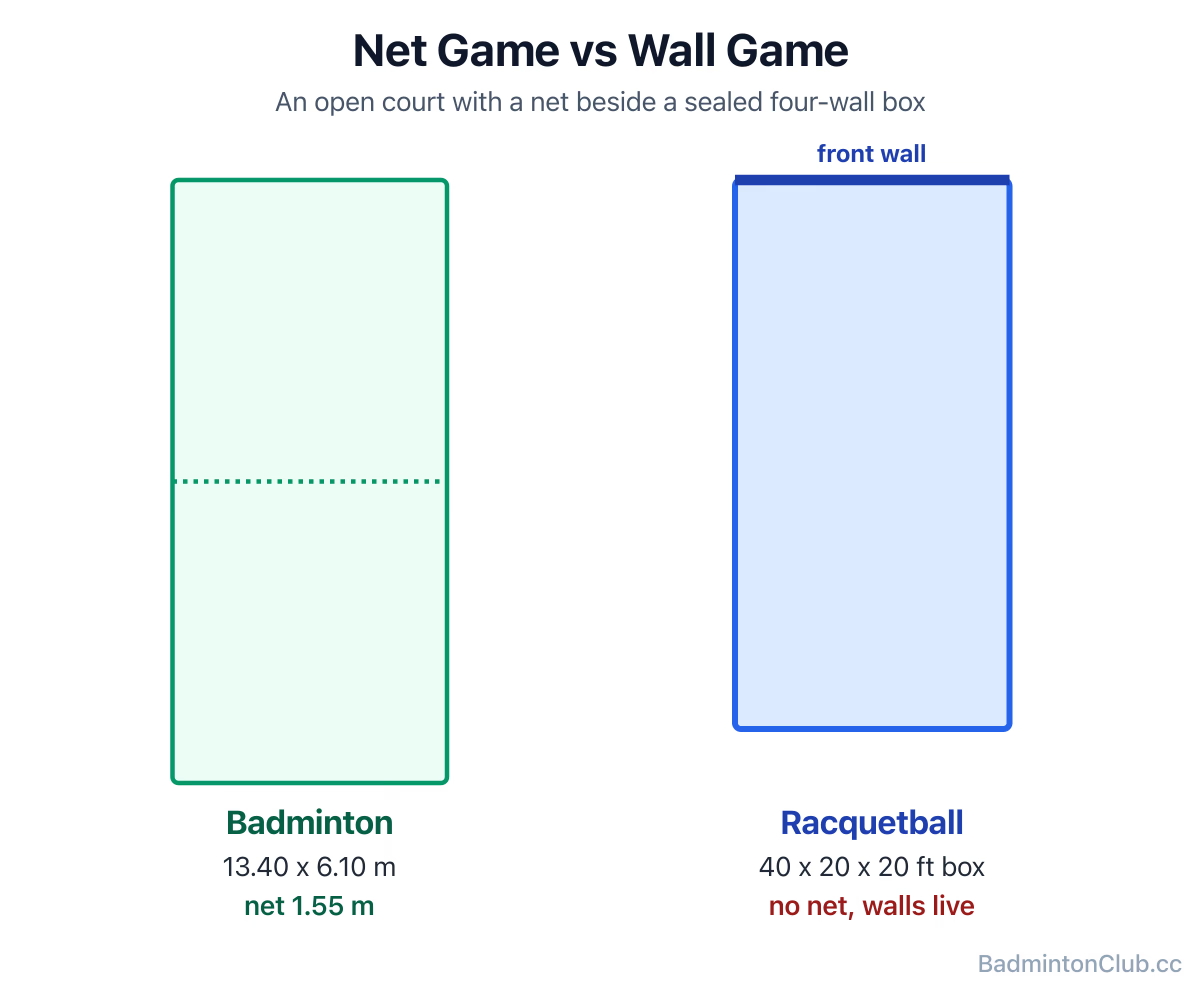
Net game vs wall game
A badminton court is an open 13.40 m × 6.10 m rectangle, split by a 1.55 m net, with you and your opponent on opposite sides. A racquetball court is a fully enclosed box — 40 ft long, 20 ft wide and 20 ft high (12.2 m × 6.1 m × 6.1 m) — where you serve and rally off the front wall, and every other surface (side walls, back wall, even the ceiling) is in play. There's no net. You share the floor with your opponent, like squash, but the ceiling and back wall add a 3D bounce squash doesn't have.
That contrast is the whole comparison: badminton is about controlling space across a net; racquetball is about predicting where a fast rubber ball will be after it ping-pongs off several walls.
The projectile: shuttle vs rubber ball
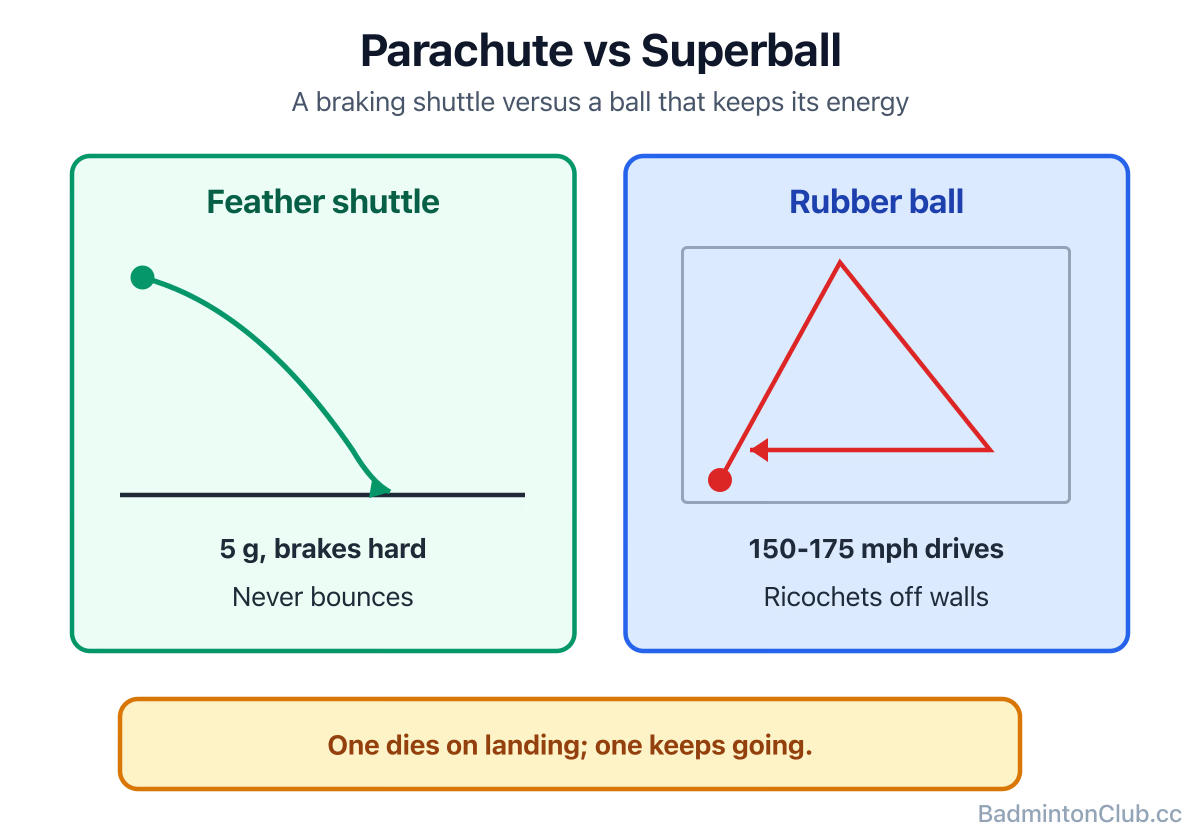
Badminton's 5 g shuttle flies fast off the racket and brakes hard — it's all about the floaty, decelerating flight. Racquetball uses a small, bouncy rubber ball that retains energy and rockets off walls; pro drives are commonly clocked around 150–175 mph. The shuttle never bounces and is taken on the full; the racquetball is meant to bounce, again and again, off whatever surface it hits. One is a parachute, the other a superball.
Rally style and scoring
Badminton rallies are vertical and tactical — clear, drop, smash, net — taken over the net with deception. Racquetball rallies are a chaotic 3D scramble: the ball comes off the back wall, the ceiling, a side wall, and you're constantly repositioning. Scoring differs too: badminton is 21-point rally scoring, best of three. Traditional racquetball is side-out scoring to 15 (you only score on serve) for the first two games, with a tiebreaker to 11. Badminton's every-rally-scores system makes momentum swing faster.
Which suits which player (the honest take)
Having knocked a ball around a racquetball box and spent far longer on a badminton court, here's how I'd steer people. Racquetball is gloriously easy to start and immediately satisfying — you can't really hit the ball "out" in a sealed box, so beginners get long, fun rallies in minutes and the ceiling for casual enjoyment is high. It's a fantastic stress-blaster: smash the ball as hard as you like and chase it. Badminton is more precise, more deceptive and, frankly, more beautiful to watch — but it asks more patience to get good because a beginner can hit the shuttle out, into the net, or feebly.
On fitness: both are intense, but they tire you differently. Racquetball's confined space means relentless reaction and twisting, often with explosive whole-body swings. Badminton spreads you across a bigger court with more jumping and lunging and far more overhead load on the shoulder. If you love whacking something flat-out and reading wild bounces, racquetball. If you love control, angles and the chess of deception, badminton. And eye protection is genuinely mandatory in racquetball — a rubber ball ricocheting around an enclosed box at 150 mph-plus is no joke, whereas badminton's open court and braking shuttle is much safer for the eyes.
FAQ
- Q: What's the difference between badminton and racquetball? Badminton is a net game on an open court with a shuttle hit over a 1.55 m net. Racquetball is a wall game in an enclosed box (40 ft × 20 ft × 20 ft) with no net, where the ball is played off the front wall and every surface is live.
- Q: Is the ball faster in racquetball or the shuttle in badminton? The badminton shuttle is faster off the racket (smashes up to 565 km/h vs racquetball drives around 150–175 mph / 240–280 km/h), but the shuttle decelerates fast while the racquetball keeps its speed bouncing off walls.
- Q: Does badminton or racquetball have a net? Only badminton. Badminton has a 1.55 m net between opponents; racquetball has no net at all — you rally off a shared front wall inside an enclosed court.
- Q: Which is easier to learn? Racquetball is very easy to start because you can't easily hit the ball out in a sealed box, so beginners get long rallies fast. Badminton takes a little longer to control the shuttle but rewards precision and deception.
- Q: Which is a better workout? Both are intense. Racquetball is relentless reaction and twisting in a confined space; badminton spreads you over a larger court with more jumping and overhead load. Different flavours of hard.
- Q: Do I need eye protection? Strongly recommended in racquetball — a fast rubber ball in an enclosed box is a real eye-injury risk. Badminton's open court and decelerating shuttle make eye protection far less critical.
Badminton vs racquetball sets a high-net court sport against an enclosed four-wall game where every surface is in play. We compare court dimensions, how the shuttle and the rubber ball behave, rally style, ball speed, scoring and fitness demands — and explain why a sport with no net at all feels so different from one defined by a 1.55 m net. If you've played one and are curious about the other, this is the clear, numbers-led comparison.