Badminton for Kids: How to Get Children Started, Equipment and Fun Games
8 June 2026 · Badminton Fans
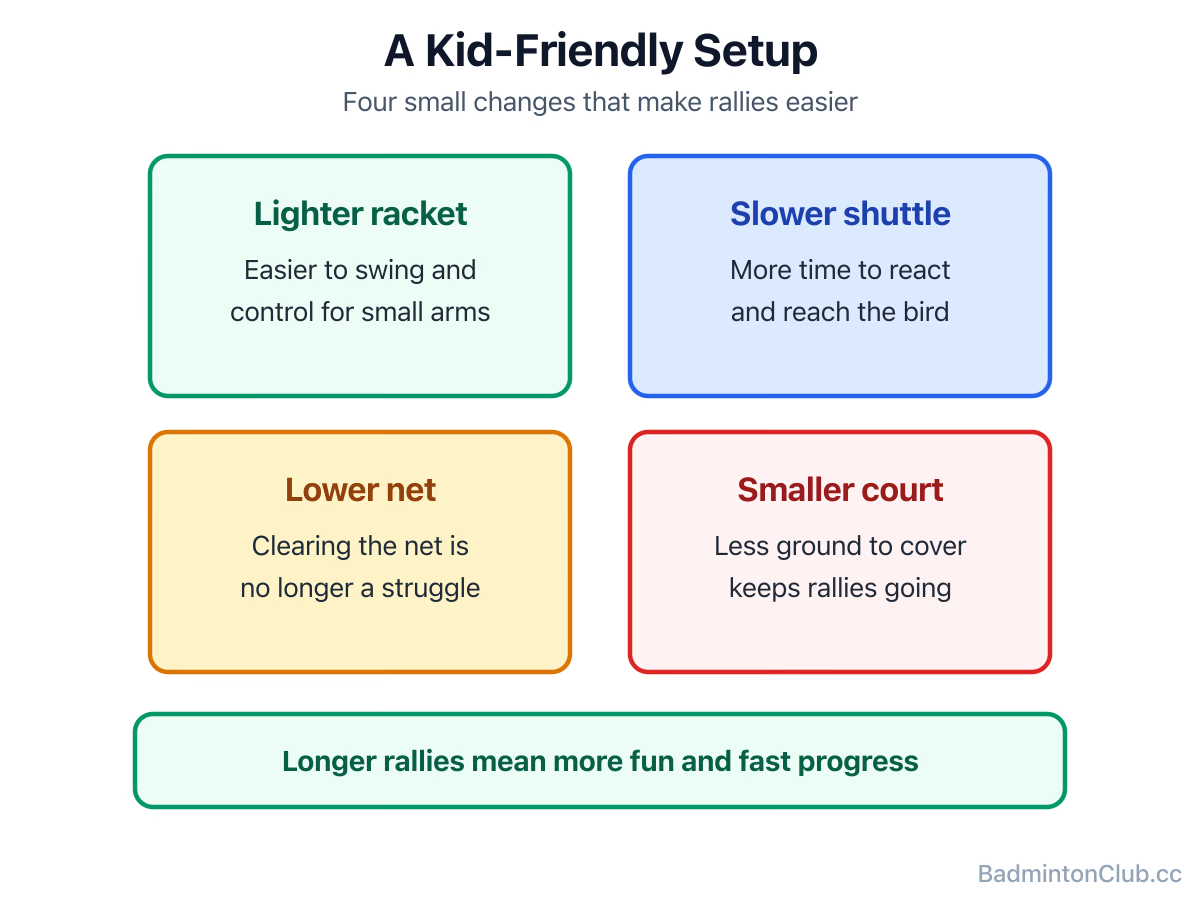
Kids can start badminton from around age five or six with a lightweight kid-sized racket, slower foam or nylon shuttles, and a lowered net on a smaller court. The golden rule: keep it playful. Children learn badminton fastest through games and rallies, not technical drills — focus on fun and keeping the shuttle in the air, and skill follows naturally. It's cheap, low-injury, works indoors or in the garden, and builds coordination brilliantly.
Why badminton is great for kids
It's affordable, it doesn't need much space, it's gentle on growing joints (no hard impacts), and it's wonderfully social. Crucially for coordination, badminton trains hand-eye timing, agility and balance — the shuttle's floaty flight gives kids more time to track and react than a fast ball would, so they get the satisfying feeling of hitting it much sooner. That early success is what keeps them coming back.
The right equipment for children
- Racket: a junior/kid-sized racket (shorter, lighter, often 53–60 cm). An adult racket is too long and heavy and will teach a panhandle slap.
- Shuttles: start with foam or slow nylon shuttles — they fly slower and are easier to hit and far more durable than feathers.
- Net: lower it. A full 1.55 m net is too high for small children; drop it so rallies are achievable.
- Shoes: any supportive non-marking trainers indoors.
Keeping early success high is everything — the right gear is mostly about making the shuttle easy to hit.
Fun games that teach skills
Skip the drills. Try these:
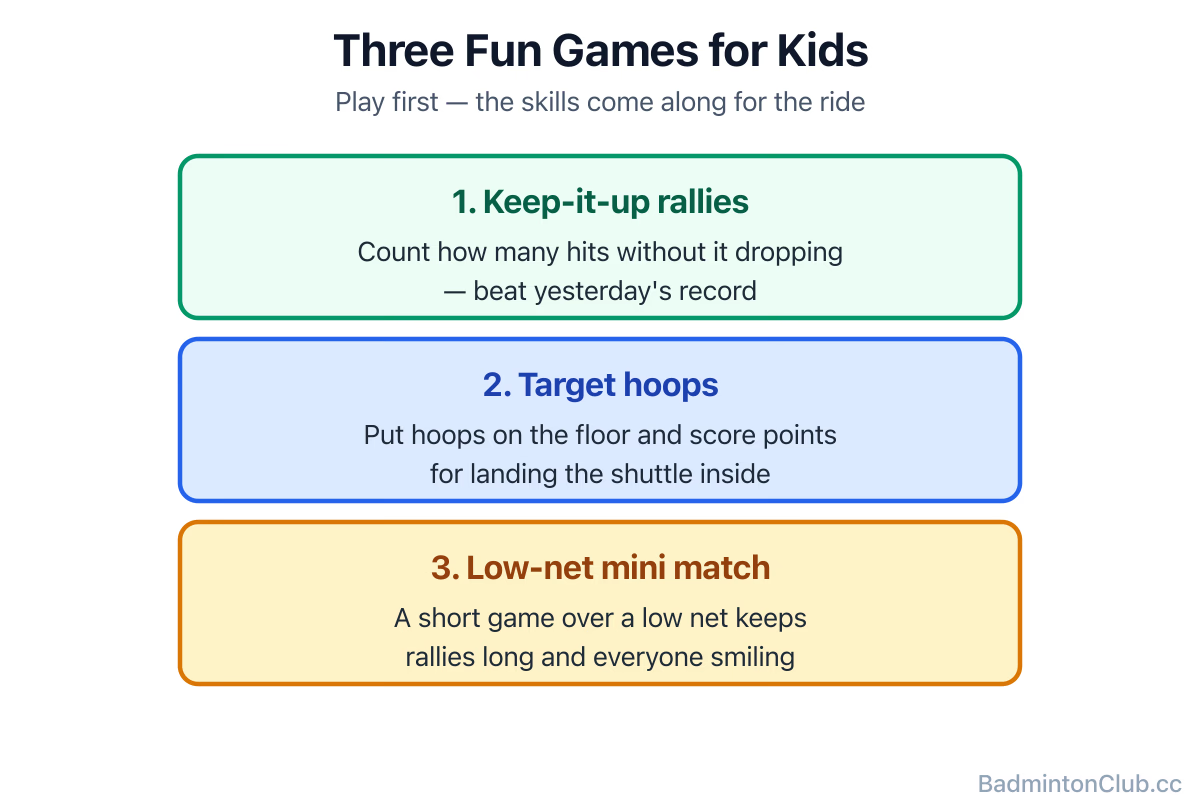
- Keep it up: how many hits in a row can you and your child rally? Beat the record. (Teaches control and consistency.)
- Balloon or foam warm-up: for the very young, rally a balloon first — it's slow and unmissable, building confidence.
- Target zones: put hoops or towels on the floor and score points for landing the shuttle in them. (Teaches placement.)
- Don't let it bounce: a simple "keep the shuttle alive" game across a low net.
What actually keeps kids coming back
Here's the honest, parent-tested truth: kids don't care about technique and they hate standing in lines. The fastest way to put a child off badminton is to over-coach them — correcting their grip on every shot, drilling footwork, making it feel like homework. The kids who stick with it are the ones who get to rally and laugh. Let the grip be slightly wrong for now; if they're having fun and keeping the shuttle up, the technique can be nudged later. A child who loves the game will fix their own grip in time; a child who's bored will quit no matter how correct their swing is. Many clubs run junior sessions and use an app like BadmintonClub.cc to organise mini-courts and rotations so every kid gets plenty of hits rather than waiting their turn.
Easing into the real game
Once a child can rally happily, slowly introduce the real elements: scoring to a small number (first to 11 is plenty), the proper serve, and gradually raising the net toward full height as they grow. There's no rush. The transition from "fun in the garden" to "playing at a club" should feel like a natural next step, not a sudden jump into rules and pressure.
One surprising benefit for kids: decision-making
Here's a reason to pick badminton for your child that isn't about fitness or coordination: it teaches fast decision-making under uncertainty. In a single rally, a child has to track the shuttle, judge its trajectory, decide whether to hit it overhead or underarm, choose direction and force, and recover — all in about two seconds. That repeated cycle of assess-decide-execute is rarer in team sports where a coach tells a child where to stand. There's a reasonable argument — and any parent who watches closely will see it — that the open-ended problem-solving of a racket sport, where the shuttle can go anywhere, trains quick decision-making more than a structured team drill does. A child who plays regular badminton is practising the skill of making good calls fast, under pressure, with incomplete information. That's a life skill that transfers far beyond the court. And unlike football or rugby, the decision-making pressure comes in short bursts with rests between, so it never overwhelms. Worth thinking about if you're choosing a first sport for your child.
FAQ
- Q: What age can kids start playing badminton? Around five or six for simple rallying with foam shuttles and a lowered net. Formal club coaching usually starts around seven or eight, but garden play can begin earlier.
- Q: What racket should a child use for badminton? A junior/kid-sized racket — shorter and lighter than an adult one (roughly 53–60 cm). An adult racket is too heavy and encourages a bad panhandle grip.
- Q: What shuttles are best for kids? Slow foam or nylon shuttles. They fly slower, are far easier to hit, and last much longer than feather shuttles — perfect for building early confidence.
- Q: How do I teach my child badminton? Through games, not drills. Keep-it-up rallies, target hoops and low-net games teach control and placement while staying fun. Avoid over-coaching technique early.
- Q: Is badminton safe for children? Yes — it's low-impact with no hard ball and little collision risk, making it one of the safer racket sports for growing kids. Non-marking court shoes help prevent slips.
- Q: How do I keep my kid interested in badminton? Prioritise fun and rallying over correction, celebrate keeping the shuttle alive, and let them play with friends. A child who enjoys it will naturally want to improve; pressure and constant correction drive kids away.
Badminton is one of the best sports for kids — cheap, safe, sociable and playable indoors or in the garden from age five or six. This guide covers the right kid-sized rackets and lighter shuttles, how to set up a lower net and smaller court, simple games that teach skills without feeling like drills, and how to keep it fun so children actually want to come back. Practical, parent-tested advice, not theory.