The Best Badminton Set for the Backyard: What to Look For (and What Annoys You Later)
8 June 2026 · Badminton Fans
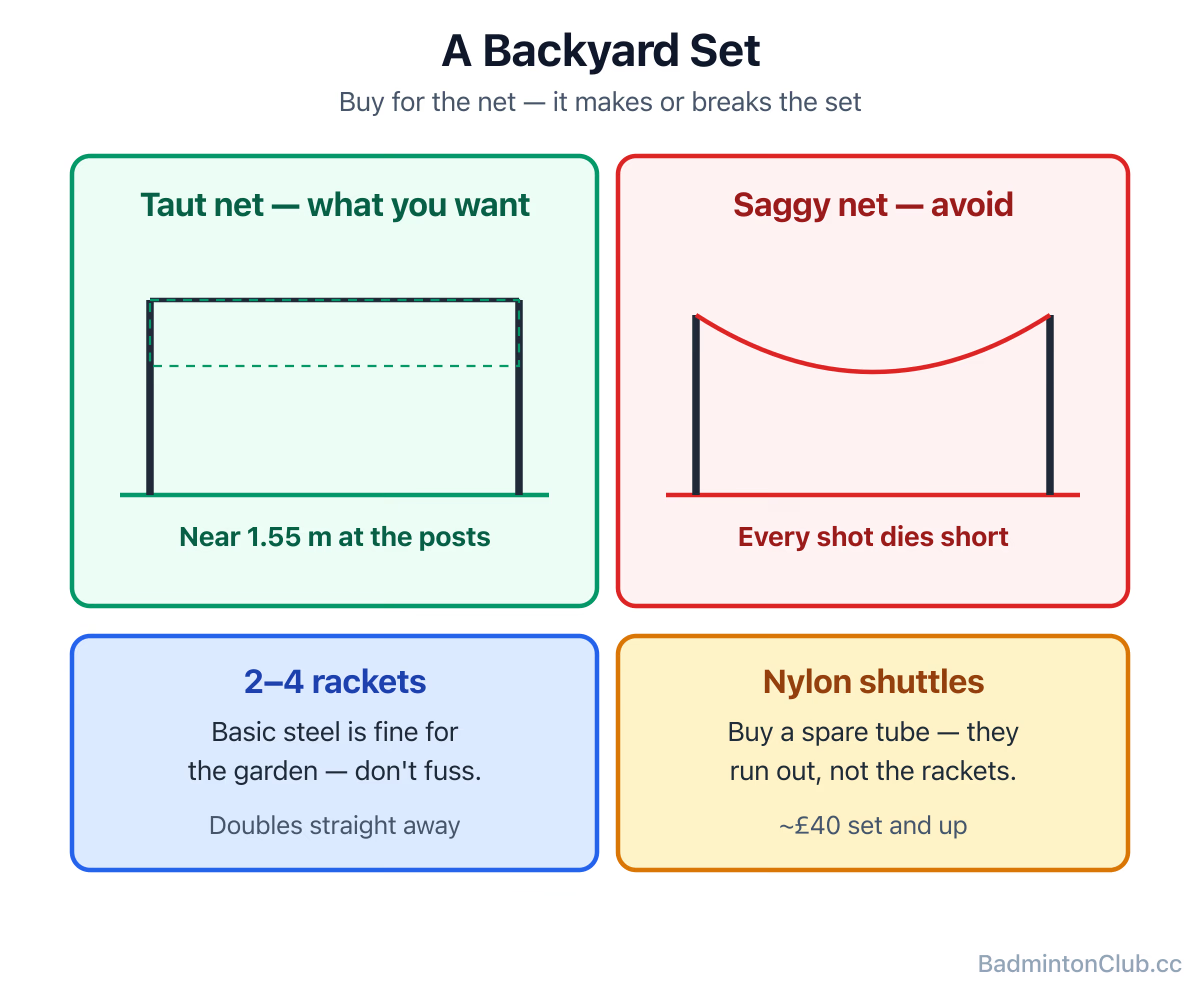
A decent backyard badminton set comes down to three things: a net that holds proper tension at roughly 1.55 metres, two or four rackets, and a handful of durable nylon shuttles. The most important part is the net. Not the rackets. Not the shuttles. The net. A saggy, blow-over-in-the-slightest-breeze net ruins the whole experience — every shot dies short, the tape sags into the court, and within ten minutes everyone's frustrated. The single factor that separates a set you'll still be using next summer from one that ends up forgotten in the shed is how well the net holds up. When you're shopping, buy for the net, not for how many rackets they throw in the box.
What actually matters in a garden set
The rackets in a combo set are usually basic steel ones — fine for the garden, don't overthink them. What makes or breaks the experience is everything around them:
- A net that holds height and tension. A proper garden set keeps the net near the regulation 1.55 m at the posts. Cheap sets sag in the middle and the "net" becomes a suggestion.
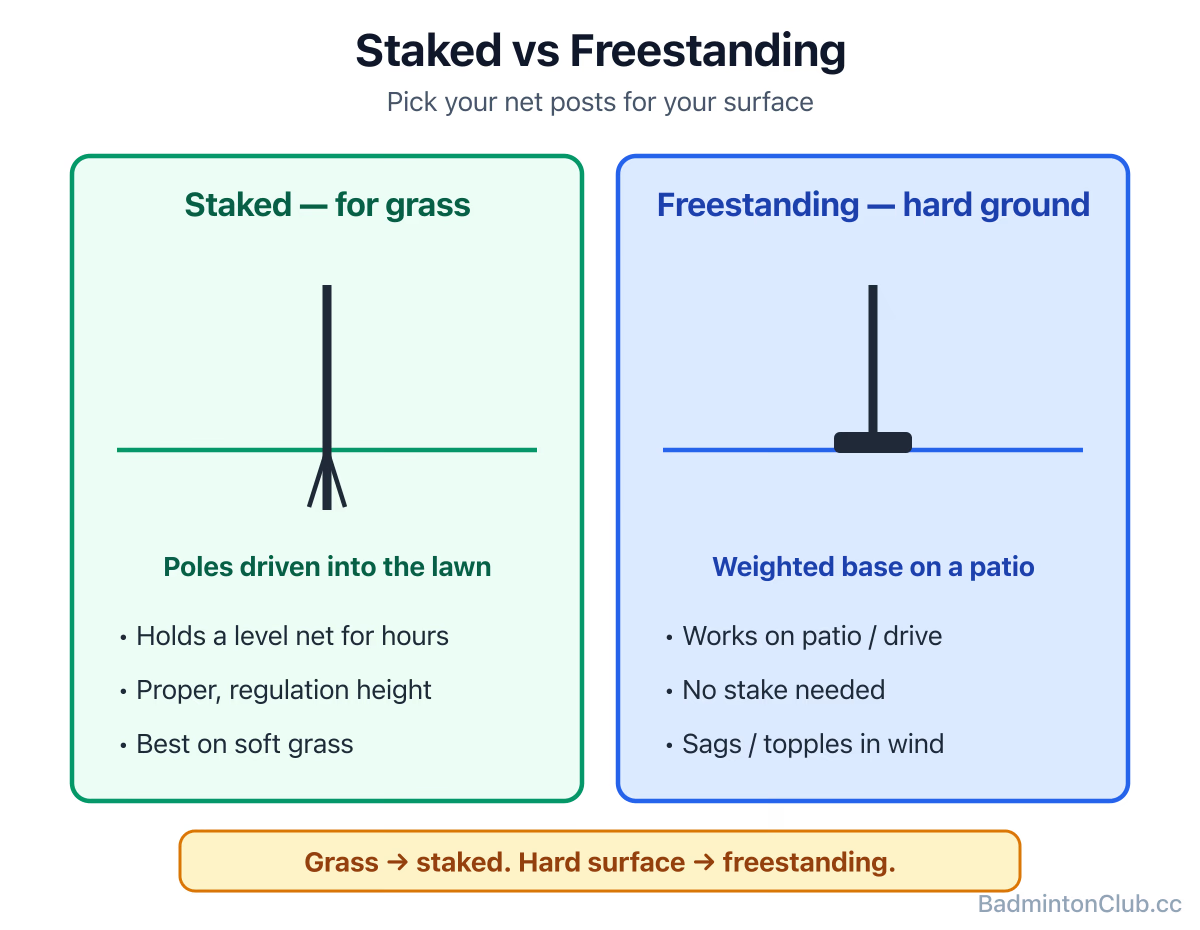
- Stable posts. Either firmly staked into a lawn or weighted/freestanding for hard surfaces (see below).
- Nylon shuttles, included or bought separately. Feathers are pointless outdoors.
- Quick setup. If it takes 20 minutes and a diagram, nobody will bother twice.
Staked vs freestanding: pick for your surface
This is the one real decision. Staked garden sets push poles into a lawn and tension the net between them — they hold a level, proper-height net for hours, which is what you want on grass. Freestanding/portable sets stand on weighted bases and work on patios, driveways, beaches or anywhere you can't drive a stake — but they're more prone to sagging and toppling in a breeze, and rarely hold a perfectly level regulation height. Rule of thumb: grass → staked; hard surface → freestanding, and accept the freestanding one is a compromise on net quality.
Why nylon shuttles are the only sensible outdoor choice
Outdoors, this isn't a preference, it's physics. The feathers on a feather shuttle catch the slightest breeze and the flight goes haywire; they also wreck instantly on a hard mishit. Nylon shuttles are heavier-feeling, more stable in light wind and far more durable — buy a tube of these and ignore feathers in the garden entirely. Even nylon struggles in a real wind, though, which is the honest limitation of backyard badminton: on a gusty day, the game just doesn't work. Pick a still evening and it's lovely.
The honest take on backyard sets
Having set up a fair few of these for family barbecues: buy slightly better than the cheapest, and buy your own tube of nylon shuttles separately. The £15 supermarket set with two shuttles and bendy steel rackets is a one-afternoon toy — the net sags, the shuttles split, and it's in the bin by August. A ~£40 garden set with a decent tensioned net and, crucially, a spare tube of Yonex Mavis nylon shuttles, turns "we played once" into "we play every warm evening." The shuttles are what run out, not the rackets. One more lived lesson: the net being the right height matters less than it being taut — a slightly low net that's drum-tight plays far better in a garden than a perfect-height one that sags into a smile. And the four-racket combo sets (budget ones from ~$25, decent tensioned-net ones around $100–$140) are great value for a family because you get doubles straight away.
A quick setup that survives the garden
Site the net across the wind, not into it, so a breeze pushes shuttles sideways rather than dead-stopping them. Stake or weight the posts properly and get the net as tight as the kit allows. Mark rough boundaries with whatever's handy (cones, shoes, a hose) — you don't need exact lines for fun. Keep the spare nylon shuttles in the box so you're not hunting for a fresh one mid-game.
FAQ
- Q: What should I look for in a backyard badminton set? A net that holds tension at roughly 1.55 m without sagging, stable posts (staked for grass, freestanding for hard surfaces), durable nylon shuttles, and quick setup. The net quality matters far more than the rackets.
- Q: How much does a good garden badminton set cost? Around £40 and up for a decent staked garden set with a proper tensioned net; family combo sets with four rackets, a net and nylon shuttles run from ~$25 for basic ones up to around $100–$140 for a decent tensioned-net set. Sub-£15 sets are one-afternoon toys.
- Q: Should I get a staked or freestanding net for the garden? Staked for a lawn — it holds a level, proper-height net for hours. Freestanding (weighted base) for patios, driveways or beaches where you can't stake, accepting it sags more and topples in wind.
- Q: Can you use feather shuttlecocks in the backyard? Not really. Feathers catch the wind and break easily outdoors. Use durable nylon (plastic) shuttles for any garden or outdoor play — they're more stable and survive mishits.
- Q: What net height should a backyard badminton set be? The regulation height is 1.55 m at the posts (1.524 m at the centre). Most decent garden sets aim for this, but in a casual garden a taut net at a slightly lower height plays better than a saggy one at exact height.
- Q: Can I play backyard badminton on a windy day? Honestly, no. Even nylon shuttles get pushed around in a real breeze. Backyard badminton is a still-evening game; if your garden is regularly windy, it may not be the right sport for that spot.
A backyard badminton set should get you playing in ten minutes — but the cheap ones sag, blow over and frustrate everyone by shot three. This guide explains what actually matters in a garden set: a net that holds a proper 1.55 m height under tension, staked versus freestanding posts, why nylon shuttles are the only sensible choice outdoors, and the realistic price bands, so you buy a set the family still uses next summer.